
Clause (grammar): structure, types, and usage
An explanation of clauses in grammar: what they are, their parts, common types (independent, dependent, relative, adverbial, nominal), examples, and cross-linguistic distinctions.
Overview
A clause is a grammatical unit that contains at least a subject and a predicate and that expresses a proposition or event. A clause can sometimes stand alone as a complete sentence, or it can be embedded within a larger sentence. Understanding clauses helps explain how ideas are packaged, how information is sequenced, and how complex thoughts are combined in speech and writing.
Image gallery
3 Images
Structure and core parts
Most clauses consist of a subject (who or what the clause is about) and a predicate (which says something about the subject). The predicate normally contains a single main verb and can include objects, complements, and adverbial modifiers. Additional elements such as indirect objects or prepositional phrases provide detail, while reduced or verbless clauses occur in informal or elliptical contexts.
Common clause types
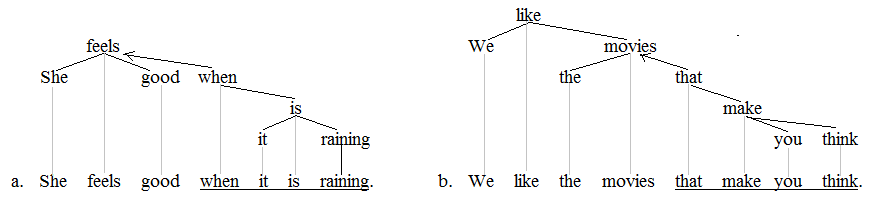
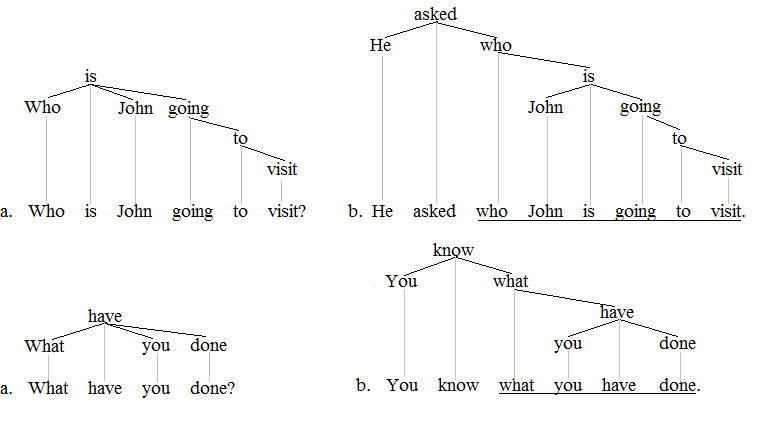
Grammars typically separate clauses into independent (main) clauses and dependent (subordinate) clauses. Independent clauses convey a full idea on their own; dependent clauses require attachment to an independent clause.
- Relative clauses: modify a noun (e.g., "the person who called").
- Adverbial clauses: provide time, reason, condition, or manner (e.g., "when the bell rang").
- Nominal (content) clauses: function as a subject, object, or complement (e.g., "that she left surprised everyone").
Examples and how clauses combine
Clauses are linked using coordination and subordination. Coordinating conjunctions such as "and", "but", or "or" connect clauses of equal status; subordinating conjunctions or relative pronouns introduce dependent clauses. Punctuation and word order also affect clause boundaries: commas often separate clauses in English, and inversion or clefting can highlight information within clauses.
History, cross-linguistic notes, and distinctions
The analytical idea of the clause traces to longstanding grammatical traditions that analyzed sentence structure; modern descriptions draw on that legacy while comparing many languages. Different languages mark clause relations by word order, affixes, particles, or special verb forms. Important distinctions include clause versus phrase (a phrase lacks a subject–predicate pairing) and clause versus sentence (a sentence may contain one or several clauses). For related concepts, consult entries on subject, predicate, verb, conjunction, and the broader topic of sentence.
Questions and answers
Q: What is a clause in a sentence?
A: A clause is a part of a sentence that consists of a subject and a predicate.
Q: What is a predicate in a clause?
A: A predicate in a clause is what happens in a sentence.
Q: How many main verbs are there in a predicate?
A: A predicate includes only one main verb.
Q: Can a sentence have multiple clauses?
A: Yes, a sentence can have multiple clauses, as seen in "I love you and I will always love you."
Q: What is a conjunction in a clause?
A: A conjunction is a word that joins two or more clauses together, like the word "and" in "I love you and I will always love you."
Q: What is the difference between an independent and a dependent clause?
A: An independent clause can stand alone as a sentence, while a dependent clause relies on an independent clause to form a complete thought.
Q: How many clauses are in the sentence "I love you?"
A: There is only one clause in the sentence "I love you."
Tags
Related articles
Author
AlegsaOnline.com Clause (grammar): structure, types, and usage Leandro Alegsa
URL: https://en.alegsaonline.com/art/20824
Sources
- www2.ivcc.edu : "Sentences: Simple, Compound, and Complex"
- grammar-monster.com : "What Is a Subordinate Clause? (with Examples)"
- chompchomp.com : "The Subordinate Clause"
- oxforddictionaries.com : "Clauses"