
Pronoun (grammar)
A pronoun is a word that stands in for a noun or noun phrase. This article explains types, forms, functions, agreement rules, common usage problems, and historical classification.
A pronoun is a word used in place of a noun or noun phrase to avoid repetition and to manage reference in discourse. Examples in English include he, she, it, they, who, which, someone, and myself. Pronouns participate in the same sentence roles as nouns (subject, object, complement, etc.), but they are distinctive because their meaning often depends on context or an antecedent— the word or phrase they refer back to. For a general introduction see overview material.
Image gallery
3 Images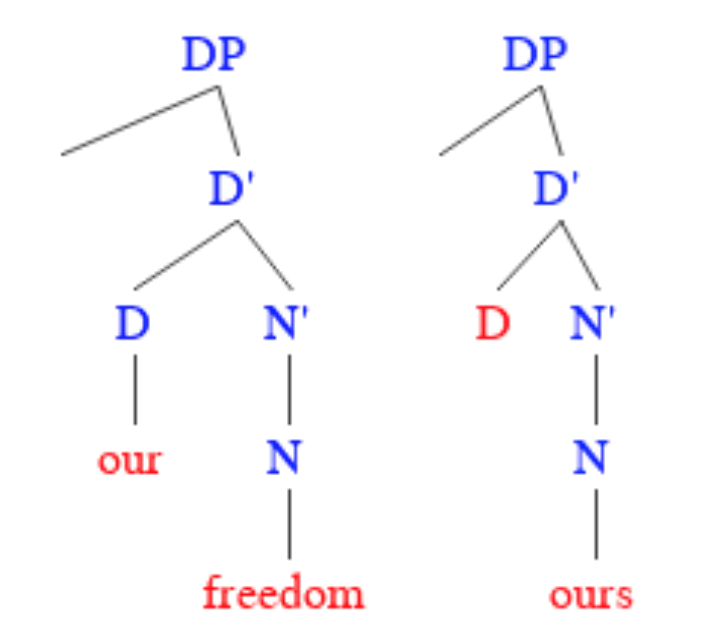

Types and forms
- Personal pronouns — refer to specific participants: I, you, he, she, it, we, they, with case forms like me, him, her.
- Possessive pronouns and determiners — show ownership: mine, yours, his; and possessive determiners that modify nouns: my, your, their.
- Reflexive and intensive — refer back to the subject: myself, herself; intensive forms add emphasis.
- Demonstrative pronouns — point to entities: this, that, these, those.
- Relative pronouns — introduce clauses that modify nouns: who, whom, which, that.
- Interrogative pronouns — used in questions: who, what, which.
- Indefinite pronouns — refer to nonspecific persons or things: someone, anyone, nothing.
- Reciprocal pronouns — express mutual action: each other, one another.
Function, agreement and antecedents
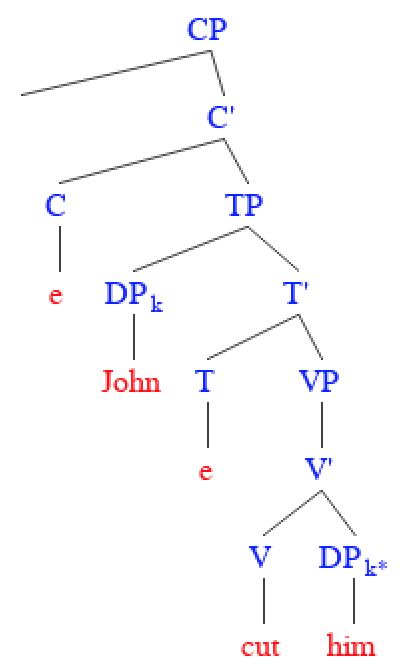
When a pronoun replaces a noun phrase, the replaced expression is called the antecedent. Pronouns must generally agree with their antecedents in number (singular/plural), person, and sometimes gender: "The student lost his book" (traditional agreement) or "The student lost their book" (gender-neutral usage). Case distinctions (subject vs. object) are important in many languages; in English, compare "she" (subject) with "her" (object or possessive determiner). For more on grammatical roles see reference discussion.
History and classification
Traditionally pronouns have been taught as a separate part of speech. Some modern linguists treat pronouns as a subclass of nouns or as a closed class of words with noun-like behavior because they can occupy the same syntactic positions as nouns while differing in semantics and reference. Historical development of pronouns varies by language family; in English many forms derive from Old English pronominal systems that had richer case and gender marking. For comparative notes see comparative grammar sources.
Usage, examples and common issues
Pronouns simplify discourse but can create ambiguity when their antecedent is unclear or distant. Example: "When John spoke to Mark, he left early." Who does "he" refer to? Writers are advised to clarify antecedents or rephrase sentences. Another widespread usage issue is the singular use of "they" as a gender-neutral pronoun; this form has long informal and increasing formal acceptance for referring back to an unspecified or gender-diverse individual. Examples:
- Tom has a new dog. He has named him Max and he lets him sleep by his bed.
- The committee reached its decision. Its here agrees with the collective noun "committee".
- Whoever arrives first will get a prize — "whoever" acts as an indefinite relative pronoun.
Pronouns also interact with determiners and quantifiers in ways that differ across languages; for instance, some words (my, your) function as determiners when they modify a noun and as pronouns when they stand alone. For practical guides and further reading, consult usage guides and grammatical surveys.
Questions and answers
Q: What is a pronoun?
A: A pronoun is a type of noun that can be used to replace another noun, such as "me", "she", or "it".
Q: How are pronouns used in English?
A: Pronouns are often used to avoid repeating the same noun multiple times. For example, instead of saying "Tom has a new dog. Tom has named the dog. Max and Tom lets the dog sleep by Tom's bed.", it is easier to say "Tom has a new dog. He has named him Max and he lets him sleep by his bed."
Q: What is an antecedent?
A: An antecedent is the noun that a pronoun replaces in a sentence. For example, in the sentence "The dog that was walking down the street," the relative pronoun is 'that' referring back to its antecedent, which is 'dog'.
Q: Can you give another example of an antecedent and its corresponding pronoun?
A: In the sentence "The spy who loved me," the relative pronoun is 'who' and its antecedent is 'spy'.
Q: Are pronouns only used for people or animals?
A: No, pronouns can also be used for objects or abstract concepts such as places or ideas. For example, one could say “It’s time to go home” where ‘it’ refers back to ‘time’ which would be considered its antecedent.
Q: Is there any difference between traditional grammar rules about pronouns and modern linguists views on them?
A: Yes, traditionally pronouns were seen as part of speech but many modern linguists consider them types of nouns instead.
Author
AlegsaOnline.com Pronoun (grammar) Leandro Alegsa
URL: https://en.alegsaonline.com/art/79436