
Congressional Record (United States official proceedings)
Official written record of proceedings and debates of the U.S. Congress, published daily when in session and bound into permanent volumes; used for reference, history, and legal intent.
The Congressional Record is the authoritative written record of proceedings and debates conducted by the United States Congress. Issued while Congress is in session, it preserves spoken words, submitted statements, amendments, and other materials that members place into the record. The publication serves legislators, researchers, journalists, and the public as a primary source for what occurred on the floors of the House and Senate.
Image gallery
1 Image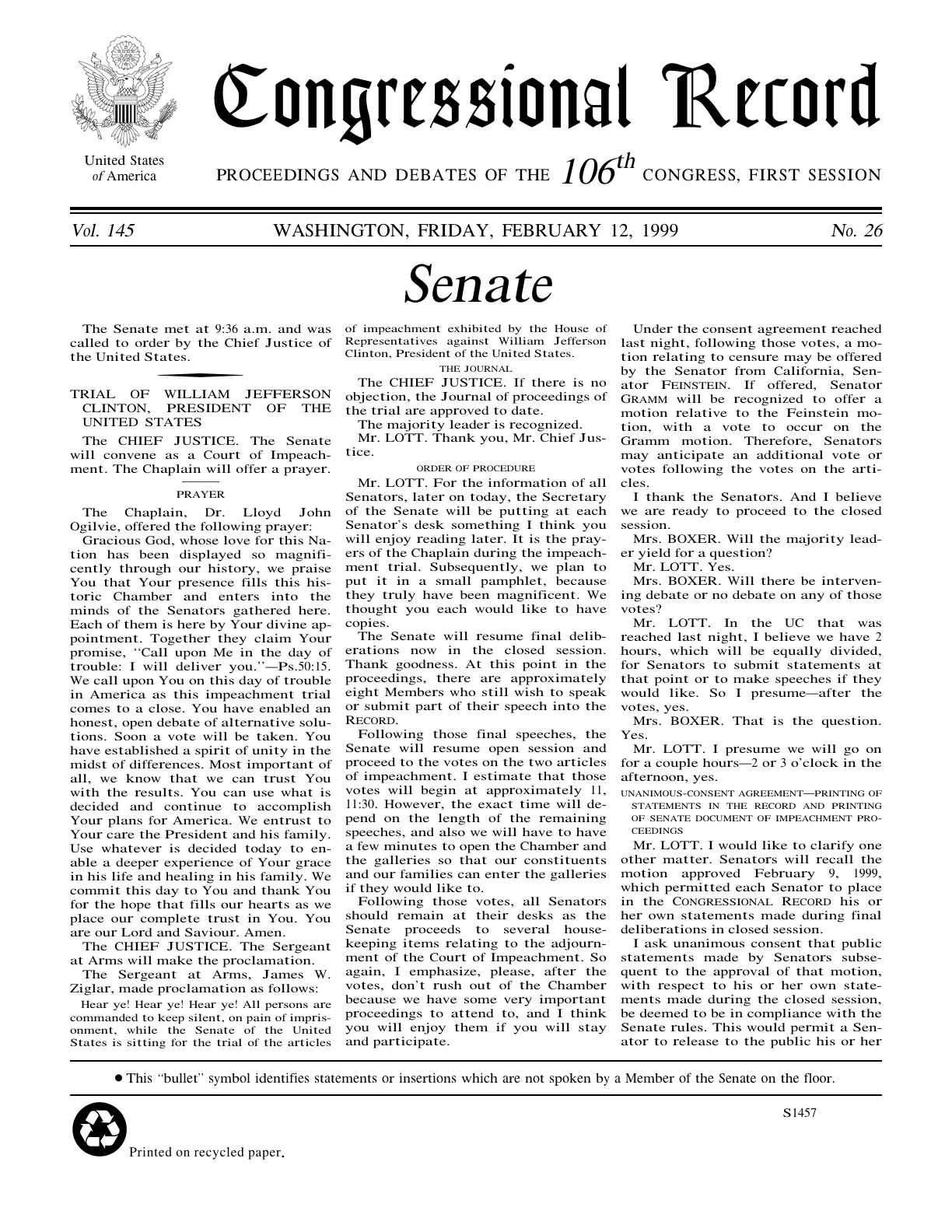
Contents and format
On any day that Congress meets a daily edition of the Congressional Record is produced. These daily editions typically include verbatim or near‑verbatim text of speeches and debates, the text of bills and amendments as entered, official actions and votes, and separately submitted material such as formal statements or documents. Periodic indexes are prepared—customarily every couple of weeks—to help locate topics, speakers, and legislative items. At the close of a congressional session the daily issues are compiled into bound volumes that become the permanent edition.
Characteristics and common features
- Record of floor proceedings: captures remarks delivered and procedural actions taken.
- Inserted material: members may insert additional statements or documents for the permanent record.
- Indexes and bound volumes: facilitate long‑term retrieval and archival preservation.
- Editorial practice: the published text can be adjusted for length, decorum, or accuracy under established rules.
History and relation to other legislatures
The Congressional Record has roots in parliamentary reporting traditions and performs a role similar to other countries' legislative journals. For example, the British Parliament uses the Hansard to report its debates; the concept of a formal, published record of proceedings is common in parliamentary and congressional systems. The Record reflects the practices of the U.S. legislative system and the broader parliamentary and Westminster traditions from which some reporting conventions originate.
Uses and significance
Beyond preserving debate, the Congressional Record is consulted for many purposes: tracking legislative history, verifying what lawmakers said for news reporting, supporting scholarly work, and serving as a source in legal and administrative contexts. Courts, agencies, and researchers sometimes consult the Record when interpreting statutes or understanding the intent behind legislative language, though it is one of several tools used to determine intent.
Notable facts and distinctions
Although called a record, the Congressional Record is not merely a verbatim stenographic transcript; its content reflects rules about what is entered and published. Members can submit "extensions of remarks" and other inserts that supplement spoken remarks. The publication is produced by the federal government’s publishing arm and is available in both physical bound form and in modern electronic formats maintained by official repositories and libraries.
Related articles
Author
AlegsaOnline.com Congressional Record (United States official proceedings) Leandro Alegsa
URL: https://en.alegsaonline.com/art/22521