
Confederate States Army
The military force raised by the Confederate States between 1861–1865 during the American Civil War; its organization, manpower, major campaigns, surrender, and historical legacy.
Overview
The Confederate States Army was the principal land force mustered by the Confederate States of America to fight in the American Civil War. It formed in 1861 as southern states seceded from the United States and organized military departments, armies, and local units to defend secession and pursue the Confederacy's political aims. The army operated from 1861 until the final surrenders in 1865 and participated in many well-known eastern and western campaigns.
Image gallery
10 Images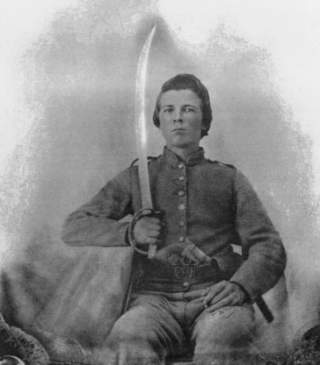


Size, records, and composition
Estimates of how many men served in Confederate forces vary. Contemporary and later studies place the total who served at different times between roughly 750,000 and 1.2 million, reflecting temporary enlistments, militia service, and changes over the war. Accurate totals are difficult because many muster rolls, paperwork, and returns were lost or incomplete; historians frequently cite the problem of incomplete and destroyed records when discussing personnel and casualty figures. The army included regular regiments, volunteer units, cavalry, and artillery, and it drew soldiers from the Confederate states as well as foreign-born immigrants and some Native American units.
Organization and command
Confederate forces were organized into departments, armies, corps, divisions, brigades, and regiments, mirroring many aspects of contemporary military practice. Prominent field formations included the Army of Northern Virginia and the Army of Tennessee. Leadership ranged from the national level down to regimental officers; notable senior commanders included Robert E. Lee (preceded in some accounts by the generic title General) and numerous other corps and division commanders. Command structures adapted during the war to meet manpower losses, changing strategic needs, and political pressure from Confederate civilian authorities.
Campaigns, victories, and defeat
The Confederate Army achieved battlefield successes in many engagements and earned a reputation for fierce fighting and skilled tactical leaders; historians often note that it won many battles against larger Union forces. However, the Confederacy ultimately could not overcome the Union's advantages in population, industrial capacity, and transport infrastructure. These disparities contributed to the Confederate armies' gradual exhaustion and ultimate defeat in 1865.
Surrenders and the end of operations
The collapse of organized Confederate resistance unfolded regionally rather than as a single event. The surrender of Robert E. Lee on April 9, 1865—when he surrendered the remnants of the Army of Northern Virginia to Ulysses S. Grant at Appomattox Court House in Virginia—is widely treated as the symbolic end of the principal Confederate fighting force. Remaining units and officers continued to lay down arms over the following weeks; one of the last Confederate generals to surrender in the field was Stand Watie, in June 1865.
Legacy and historical notes
The Confederate States Army remains a subject of study and debate. Military historians analyze its campaigns, leadership, logistics, and soldier experience, while social and cultural historians examine how its memory has been commemorated and contested. Important considerations for researchers include the limitations of surviving records, regional variations in enlistment and supply, and the army's role in the larger political and social context of the Civil War era.
- Major formations: Army of Northern Virginia, Army of Tennessee
- Key figures: Robert E. Lee, Ulysses S. Grant (opposing Union general)
- Records and research: challenges from lost or incomplete documentation
Questions and answers
Q: When was the Confederate States Army organized?
A: The Confederate States Army was organized in February 1861.
Q: How many soldiers served the Confederacy during the American Civil War?
A: Somewhere between 750,000 and 1.2 million soldiers served the Confederacy in one form or another.
Q: Why are the exact numbers of soldiers who served in the Confederacy not known?
A: The exact numbers are not known because of incomplete and destroyed records.
Q: Did the Confederate Army win many battles during the American Civil War?
A: Yes, the Confederate Army won many battles during the American Civil War.
Q: Why did the Confederate Army lose the war?
A: The Confederate Army could not overcome the Union army's larger numbers and better resources.
Q: When did General Robert E. Lee surrender?
A: General Robert E. Lee surrendered what was left of the Army of Northern Virginia to General Ulysses S. Grant at Appomattox Court House, Virginia on April 9, 1865.
Q: Who was the last Confederate general to surrender?
A: Georgia's Stand Watie became the last Confederate general to surrender on June 23, 1865.
Author
AlegsaOnline.com Confederate States Army Leandro Alegsa
URL: https://en.alegsaonline.com/art/22463
Sources
- nps.gov : "Facts"
- historytoday.com : "Why was the Confederacy Defeated?"
- eyewitnesstohistory.com : "Surrender at Appomattox, 1865"
- thomaslegion.net : "Structure of the Union and Confederate Armies"
- civilwar.org : "Civil War Army Organization"
- civilwarhome.com : "The Armies of the Confederate States in the Civil War"
- patriotshistoryusa.com : "Armies in the War: Militia and Regulars"
- civilwarhome.com : "Ethic Composition of Civil War Forces (C.S & U.S.A.)"
- civilwar.ws : "Confederate Soldiers"