
Condensed matter physics
Branch of physics that studies properties and behavior of densely packed phases of matter — solids and liquids — including emergent collective phenomena and their technological applications.
Overview
Condensed matter physics is the field of physics concerned with the macroscopic and microscopic properties of condensed phases, especially solids and liquids. It focuses on how large numbers of interacting particles produce collective behaviors that are not obvious from the properties of single atoms or molecules. For context see physics and basic notions of matter.
Image gallery
7 Images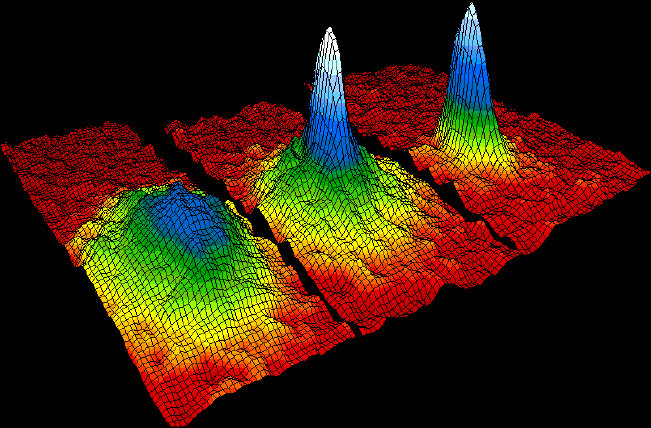




Key concepts and constituents
The subject examines lattices, electronic bands, phonons, defects and excitations such as quasiparticles. It draws on quantum mechanics and statistical mechanics to explain conductivity, magnetism, superconductivity and phase transitions. The role of atomic arrangement and intermolecular forces — how molecules or atoms pack together — is central to the observed properties of solids.
Typical phenomena
- Electronic conduction and semiconductor behavior
- Magnetism and spin ordering
- Superconductivity and superfluidity
- Crystalline and amorphous structures, and soft matter mechanics
History and methods
Condensed matter physics grew from studies of solid materials and the development of quantum theory in the 20th century. It combines experiment (diffraction, transport, spectroscopies, microscopy) with theoretical tools (many-body theory, density functional methods, model Hamiltonians) and numerical simulation.
Applications and significance
Insights from condensed matter physics underpin modern electronics, magnetic storage, photovoltaics and emerging areas such as spintronics and quantum materials. The discipline bridges fundamental science and materials engineering and informs the discovery of new functional materials.
Relations and distinctions
While related to materials science and chemical physics, condensed matter physics emphasizes fundamental mechanisms and emergent collective effects rather than solely applied manufacture. Its methods and concepts also connect to nanoscience and statistical physics.
Related articles
Author
AlegsaOnline.com Condensed matter physics Leandro Alegsa
URL: https://en.alegsaonline.com/art/22433