
A Connecticut Yankee in King Arthur's Court
Mark Twain's 1889 satirical novel in which a 19th-century American engineer is transported to Arthurian Britain; combines early time-travel fiction, social satire, and reflections on technology and power.
Overview
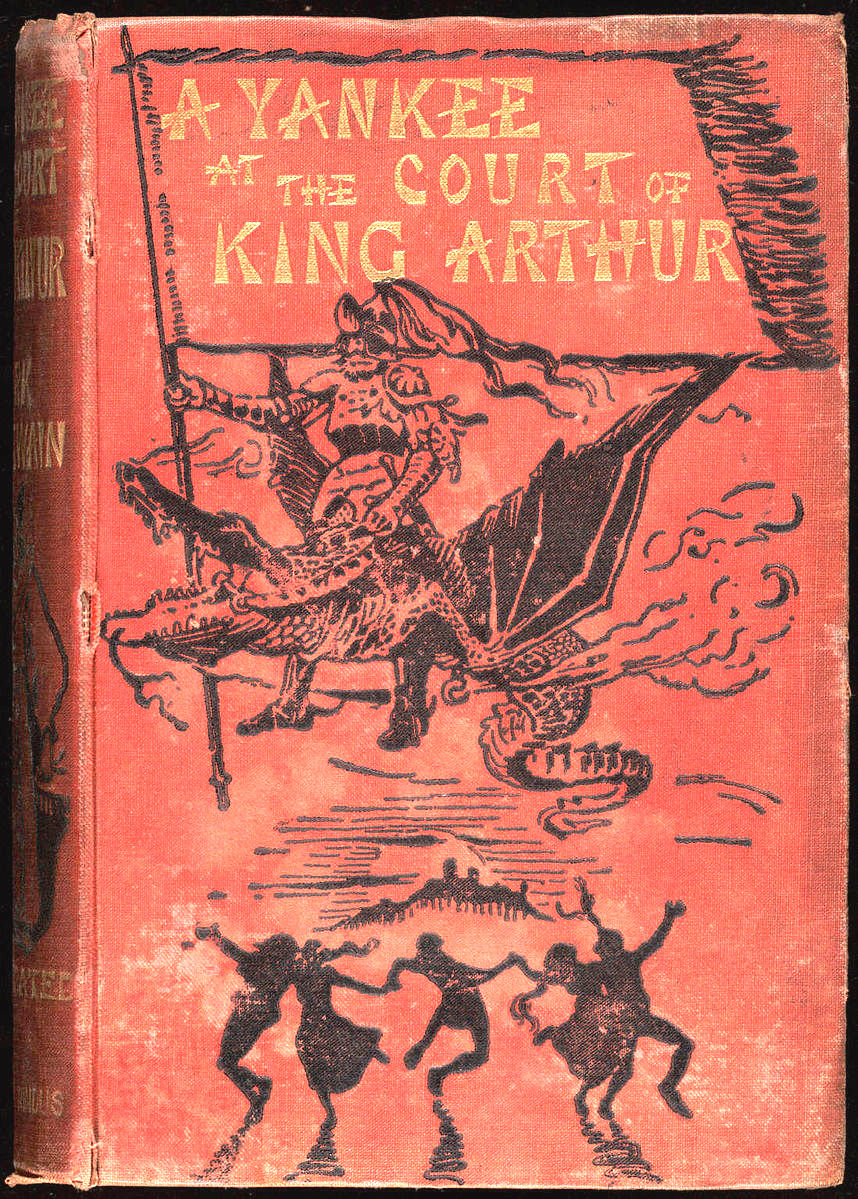
A Connecticut Yankee in King Arthur's Court is a novel by Samuel Clemens, who wrote under the pen name Mark Twain. First published in book form in 1889, it tells the story of a resourceful 19th-century American who finds himself in the Britain of King Arthur. The book is often cited as one of the early English-language works to deploy time travel as a central plot device and is widely read as a satirical critique of romanticized chivalry and entrenched institutions. For edition information see this entry and for the author see Mark Twain.
Image gallery
7 Images



Plot and main characters
The protagonist, commonly called Hank Morgan or "the Yankee," is a mechanic and foreman from Connecticut who wakes up in a medieval court. He uses his knowledge of 19th-century science, engineering and organization to set up workshops, printing presses and basic factories, and to challenge feudal and clerical authority. The narrative mixes episodes of invention, political maneuvering, and comic misadventure as Hank attempts to modernize the realm.
Themes and features
Twain combines social satire with speculative elements. Key themes include the contrast between technological progress and superstition, the critique of monarchy and the church, and questions about violence, reform, and the unintended consequences of modernization. The novel pairs broad humor with darker moments that probe power and responsibility.
- Technology vs. Tradition: practical inventions confront medieval customs.
- Satire of Authority: lampooning aristocracy and clerical power.
- Proto–Science Fiction: early use of temporal displacement to examine society.
Publication, reception and legacy
Published in 1889, the work attracted both praise and controversy for its tone and political views. Scholars and readers have debated its stance toward imperialism, reform, and social engineering. Its blend of humor, social criticism, and speculative conceit influenced later writers interested in time travel and social satire; for commentary and critical resources see publication notes and broader analyses at critical studies.
Notable distinctions
The novel stands out in Twain's output for its sustained use of a speculative premise to interrogate modernity. It remains widely taught and adapted in various media, and is often referenced in discussions about how literature imagines technological change and the encounter of different cultures and eras.
Tags
Related articles
Author
AlegsaOnline.com A Connecticut Yankee in King Arthur's Court Leandro Alegsa
URL: https://en.alegsaonline.com/art/22