
Commander-in-Chief, India (British military command)
Senior military officer who led the British administration's armed forces in India (India Command). Headed GHQ India and oversaw the British Indian Army, colonial defence and expeditionary contributions until 1947.
Overview
The Commander-in-Chief in India was the senior military officer responsible for directing the British administration's armed forces on the Indian subcontinent. As the head of India Command, the holder exercised operational control over the British Indian Army and its supporting services, led strategic planning for the colony's defence, and coordinated large-scale troop movements and logistics across the region.
Image gallery
10 Images


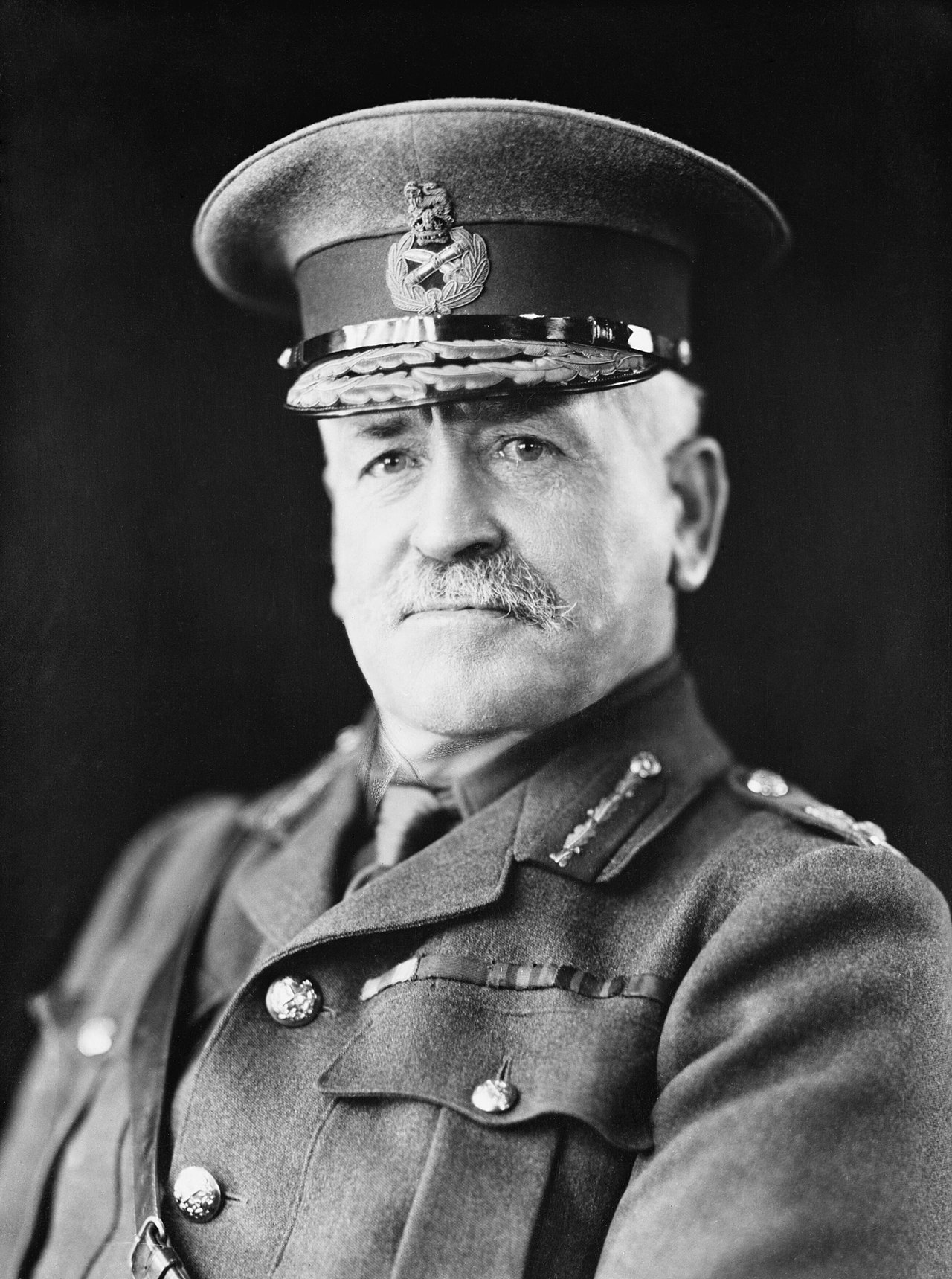


Organization and duties
The Commander-in-Chief led a staff collectively known as India Command, whose headquarters were commonly referred to as General Headquarters India (GHQ India). Duties typically included:
- overall command and administration of British Indian land forces;
- training, recruitment and officer appointments;
- planning and executing frontier defence and internal security operations;
- preparing and dispatching expeditionary forces for imperial commitments abroad;
- managing logistics, transport and supply across a vast and diverse theatre.
Origins and development
The office evolved from earlier military arrangements under the East India Company and later developed under Crown rule following administrative changes after 1858. Over time the Commander-in-Chief's responsibilities expanded with the professionalization of the Indian Army and the creation of centralized staff functions at GHQ India. During the two World Wars the command played a major role in mobilizing and sending large numbers of Indian and British troops to other theatres.
Notable features and distinctions
- The position combined operational command with substantial administrative responsibilities across a multi-ethnic, geographically wide force.
- It was distinct from commanders in Britain and from purely local or provincial military authorities—acting as the senior military voice within the colonial government structure.
- Historically, the Commander-in-Chief interacted closely with civilian authorities such as the Viceroy and ministries in London, reflecting the dual military‑civil character of imperial governance.
Legacy
The role ceased to exist in its colonial form with the end of British rule in 1947. After independence, military command responsibilities were transferred to the newly sovereign states, which established their own national chiefs and defence structures. The institutional practices, training systems and staff arrangements developed under India Command influenced the post‑colonial armies and continuing regional defence arrangements.
Related articles
Author
AlegsaOnline.com Commander-in-Chief, India (British military command) Leandro Alegsa
URL: https://en.alegsaonline.com/art/21940