
Come See the Paradise (1990 film)
A 1990 historical drama directed by Alan Parker about an interracial romance and the forced internment of Japanese Americans during World War II.
Overview
Come See the Paradise is a 1990 historical drama film directed by Alan Parker. The story follows an interracial romance set against the upheaval of World War II in the United States and examines the experience of Japanese American families who were forcibly relocated and incarcerated. The film brought attention to a painful chapter of American history through a personal, dramatic narrative. For film details see official information.
Image gallery
1 Image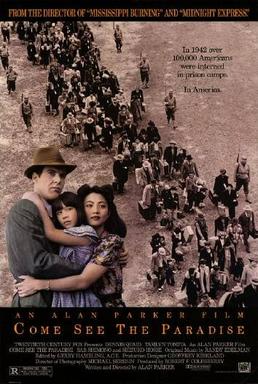
Plot and characters
The central plot follows an American man and a Japanese American woman whose relationship is tested after the attack on Pearl Harbor. As wartime suspicion grows, members of Japanese ancestry on the West Coast face exclusion orders and removal from their homes. The film dramatizes family separation, loss of property and the daily life inside relocation centers, using individual characters to convey larger social consequences.
Historical context
The events portrayed connect to Executive Order 9066, issued in 1942, which authorized military authorities to exclude people from designated areas. As a result, roughly 120,000 people of Japanese descent -- many U.S. citizens -- were sent to assembly centers and incarceration camps. The movie situates personal stories within this legal and political framework and encourages viewers to reflect on civil liberties during wartime. More on the historical background can be found at historical resources.
Themes and reception
The film explores themes of racism, loyalty, identity, and the tension between national security and individual rights. Critics and audiences praised its intention to illuminate an often-overlooked episode, while some reviewers argued the romantic storyline simplified complex historical realities. Nonetheless, it remains a reference point in popular culture for discussions about the wartime treatment of Japanese Americans.
Notable facts
- Released in 1990 and directed by Alan Parker.
- Uses a personal drama to examine broader civil-rights issues.
- Has been used in educational contexts to introduce students to the internment period.
The film continues to be cited in conversations about memory, justice and how nations confront difficult parts of their past.
Related articles
Author
AlegsaOnline.com Come See the Paradise (1990 film) Leandro Alegsa
URL: https://en.alegsaonline.com/art/21896
Sources
- rogerebert.suntimes.com : "Come See The Paradise"