
Combinatorial optimization: theory, problems, and methods
Study of selecting the best discrete configuration from a finite or countable set. Covers common problems (TSP, MST, matching), algorithmic methods, complexity, and applications.
Combinatorial optimization is the study of selecting an optimal object from a discrete collection of alternatives. It lies at the intersection of discrete mathematics, computer science and operations research. Typical tasks include finding an ordering, subset, or assignment that minimizes cost or maximizes benefit under given constraints. The field formalizes such tasks as optimization over a finite set of feasible solutions or an implicitly defined search space represented by combinatorial structures.
Image gallery
1 Image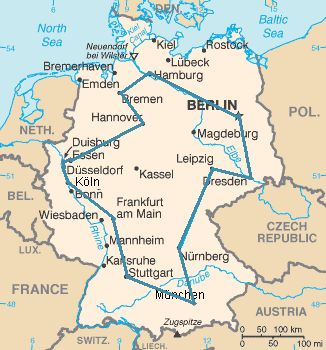
Core concepts
Problems are defined by a domain of feasible solutions, an objective function that assigns a value to each solution, and constraints that restrict feasible choices. Solution spaces are often represented by graphs, hypergraphs, matrices, or combinatorial objects such as permutations and sets. Many formulations are expressed as integer programs; relaxations to continuous forms, notably linear programming, play a central role in design and analysis.
Common problem classes and examples
- Path and tree problems: shortest path, minimum spanning tree, and network flows in a graph.
- Routing and ordering: the Travelling Salesman Problem (TSP) and vehicle routing.
- Matching and assignment: bipartite matching and assignment problems.
- Packing and covering: knapsack, bin packing, set cover.
- Scheduling: allocating tasks to machines to optimize makespan or cost.
Algorithms and techniques
Exact methods include dynamic programming, branch and bound, and cutting-plane techniques from integer programming. Greedy algorithms and polynomial-time procedures solve several important cases (for example, Kruskal's and Prim's algorithms for minimum spanning trees). For NP-hard problems, approximation algorithms, heuristics, and metaheuristics (local search, simulated annealing, genetic algorithms) are widely used. Linear and convex relaxations provide bounds and guide branching decisions.
History and development
Roots of combinatorial optimization trace back to classical problems such as Euler's bridges and early network problems. The formalization grew through the twentieth century with contributions from graph theory, algorithm design, and mathematical programming. Over time the discipline has unified discrete modeling, complexity analysis, and practical algorithm engineering.
Applications and significance
Combinatorial optimization underpins logistics, telecommunications, scheduling, electronic design automation, and bioinformatics. Solutions reduce costs, improve resource use, and enable efficient operation of infrastructure. Practical success often relies on problem-specific models, relaxation techniques, and a blend of exact and approximate methods to handle real-world scale.
For introductions and further reading see surveys and textbooks that cover fundamentals, algorithmic paradigms, and case studies; many resources also explore links to the theory of feasible sets and advanced polyhedral methods. Research continues on stronger approximations, faster heuristics, and tighter relaxations to bridge theory and large-scale practice.
Notable features include the contrast between polynomially solvable special cases and widely occurring NP-hard instances, and the frequent use of continuous relaxations and cutting-plane ideas to tackle discrete structure.
For algorithmic implementations and software tools consult compendia and online repositories that collect benchmarks and solver interfaces for integer and combinatorial optimization problems.
Additional background on graph-based models and algorithmic techniques is available in dedicated treatments of graphs and networks at introductory and advanced levels; see standard references for proofs, pseudocode, and example applications.
Further reading: algorithm textbooks, specialized monographs, and review articles summarize theoretical foundations and practical methods for tackling combinatorial optimization challenges in science and industry. For more technical material consult surveys linked in academic resources and lecture notes.
Related topics include complexity theory, algorithmic approximability, and polyhedral combinatorics, each of which contributes tools and perspectives to model and solve discrete optimization problems.
Relevant introductions and tutorials can be found in comprehensive educational materials and open courses that present both classical algorithms and modern solver-based approaches to combinatorial optimization.
See also: foundational methods in optimization and network design, with pointers to applied domains and software tools in the literature.
Explore further links for focused topics and implementations: minimum spanning tree resources, graph algorithm surveys, and practical guides using linear programming.
For mathematical background on discrete structures and proof techniques, consult introductory material on discrete mathematics and combinatorics, and applied chapters on modeling optimization problems as integer programs and network flows.
For case studies, benchmarks, and solver comparisons see collections of problem instances and computational results maintained by the research community and open repositories.
To learn how combinatorial optimization is applied in scheduling, routing, and design, review application-focused texts and industry whitepapers that illustrate model formulation and algorithm selection.
Finally, note that many modern solvers combine discrete and continuous methods; understanding both perspectives is useful for research and applied work in combinatorial optimization.
Related articles
Author
AlegsaOnline.com Combinatorial optimization: theory, problems, and methods Leandro Alegsa
URL: https://en.alegsaonline.com/art/21871