
Combinatorics: concepts, methods, and applications
An introduction to combinatorics covering its main themes, typical problems and methods, historical notes, and key applications in mathematics, computer science, and related fields.
Combinatorics is the area of mathematics concerned with counting, arranging, and analyzing discrete structures. It is often described as a branch of mathematics that focuses on problems involving finite or countably infinite collections, and it sits at the heart of discrete mathematics. At its simplest, combinatorics asks how many ways a configuration can occur; it also asks whether particular arrangements exist and how to construct them.
Image gallery
2 Images
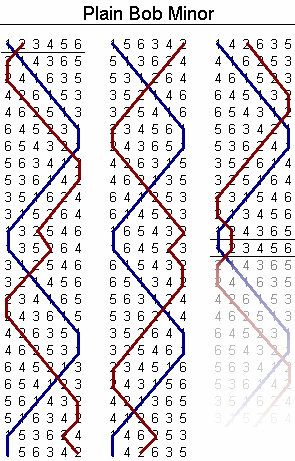
Core concepts and types of problems
Typical objects of study include permutations and combinations, set partitions, integer compositions, combinatorial designs, and networks studied in graph theory. Problems range from straightforward enumeration to existence and optimization questions. Many combinatorial questions can be phrased for finite collections or for classes of infinite discrete structures where countability matters.
Methods and techniques
Combinatorial reasoning uses a toolbox of methods. Common techniques include:
- Direct counting and basic formulas for permutations and combinations.
- The principle of inclusion–exclusion for overlapping conditions.
- Bijections and combinatorial proofs that translate one counting problem into another.
- Recurrence relations and generating functions to encode sequences.
- Probabilistic methods and extremal arguments for existence results.
Brief historical perspective
As a discipline, combinatorics has roots in ancient enumeration problems but gained modern form through work in the 18th–20th centuries. Euler’s analysis of networks and later investigations into designs, partitions, and graph problems helped shape the field. Influential 20th-century developments formalized techniques (for example probabilistic and algebraic methods) that expanded combinatorics’ reach.
Applications and significance
Combinatorics is essential in computer science, coding theory, cryptography, and operations research. It underlies algorithm analysis, network design, error-correcting codes, and combinatorial optimization. Concrete examples include counting distinct words or arrangements, designing experiments, and solving scheduling or routing tasks.
Distinctions and notable facts
Combinatorics overlaps with algebra, geometry and probability but retains a distinct focus on discrete structure. It ranges from elementary puzzles to deep theorems in Ramsey theory and extremal combinatorics. As George Pólya and others have emphasized, the subject blends enumeration, existence, and constructive methods into a unified approach to discrete problems.
Further reading and introductions can be found in general resources and textbooks that survey enumerative, extremal, algebraic and probabilistic approaches; see also links introducing foundational topics: overview, finite sets, countable structures, discrete math context, and graph theory connections.
Related articles
Author
AlegsaOnline.com Combinatorics: concepts, methods, and applications Leandro Alegsa
URL: https://en.alegsaonline.com/art/21872