
Columbia County, Pennsylvania: overview, history, communities, and facts
County in northeastern Pennsylvania with Bloomsburg as its county seat. Established in 1813, noted for Susquehanna River towns, mixed economy, and regional history in timber and coal.
Columbia County is a county in the Commonwealth of Pennsylvania, located along the middle Susquehanna River. According to the 2010 census, the population was about 67,295. Its administrative center is the borough and county seat of Bloomsburg, notable as Pennsylvania's only incorporated "town." The county combines river valleys, agricultural land, small manufacturing centers and forested ridges.
Image gallery
10 Images


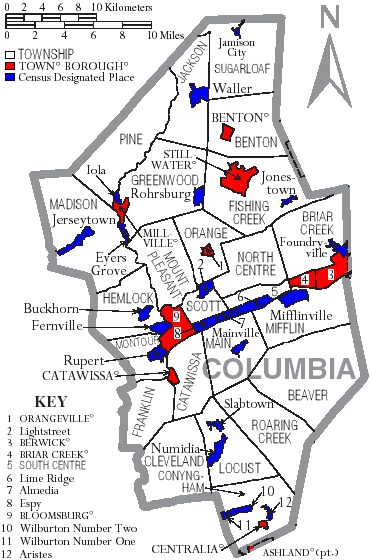
Geography and communities
The landscape is shaped by the Susquehanna and its tributaries, rolling hills and mixed woodlands. Principal population centers include Bloomsburg, Berwick, Catawissa and Benton, together with numerous townships and villages. The county supports farming in river valleys, residential settlements along state roads and recreational areas in forested uplands. Local transportation links connect communities to neighboring counties and regional markets.
History and development
Columbia County was created in 1813 during the westward settlement and administrative reorganization of Pennsylvania's interior. In the 19th and early 20th centuries the county economy grew around timber, agriculture, mills, and industries that used river and rail transport. Towns developed at river crossings, mill sites and along rail lines, leaving a legacy of small urban centers and historic downtowns.
Economy, institutions and culture
The modern economy mixes agriculture, light manufacturing, retail trade, education and services. Bloomsburg University is an important local institution that contributes to the cultural life and economy of the county, bringing academic programs, arts events and seasonal students. Annual community events, including agricultural fairs and local festivals, celebrate regional traditions and draw visitors from across the region.
Government, services and recreation
County government is administered by elected commissioners and other county officers, while boroughs and townships manage municipal services. Outdoor recreation is popular along the Susquehanna and in state game lands and parks: activities include fishing, boating, hiking and hunting. Historic sites, small museums and community organizations preserve and interpret local history.
Further reading and resources
- Official county government and services: Columbia County
- State-level context and resources: Pennsylvania resources
- Demographic data and historical census records: 2010 census
- County seat information and local administration: Bloomsburg administration
- Community pages and regional guides: local community pages
Related articles
Author
AlegsaOnline.com Columbia County, Pennsylvania: overview, history, communities, and facts Leandro Alegsa
URL: https://en.alegsaonline.com/art/21791
Sources
- factfinder2.census.gov : "American FactFinder"