
Colorimetric analysis: principles, equipment, and applications
Colorimetric analysis determines concentration by measuring color intensity after a reagent reacts with a sample. Used in clinical labs, environmental testing and industry, often automated for routine work.
Colorimetric analysis is a laboratory technique for estimating the concentration of a target substance by producing a coloured product and measuring its intensity. The target may be a single chemical element or a more complex chemical compound. The method is applicable to both organic compounds and inorganic compounds, and it can be carried out with direct chemical reagents or with enzymes that convert analytes into coloured species. Routine implementations are common in medical laboratories and in industrial or environmental monitoring.
Image gallery
2 Images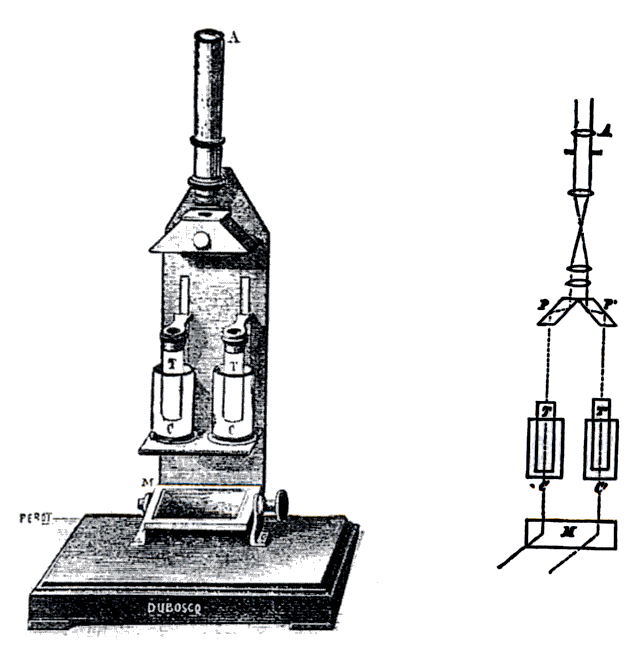

Principles
The basic principle is that the intensity of light absorbed or transmitted by a coloured solution is related to the amount of absorbing species present. Quantitative colorimetric methods usually rely on the Beer–Lambert relationship: absorbance increases proportionally with concentration and path length under defined conditions. Instruments measure either absorbance or transmitted light at a chosen wavelength; a colorimeter is the typical benchtop device, while spectrophotometers provide wavelength selection and higher precision.
Typical equipment and workflow
Common equipment includes a colorimeter or photometer, transparent cuvettes, stable colour reagents, calibration standards and routine lab supplies. A simplified workflow is:
- collect and, if needed, pre-treat the sample (dilution, filtration, pH adjustment);
- add a reagent that reacts to form a coloured complex or product; incubation may be required;
- measure the absorbance or transmission at a defined wavelength against a blank;
- determine concentration by comparing to a calibration curve prepared from standards.
Applications and examples
Colorimetric tests are widely used because they are simple and inexpensive. Clinical chemistry uses colour reactions for analytes such as glucose (often via an enzymatic step), bilirubin, uric acid and others. Environmental and industrial uses include determination of metal ions (iron, copper), nutrients (phosphate, nitrate), disinfectant residuals (chlorine) and indicators used in water treatment. Many field test kits are colorimetric, providing rapid, semi-quantitative results for screening.
Advantages, limitations and quality considerations
Advantages include low cost, straightforward procedures and suitability for high-throughput automation (for example AutoAnalyzer or flow injection systems). Limitations arise from interferences (coloured or turbid samples, matrix effects), reagent instability, limited dynamic range and dependence on accurate calibration. Proper blanking, use of matrix-matched standards, and sample clean-up help reduce bias. Instrument maintenance and routine quality controls are essential for reliable results.
History and development
Color comparison and visual matching of coloured solutions predate modern instrumentation. The development of photometric devices and the formalization of the relationship between light and concentration transformed colorimetry into a quantitative science. Subsequent advances—stable synthetic reagents, enzyme-based assays, filter photometers and automated analyzers—extended its use across medicine, environmental science and industry. Despite more complex analytical options, colorimetric methods remain valuable for their accessibility and adaptability.
When choosing a colorimetric method, consider sensitivity requirements, potential interferences, reagent availability and whether automation is desirable for throughput. Proper method validation and routine calibration keep colorimetric analysis a practical and trustworthy tool for many routine determinations.
Related articles
Author
AlegsaOnline.com Colorimetric analysis: principles, equipment, and applications Leandro Alegsa
URL: https://en.alegsaonline.com/art/21755