
Cobh: Seaport town in County Cork, Ireland
Cobh is a historic seaport on Great Island in Cork Harbour, County Cork, Ireland. Known as Queenstown (1849–1920), it was the Titanic's last port and remains a major maritime and heritage destination.

Overview: Cobh is a coastal town on Great Island at the mouth of Cork Harbour. Long spelled "Cove" in English, it was renamed Queenstown in 1849 and reverted to Cobh in 1920. Today it is a prominent tourist and seaport that draws visitors for its maritime history and harbour scenery. The town sits in County Cork, in Ireland, and serves as an entry point for cruise ships and regional ferries.
Image gallery
10 Images

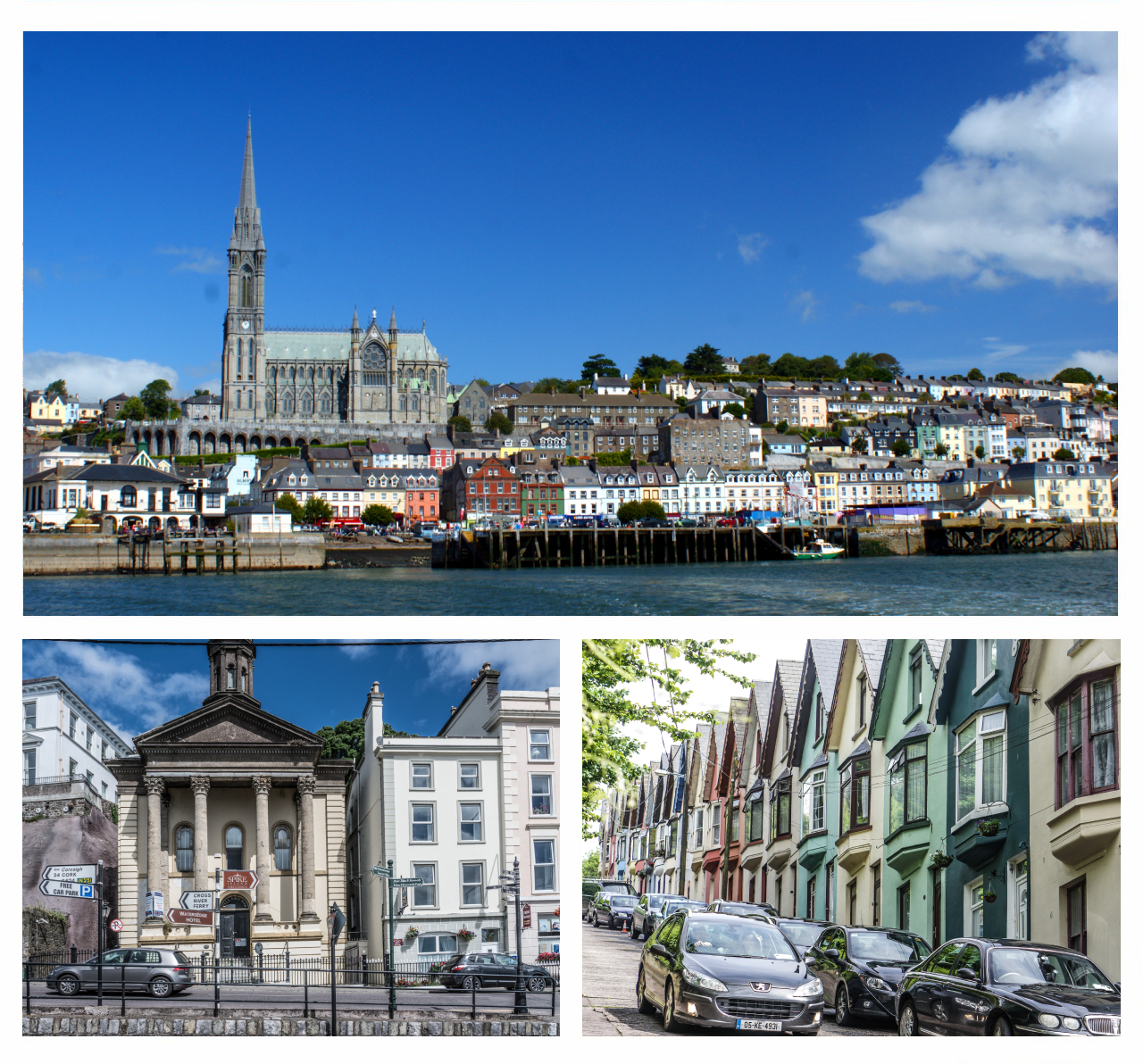


Geography and townscape
Cobh occupies an elevated position overlooking the harbour with a compact town centre of terraces, shops and waterfront promenades. St Colman's Cathedral dominates the skyline; narrow streets lead down to the quays where passenger and freight services operate. The harbour setting has shaped the town's economy, built environment and role as a gateway to transatlantic routes.
History
The site has been an important harbour for centuries. The anglicised name "Cove" reflected its sheltered bay; the town was renamed Queenstown after Queen Victoria's 1849 visit and later restored to the Irish form Cobh during the early 20th century. In the 19th and early 20th centuries Cobh was a major embarkation point for emigrants leaving Ireland for North America. It is also remembered for several maritime events: it was the last port of call for the RMS Titanic in April 1912, and after the sinking of the RMS Lusitania in 1915 many survivors and victims came ashore here.
Maritime role and tourism
Cobh remains an active maritime hub. Modern cruise ships use the port and passengers visit museums, memorials and the preserved streetscape to learn about emigration, naval history and shipwrecks. Attractions include a Titanic-related exhibition, maritime heritage centres, and guided harbour tours. Local festivals and regattas celebrate the town's long seafaring traditions.
Notable features and significance
- Historic renaming: known as Queenstown from 1849 to 1920.
- Last port of the Titanic, a key point in transatlantic maritime history.
- Connections to the Lusitania disaster and First World War wartime activity.
- Architectural landmark: St Colman's Cathedral overlooking the harbour.
- Current economy: tourism, heritage attractions and port services.
Cobh's combination of dramatic harbour location, well‑documented emigration history and preserved Victorian streetscapes makes it a focal point for visitors interested in maritime heritage and Irish social history. For practical visitor information and local resources see local tourism and port guides.
Related articles
Author
AlegsaOnline.com Cobh: Seaport town in County Cork, Ireland Leandro Alegsa
URL: https://en.alegsaonline.com/art/21295
Sources
- irishcentral.com : "Remarkable Facts about Cobh"
- britannica.com : Cobh