
Abbott and Costello Go to Mars
1953 American comic science-fiction film starring Bud Abbott and Lou Costello, directed by Charles Lamont. A product of 1950s genre-mixing, remembered for its slapstick, period special effects and cult appeal.
Overview
Abbott and Costello Go to Mars is a 1953 American comic film that blends slapstick with midcentury science fiction motifs. Directed by Charles Lamont and released by Universal, it places the popular double act in an outlandish premise typical of postwar genre mash-ups: the pair become involved in a space-related adventure that allows the movie to spoof both science and spectacle.
Image gallery
1 Image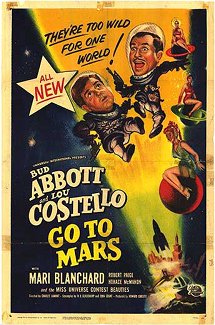
Principal cast and characters
The film features the longstanding comedy team of Bud Abbott and Lou Costello alongside a supporting ensemble. Principal credited performers include Mari Blanchard, Robert Paige and Dudley Dickerson. Contemporary records and later listings supply full cast details and occasional discrepancies; for additional cast references see filmographic databases and archives here.
Style, production and themes
Produced in the early 1950s, the movie exemplifies several period features: modest budgets, studio-era set work, and a comic reliance on sight gags, rapid-fire banter and situation comedy. It mixes recognizable science-fiction trappings—rockets, madcap scientific experiments and exotic destinations—with the routine physical comedy that made Abbott and Costello popular in radio, vaudeville and earlier films. The visual effects are deliberately simple by modern standards, reflecting available techniques and the film's emphasis on humor over scientific realism.
Reception and cultural place
Upon release the film drew mixed reactions: audiences familiar with Abbott and Costello appreciated the duo's chemistry, while critics noted the lightweight plot and gag-driven structure. Over time the picture has remained of interest to collectors and historians as an example of how mainstream comedies appropriated science-fiction themes during the 1950s boom in space-related entertainment. It also illustrates how established comedy teams adapted to changing popular tastes and new media markets, including television and drive-in exhibition.
Notable facts and distinctions
- Director Charles Lamont worked with Abbott and Costello on multiple studio comedies and was known for efficient, actor-focused productions.
- The picture is often cited when discussing the crossover of comic acts into genre films, a trend that yielded both novelty and commercial appeal in its era.
- Modern audiences and retrospectives treat the film as both a curiosity and a document of 1950s popular culture rather than a landmark of science fiction cinema.
Further information
For more on the film's genre context and production background, consult contemporary reviews, studio records and film reference works that cover Abbott and Costello's career and 1950s American genre cinema. Additional online resources on the movie and its place in the duo's filmography are available through genre databases and archive listings genre entry and archival sources.
Tags
Related articles
Author
AlegsaOnline.com Abbott and Costello Go to Mars Leandro Alegsa
URL: https://en.alegsaonline.com/art/323
Sources
- afi.com : Abbott and Costello Go to Mars