
Civil Rights Act of 1964
A landmark U.S. federal law that outlawed discrimination in public life and employment, ended legal segregation in many public places, and established new enforcement tools to advance equal protection.
Overview
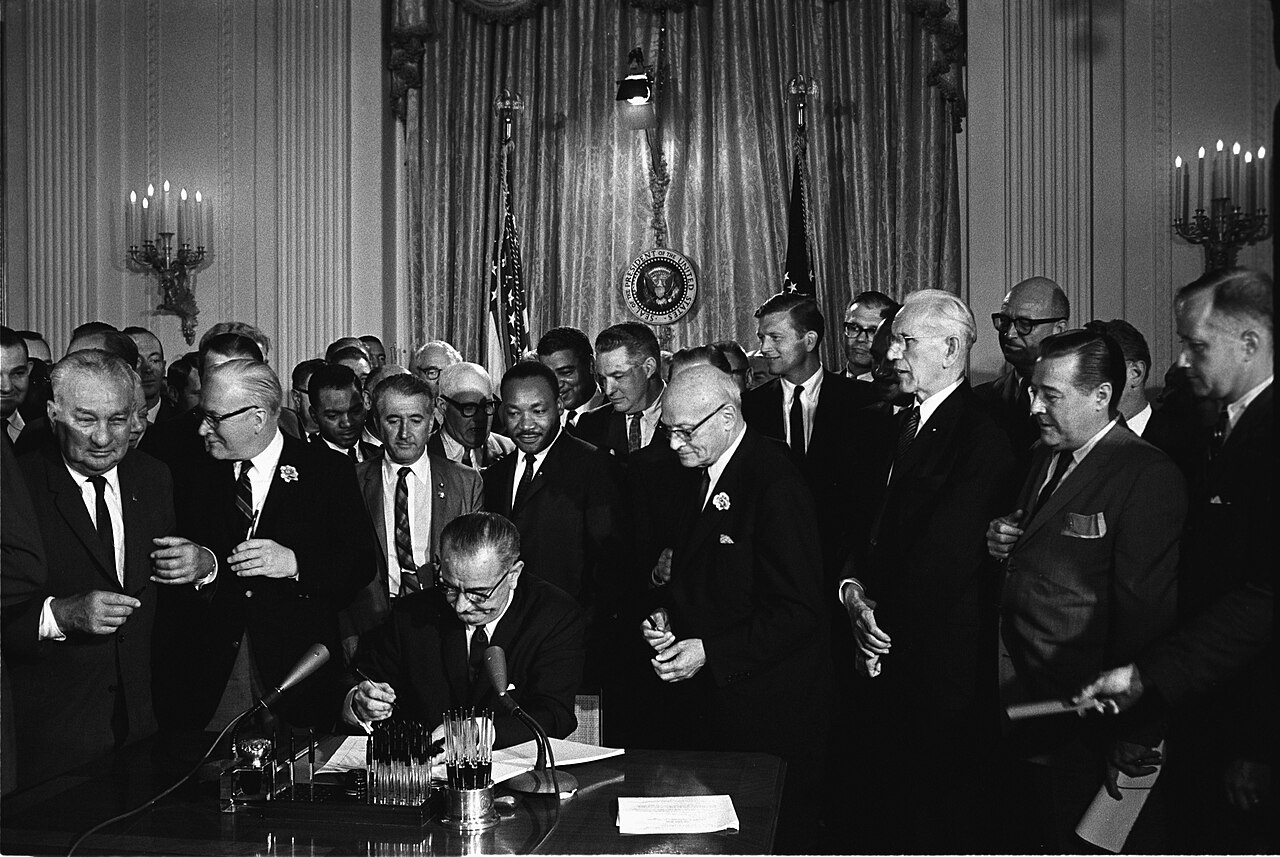
The Civil Rights Act of 1964 is a landmark United States federal law that transformed the legal landscape for equality. Enacted during the civil rights movement and signed by President Lyndon B. Johnson, it made discrimination unlawful in a range of settings and provided federal authority to enforce equal treatment. For the full statutory language see the law's text and for context about the nation where it was enacted see United States historical sources.
Image gallery
10 Images



Main provisions and structure
The Act is organized into titles that address different areas of public life. Major provisions commonly discussed include:
- Public accommodations — prohibitions on discrimination in hotels, restaurants and other public facilities.
- Employment — prohibitions against hiring, firing, or other workplace discrimination; this led to the creation of administrative enforcement mechanisms such as the Equal Employment Opportunity Commission.
- Education and desegregation — measures to end racial segregation in public schools and institutions receiving federal funds.
- Federal enforcement — authority for the federal government to bring suits and seek injunctions to enforce the statute.
History and passage
The Act was the result of years of activism, legal challenges, and legislative negotiation during the 1950s and 1960s. Momentum from protests, legal campaigns, and public pressure pushed Congress to act; the bill overcame prolonged debate and procedural obstruction in the Senate before being signed into law in the mid-1960s. For background on the era and legislative process consult historical summaries at civil rights resources.
Impact and enforcement
After its passage, the statute produced immediate and long-term effects: courts and federal agencies used it to dismantle legal segregation in many public settings and to open employment opportunities that had been restricted. Enforcement relies on private lawsuits, agency actions, and occasionally federal litigation led by the Department of Justice. Its employment provisions, in particular, shaped modern workplace civil-rights law.
Notable facts and continuing relevance
The Act prohibits discrimination on the basis of race, color, religion, sex, and national origin — categories that remain central to civil-rights law and policy debates. Over time, courts and Congress have interpreted and amended its scope; for example, subsequent rulings and legislation clarified application to gender and workplace harassment. Contemporary discussions about equal treatment frequently trace legal doctrine and remedies back to this Act. For practical guides and summaries see educational materials and government overviews.
Related articles
Author
AlegsaOnline.com Civil Rights Act of 1964 Leandro Alegsa
URL: https://en.alegsaonline.com/art/20599