
Cinematography: Art and Craft of Motion-Image Photography
Cinematography is the art and technique of recording moving images for film, television and digital media, combining camera, lighting and compositional choices to shape cinematic storytelling.
Overview
Cinematography is the process of capturing photographic images that move. Related to still photography, it shares concerns about light, composition and exposure but adds time, motion and sequence as central elements. The visual choices made in cinematography define how a story is seen and felt by an audience.
A professional responsible for these choices is commonly called a cinematographer or director of photography (DoP). Working closely with the director, production designer and camera crew, the DoP plans camera placement, lens selection, lighting setups and camera movement to support the film's tone and narrative objectives.
Image gallery
8 Images



Techniques and tools
Cinematography combines creative decisions and technical equipment. Key components include:
- Camera systems: film or digital cameras and their sensors.
- Lenses: focal length, depth of field and optical characteristics shape perspective.
- Lighting: quality, direction and color temperature control mood and visibility.
- Camera movement: handheld, dolly, crane, stabilizers and more introduce motion.
- Frame rate and aspect ratio: affect motion rendering and image proportions.
History and development
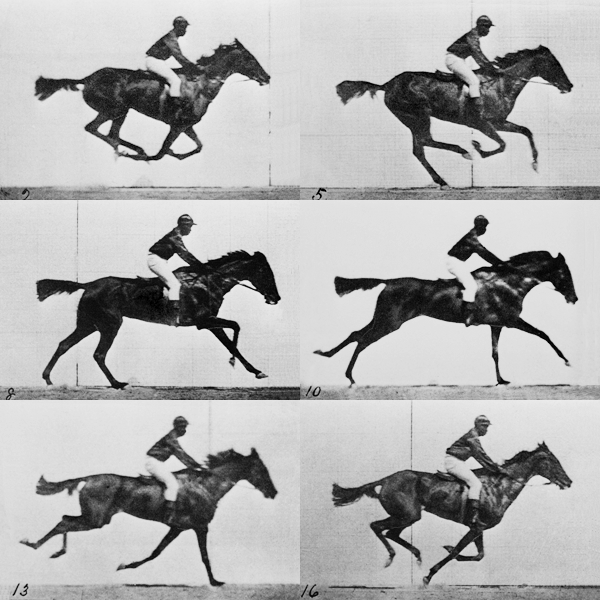
From the earliest motion experiments to contemporary digital workflows, cinematography has evolved through major shifts: the move from silent to sound films, the introduction of color and widescreen formats, and, more recently, the adoption of digital sensors, high-resolution capture and computer-assisted lighting and compositing. Each technical advance broadened expressive possibilities.
Applications and importance
Cinematography is essential across narrative film, documentaries, television, advertising and music videos. Visual strategies—such as lighting contrasts, lens choice and camera choreography—help convey character, pace and emotion. Strong cinematography can transform a script into a memorable visual experience.
Notable distinctions: cinematography differs from still photography by emphasizing temporal continuity and editing, and from directing by focusing specifically on image creation rather than overall storytelling choices. Training paths include film schools, technical apprenticeships and hands-on production experience; many cinematographers combine technical expertise with a clear visual sensibility.
Related articles
Author
AlegsaOnline.com Cinematography: Art and Craft of Motion-Image Photography Leandro Alegsa
URL: https://en.alegsaonline.com/art/20406