
Cincinnati Reds
One of professional baseball’s oldest franchises, founded 1869 in Cincinnati. Five-time World Series champions, famed for the 1970s “Big Red Machine,” with a long local tradition and loyal regional fan base.
The Cincinnati Reds are a professional baseball franchise based in Cincinnati, Ohio. The club traces its identity to the 19th century and is widely remembered as one of the sport’s oldest continuously identified teams. The organization originated as the Cincinnati Red Stockings in 1869, a club often cited as the first openly all‑professional baseball team, and later adopted the modern name that endures today.
Image gallery
10 Images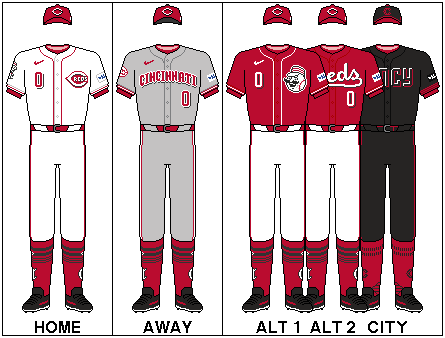



Overview and identity
The Reds’ visual identity centers on the color red, a distinctive "C" logo and traditions that reflect the club’s long history in the Ohio River valley. The team is a member of Major League Baseball’s National League and competes in the National League Central Division. Home games are played at Great American Ballpark, which opened in 2003 on Cincinnati’s riverfront and provides modern amenities, dedicated fan areas and museum exhibits celebrating the club’s past. The franchise maintains a broad regional following across southwestern Ohio, Kentucky and Indiana.
History and milestones
After forming in 1869 as the Red Stockings, the club’s lineage continued through professional reorganizations in the late 19th century and into the modern major league era. The franchise lists multiple major championships among its milestones, including World Series titles in 1919, 1940, 1975, 1976 and 1990. The 1919 series is frequently discussed in historical accounts because of larger controversies affecting baseball that year; later championships—especially those in the 1970s—are central to how fans remember the club’s competitive peaks.
Notable eras and personalities
The most celebrated period in club history came in the 1970s, when a core group of players and a strong supporting roster built teams often called the "Big Red Machine." That era featured Hall of Fame performers and stars such as Johnny Bench, Joe Morgan and Tony Pérez, and was managed by Sparky Anderson. Across different decades the Reds have featured other prominent figures: Pete Rose, a prolific hitter closely associated with Cincinnati (whose later ban from baseball for gambling remains a major part of his public legacy); Barry Larkin, a standout shortstop and later Hall of Famer; and the hard‑throwing bullpen known on the 1990 championship club for its power arms. These players and staffs contributed to several of the franchise’s most memorable seasons and shaped its reputation for offense and competitive depth.
Ballparks and facilities
- Crosley Field: the Reds’ intimate home through much of the early 20th century, remembered for its neighborhood setting and old‑style ballpark feel.
- Riverfront Stadium (also called Cinergy Field): a multi‑purpose venue used from 1970 until 2002 that hosted several postseason teams and large crowds during the franchise’s modern rise.
- Great American Ballpark: the club’s riverfront home since 2003, designed to enhance fan sightlines and game‑day amenities and to provide space for museum displays and community events.
Rivalries and competition
Throughout its history the team has developed competitive rivalries common to regional and divisional alignment. The Reds have often had heated matchups with other National League clubs in the Midwest and bordering regions; these rivalries have shifted over time with realignments and league changes but remain important to season narratives and local interest.
Community, traditions and legacy
Beyond on‑field results, the Reds have a long cultural presence in Cincinnati and the surrounding region. Opening Day traditions, longstanding fan rituals, youth baseball programs and the club’s acknowledgment of its early professional roots contribute to a local sports identity that reaches back more than a century. The team maintains a Reds Hall of Fame and Museum presence at its ballpark to honor players, managers and contributors who have shaped the franchise. Collectively, the franchise’s historic continuity, celebrated eras such as the Big Red Machine and multiple championships ensure the Cincinnati Reds remain a frequent subject in discussions of baseball history and American sports culture.
Related articles
Author
AlegsaOnline.com Cincinnati Reds Leandro Alegsa
URL: https://en.alegsaonline.com/art/20392