
Chert — a hard silica rock (flint, jasper, agate)
Chert is a dense, fine‑grained sedimentary rock made of microcrystalline quartz. It forms nodules and beds, preserves fossils, and has been used for tools, construction aggregate, and decorative stones.
Overview
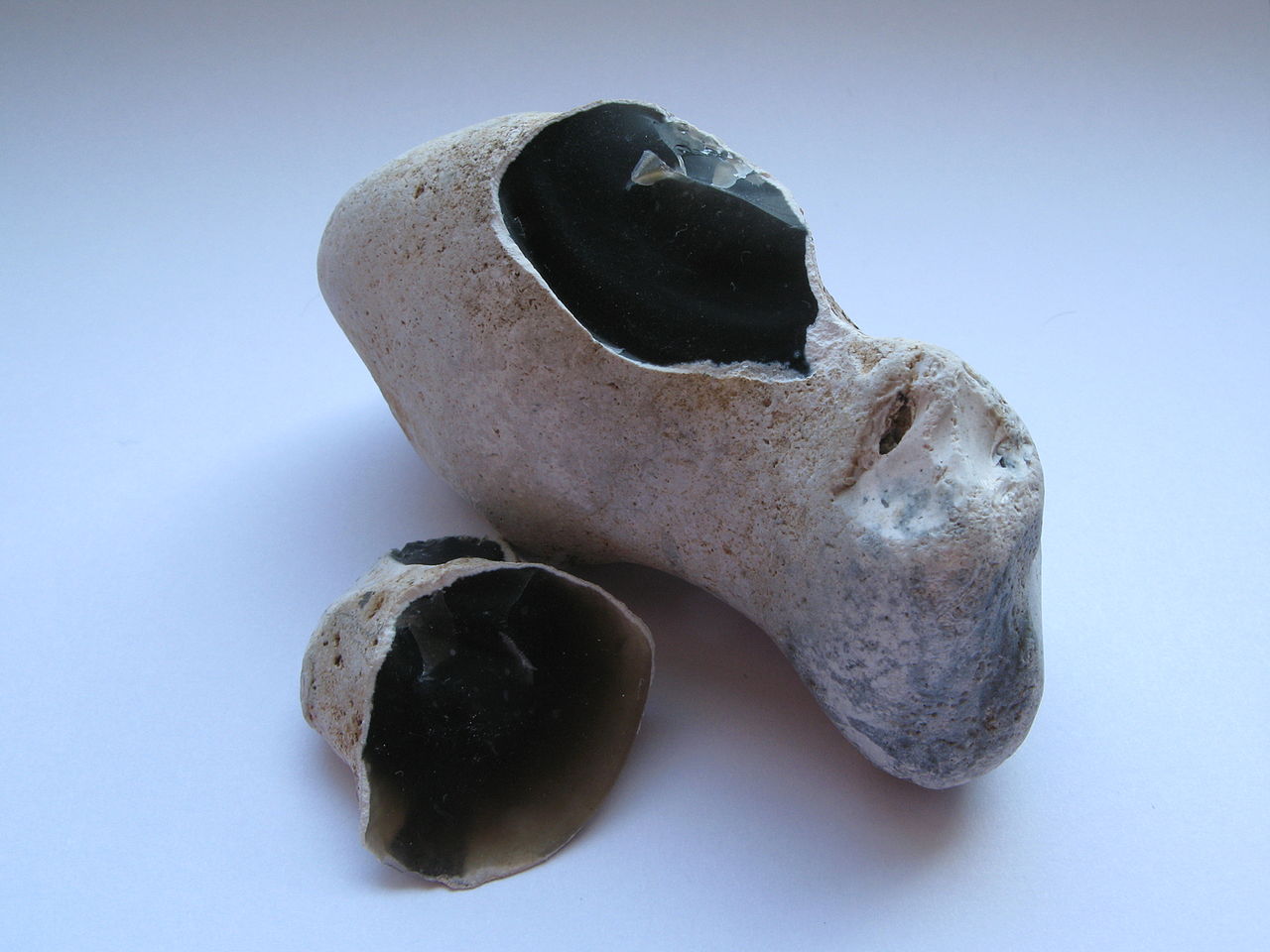
Chert is a compact, silica‑rich sedimentary rock composed predominantly of very small quartz crystals. It is notable for its hardness, conchoidal fracture and ability to form very sharp edges when broken. Several familiar varieties are grouped with chert: flint is a commonly cited dark, brittle form found in chalk and limestone, while banded or translucent examples are classified as agate or other chalcedony varieties. Chert may also contain preserved remains of organisms and fragments of shells.
Image gallery
8 Images




Composition and physical properties
At a microscopic level chert consists of cryptocrystalline or microcrystalline quartz (SiO2). Its crystals are too small to see without magnification, giving the rock a dense, even texture. Typical characteristics include a hardness near that of quartz, a glossy to waxy luster on fresh surfaces, and a smooth, conchoidal break that yields sharp edges. Color varies widely — pale gray, white, brown, red or black — depending on trace impurities; iron oxides commonly impart red tones to produce jasper.
Formation and occurrence
Chert forms in several geological settings. It can precipitate directly from silica‑rich marine solutions, accumulate from the siliceous remains of microorganisms such as radiolarians and diatoms, or replace other materials like carbonate shells and wood by silicification. Common expressions include nodules in limestone and chalk, layered (bedded) chert in deep marine sequences, and cavity fillings in volcanic rocks that produce agates. Because silica is chemically stable, chert beds can be long‑lived features in the rock record and are found on most continents.
Uses and cultural importance
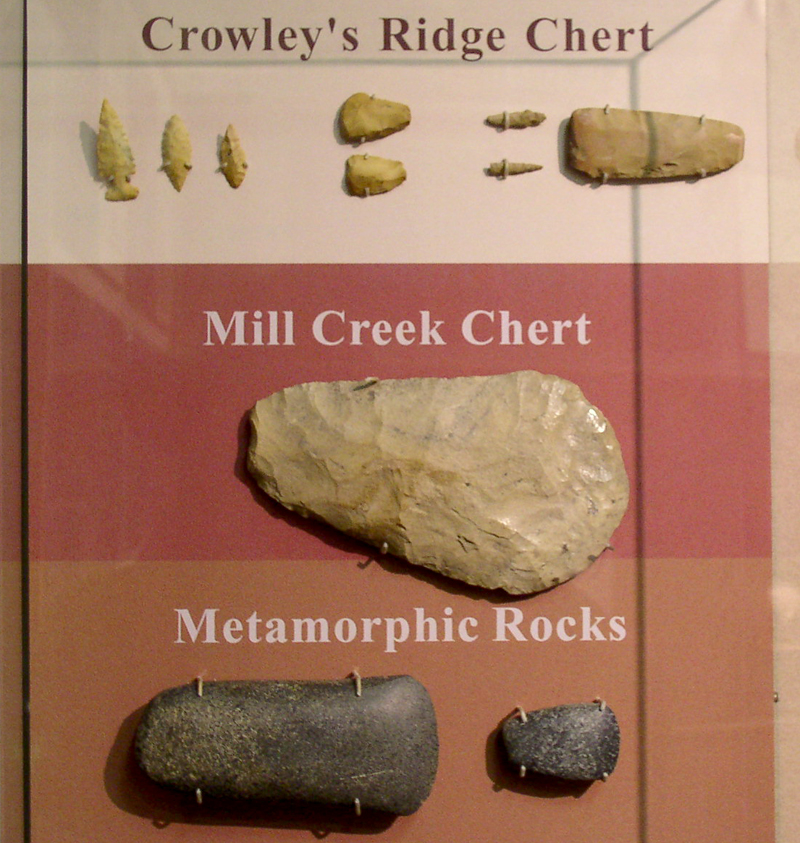
Human cultures have prized chert for millennia. Prehistoric people selected chert and flint for flaked stone tools and projectile points because controlled fracturing produced thin, sharp edges ideal for cutting and hunting. In historic times flint was used to produce sparks for fire‑starting when struck against steel. Today chert varieties such as jasper and agate are used as ornamental stones and in jewelry, and crushed chert serves as an aggregate in construction and road materials.
Notable distinctions and facts
- Terminology is partly regional: "chert" is a broad term, while "flint" often denotes the darker nodular form found in chalk formations.
- "Jasper" typically refers to an opaque, red or brown chert colored by iron; it is valued as a gemstone.
- Silicification related to chert formation can preserve fossils; some chert nodules enclose shell fragments or microscopic organisms — see fossil occurrences for examples.
- Petrified wood and other silicified fossils are closely related processes, where silica replaces original organic or carbonate material.
Because of its durability and distinctive fracture behavior, chert remains important in geology, archaeology and lapidary arts. It is both a record of past biological activity and a practical resource that shaped human technology.
Related articles
Author
AlegsaOnline.com Chert — a hard silica rock (flint, jasper, agate) Leandro Alegsa
URL: https://en.alegsaonline.com/art/19305
Sources
- watersheds.org : "Rock Types; Chert"