
Chemical vapor deposition: methods, materials, and applications
Chemical vapor deposition (CVD) is a family of gas-phase processes used to produce thin solid films and coatings on substrates; it is widely used in electronics, optics, biomedical implants and synthetic diamond growth.
Overview
Chemical vapor deposition (CVD) denotes a set of manufacturing methods in which volatile chemical precursors in the gas phase react or decompose at a substrate surface to form a solid material. The deposited material can be a metal, metal compound, ceramic or carbon allotrope; films range from a few nanometers to many micrometers in thickness. CVD is valued for producing uniform, adherent coatings and for its ability to coat complex shapes and recessed features.
Image gallery
3 Images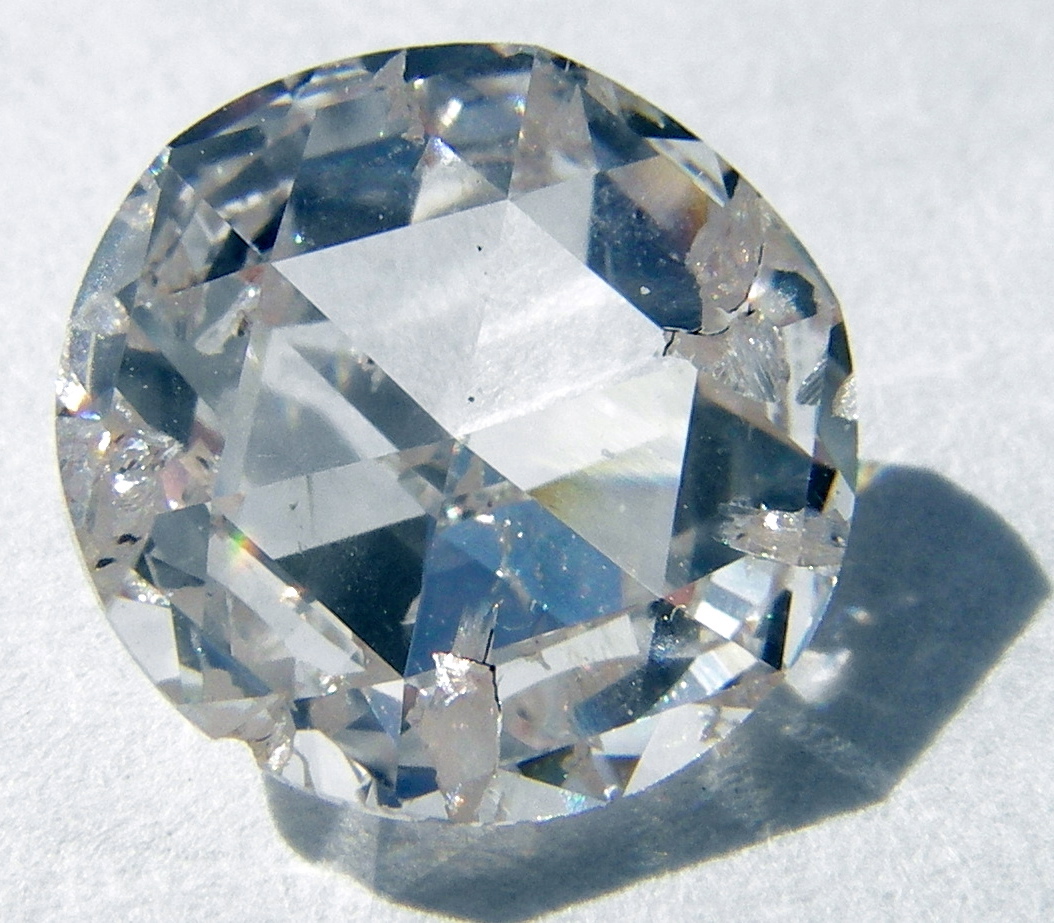


How the process works
In a typical CVD run, reactant gases are introduced to a reaction chamber containing one or more substrates. Under controlled temperature and pressure, the gas molecules adsorb, react, and form a solid film while volatile reaction by-products are removed by the gas flow. Important process variables include:
- choice and delivery of chemical precursors (e.g., organometallics, halides, hydrides),
- substrate temperature, which drives surface chemistry,
- chamber pressure and gas flow patterns, which affect transport and uniformity,
- use of energy sources such as thermal heating, plasma, or photon activation to enable low-temperature deposition.
Several variants of the technique are commonly used: low-pressure CVD (LPCVD), plasma-enhanced CVD (PECVD), and metal-organic CVD (MOCVD), among others. Each trades off deposition rate, film quality, conformality and process temperature to suit different materials and applications.
Materials, substrates and properties
CVD can produce elemental films (e.g., tungsten), compounds (e.g., silicon nitride, silicon dioxide, titanium nitride), and carbon-based materials including graphene and synthetic diamond. Films may be conductive, insulating, hard, lubricious, or optically transparent, depending on chemistry and microstructure. Substrates range from single-crystal silicon wafers used in microelectronics to glass, metals and medical-grade alloys. By tuning chemistry and conditions, operators control film thickness, composition, stress and adhesion.
History and development
The basic concept of vapor-phase deposition has roots in early industrial chemistry, but CVD technologies were developed and refined throughout the 20th century as vacuum and gas-handling methods improved. The technique became central to the semiconductor industry from the 1960s onward for depositing gate oxides, polysilicon and thin dielectric films. Over subsequent decades, advances in precursor design, reactor engineering and plasma technology expanded the range of materials and lowered processing temperatures.
Major applications
CVD is used across many industries. Examples include:
- Semiconductors and displays: deposition of dielectrics and conductive films in integrated circuits, thin-film transistors for displays, and barrier layers for modern electronics. See further information via technical overview.
- Optical coatings: transparent conductive films on glass for mirrors, defogging and energy-efficient windows; coating technologies are critical in optics manufacturing.
- Hard coatings and wear resistance: protective layers on cutting tools and mechanical components, and biocompatible coatings on orthopedic implants to improve wear life and corrosion resistance; examples and standards are summarized at materials resources.
- Diamond and carbon materials: production of polycrystalline diamond films for cutting, heat spreaders and specialty optics, and growth of graphene and carbon nanotube films for research and niche products; see applications at research summaries.
- Energy and sensors: catalyst coatings, battery electrode films and gas-sensing layers benefit from the conformal and controllable nature of CVD films. General application notes are available at application notes.
Advantages, limitations and distinctions
Advantages of CVD include excellent film conformity over complex topography, scalability for production, and the ability to produce high-purity, dense films. Limitations include the need to manage potentially hazardous chemical precursors, the requirement for elevated temperatures for many chemistries, and the capital cost of reactors and gas-handling infrastructure. Related techniques such as physical vapor deposition (PVD) and atomic layer deposition (ALD) offer alternative trade-offs: PVD is line-of-sight and often lower in conformity, while ALD provides extreme thickness control but at lower deposition rates.
Because of its versatility, CVD remains a foundational tool in modern materials science and manufacturing, connecting fundamental surface chemistry to practical products ranging from consumer electronics to medical implants and advanced optical components.
Related articles
Author
AlegsaOnline.com Chemical vapor deposition: methods, materials, and applications Leandro Alegsa
URL: https://en.alegsaonline.com/art/19189