
Charlotte's Web (novel by E. B. White)
A classic 1952 children's novel by E. B. White about Wilbur the pig and Charlotte the spider, exploring friendship, mortality, and farm life; illustrated by Garth Williams and widely adapted.
Overview
Charlotte's Web is a children's novel first published in 1952 by E. B. White. Told in plain, gently humorous prose, it follows a young pig named Wilbur and his friendship with a barn spider, Charlotte. The story mixes everyday farm detail with moments of tenderness and poignancy, and has remained popular with children and adults for generations.
Image gallery
2 Images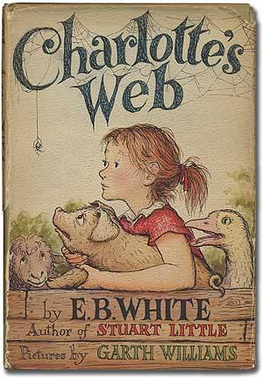

Major characters and structure
The narrative centers on a small cast of farm-dwelling figures, some human and some animal. Key characters include:
- Wilbur — the pig whose life and fate drive the plot.
- Charlotte — the spider whose cleverness and sacrifice form the emotional core.
- Fern — the child who first saves Wilbur and cares for him.
- Templeton — a gluttonous rat who provides comic relief and occasional help.
Themes and style
The book treats themes of friendship, loyalty, the passage of life, and the possibility of kindness between different beings. White's style is economical and descriptive, with an emphasis on character and moral insight rather than didacticism. Charlotte's actions — weaving words into her web to influence human perception — introduce a memorable blend of ingenuity and sacrifice.
Publication, illustration, and reception
Illustrated by Garth Williams, the book won widespread critical favor and literary honors; it is frequently taught in schools and appears on many lists of important children's literature. Readers and critics have praised its emotional honesty and the clarity of its animal characters. For more about the author, see E. B. White, and for information on recognitions, consult awards and honors.
Adaptations and legacy
The simplicity and strong characterization of Charlotte's Web have made it a popular source for adaptations. It has been produced on stage and radio and adapted into motion pictures; three film versions have been made over time. For details on screen adaptations, see film adaptations. The book's central image — messages woven into a spider's web — remains a widely recognized symbol of friendship and selfless action.
Because of its enduring themes and accessible prose, Charlotte's Web continues to be read, performed, and recommended as an introduction to humane values and storytelling craft.
Related articles
Author
AlegsaOnline.com Charlotte's Web (novel by E. B. White) Leandro Alegsa
URL: https://en.alegsaonline.com/art/18845