
Children of the Mind — novel by Orson Scott Card
Children of the Mind (1996) is the fourth book in the original Ender quartet by Orson Scott Card, concluding themes from Xenocide and exploring identity, personhood, and the moral consequences of scientific action.
Children of the Mind is a 1996 science fiction novel by Orson Scott Card. It follows the events of Xenocide and completes the narrative arc begun in Speaker for the Dead, continuing the story of Ender Wiggin and several long-running conflicts introduced earlier in the series. The book aims to resolve moral, metaphysical and political problems left open by the prior volume while deepening Card's exploration of conscience and responsibility.
Image gallery
2 Images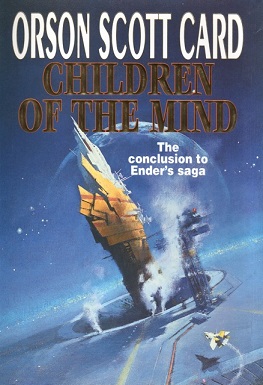

Overview
The novel is often called the fourth volume of the Ender quartet and serves as a direct sequel to Xenocide. It continues to examine the aftermath of decisions that affect entire worlds and sentient species. Themes include the nature of identity, the ethics of intervention, and the limits of language and understanding when different lifeforms interact.
Major elements and characters
Key figures from earlier books return, including Ender Wiggin and several of his close associates, and an advanced network intelligence that plays a central role in the plot. The story also engages with the implications of a biologically transformative agent (commonly referred to in the series) and the social and scientific conflicts it produces. Card uses personal dilemmas and philosophical dialogue to drive the narrative.
Publication, series context and development
Published in 1996, Children of the Mind was presented as the concluding volume of the original Ender sequence that began with Ender's Game and continued through Speaker for the Dead and Xenocide. Since then the Ender universe has expanded with additional novels and parallel stories that explore other times and characters; however, Children of the Mind remains the canonical resolution of the quartet's central plotline within the sequence established by Card.
Themes, style and reception
The book mixes speculative science, ethical debate and introspective character study. Reviewers and readers have noted its philosophical ambitions and dense, idea-driven passages. Reactions ranged from praise for its emotional and moral scope to criticism by some who found its pace or exposition heavy. It nonetheless occupies an important place in late 20th-century science fiction for tackling issues of personhood and the responsibilities that accompany far-reaching power.
Notable distinctions
- Completes the narrative thread begun in Xenocide and Speaker for the Dead.
- Places philosophical questions about identity and language at its center.
- Forms part of a larger fictional universe often explored in companion and prequel works within the Ender's Game series.
For readers new to the series, Children of the Mind is best approached after the earlier volumes to appreciate its resolution of long-running ethical and narrative questions. It remains a frequent subject of discussion among fans and scholars interested in science fiction's treatment of empathy, moral judgment and the consequences of interspecies contact.
Related articles
Author
AlegsaOnline.com Children of the Mind — novel by Orson Scott Card Leandro Alegsa
URL: https://en.alegsaonline.com/art/19668