
Chaudhary Charan Singh — Indian agrarian leader and short-term Prime Minister
Chaudhary Charan Singh (1902–1987) was an Indian politician noted for championing peasant interests, agrarian reform and regional parties; he served briefly as India's fifth Prime Minister in 1979–1980.
Chaudhary Charan Singh (23 December 1902 – 29 May 1987) was an Indian politician best known for his advocacy on behalf of farmers and rural communities. He served as the country's fifth Prime Minister from 28 July 1979 until 14 January 1980. Singh's career spanned state and national politics, and he is widely remembered as a leading voice for agrarian reform and the political mobilization of rural North India. He was commonly described as a "champion of India's peasants."
Image gallery
10 Images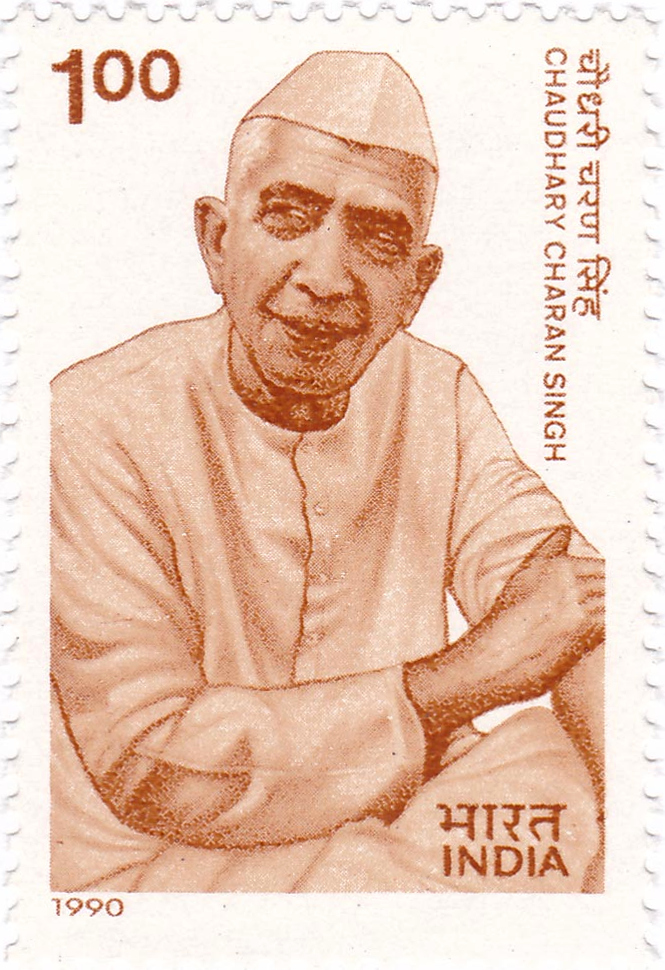


Early life and political rise
Born in a village near Noorpur in what was then the United Provinces, Singh rose from a rural background to become a prominent regional leader. His early political work focussed on land rights, tenancy issues and measures to protect small cultivators from indebtedness. Over time he built a base among conservative smallholders and tenant farmers, translating rural grievances into organized political influence.
Political organisation and ideas
Throughout his career Singh either founded or led a series of regional and national groupings that sought to represent agrarian interests. In the 1960s and 1970s he became associated with parties that emphasized farmers' rights and decentralised governance rather than rapid industrialisation. He also played a role in the coalition politics that emerged after the Emergency period, aligning with and later breaking from broader anti-Congress alliances.
Prime Ministership and national role
Singh became Prime Minister in July 1979 at a time of political flux. His government was short-lived: it relied on outside support from rival groups and collapsed before it could consolidate a long-term parliamentary majority. After leaving office he remained an influential elder statesman for rural political movements and inspired later formations that claimed his legacy.
Legacy and significance
- Advocate for land reforms and tenancy protections, prioritising the concerns of small farmers and peasants.
- Founder and leader of regional agrarian parties that influenced post-independence politics in North India.
- His brief national premiership highlighted the volatility of coalition politics in late-1970s India.
Singh's life is often cited in discussions of how rural interests shaped Indian political development in the 20th century. He remained a controversial but respected figure: criticised by some for conservatism and praised by many for steadfast support of agrarian communities. He died after suffering a stroke on 29 May 1987 in New Delhi. His political journey — from a village in the United Provinces where he was born to the national stage as the 5th Prime Minister of India — and his long association with parties like the Janata Party illustrate the persistent role of agrarian leadership in India's democratic evolution.
Related articles
Author
AlegsaOnline.com Chaudhary Charan Singh — Indian agrarian leader and short-term Prime Minister Leandro Alegsa
URL: https://en.alegsaonline.com/art/18632
Sources
- dx.doi.org : "Charan Singh, 1902–87: An assessment"
- doi.org : 10.1080/03066158808438356
- worldcat.org : 0306-6150