
Chamber of Deputies of the Czech Republic
The Chamber of Deputies is the 200‑member lower house of the Czech Parliament. It drafts and passes laws, controls the government, approves the budget and is elected for four‑year terms by proportional vote.
The Chamber of Deputies (Czech: Poslanecká sněmovna) is the lower chamber of the bicameral Parliament of the Czech Republic. Composed of 200 deputies, it is the principal legislative body where most national bills are introduced, debated and adopted. Deputies serve four‑year terms and are directly elected by citizens under a system of proportional representation.
Image gallery
1 Image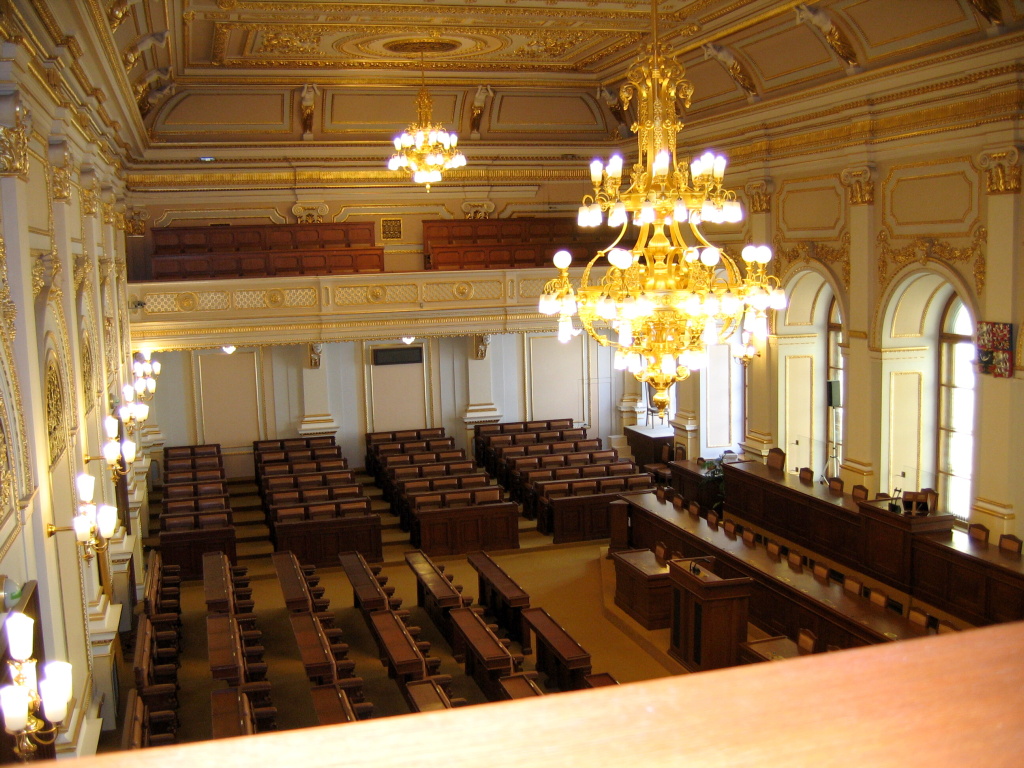
Composition and election
Members of the Chamber are chosen from regional multi‑member constituencies through proportional representation, using methods intended to reflect the distribution of votes among political parties. Parties and candidates contesting elections win seats in proportion to their share of the vote, and coalitions or party groupings commonly form after elections to provide a working majority. The chamber elects its own presiding officer (the Speaker) and organizes standing committees to examine legislation.
Powers and functions
The Chamber of Deputies holds primary responsibility for drafting and approving domestic legislation, including the state budget. It exercises oversight over the government: the cabinet must retain the confidence of the Chamber, and the Chamber can express no confidence in a government or individual ministers. The lower house plays a central role in ratifying international agreements and in procedures related to constitutional change, while also supervising the implementation of laws and public policy.
Procedure and interaction with the Senate
Once the Chamber adopts a bill, it is transmitted to the upper house (the Senate) for review. The two chambers have distinct but complementary roles; the Chamber of Deputies is generally dominant on urgent budgetary and confidence matters. If the Senate returns a bill with amendments, the Chamber considers those changes and may confirm, modify or override the Senate’s suggestions according to constitutional rules.
Institutional features and history
The present parliamentary framework dates from the early 1990s, when the Czech Republic established its constitution and institutions following the separation from Czechoslovakia. Since then the Chamber of Deputies has been the arena for political debate, coalition formation and legislative priority‑setting. Its work is organized through parliamentary committees, plenary sittings and special investigative or ad hoc bodies.
Importance and public role
As the directly elected house, the Chamber of Deputies links citizens to national decision‑making: it determines laws that affect everyday life, approves public spending, and holds the executive to account. Political majorities in the Chamber shape government policy and the legislative agenda. For further procedural details, legal texts and current membership lists consult official sources and parliamentary documentation (lower house resources). For broader context about the Czech state and political system see general references on the Czech Republic and parliamentary government models (parliamentary systems).
Related articles
Author
AlegsaOnline.com Chamber of Deputies of the Czech Republic Leandro Alegsa
URL: https://en.alegsaonline.com/art/18415