
Chalcopyrite: the primary copper ore (CuFeS2)
Chalcopyrite is a copper iron sulfide mineral and the most important copper ore. This article covers its properties, occurrence, processing, uses and differences from similar minerals.
Overview
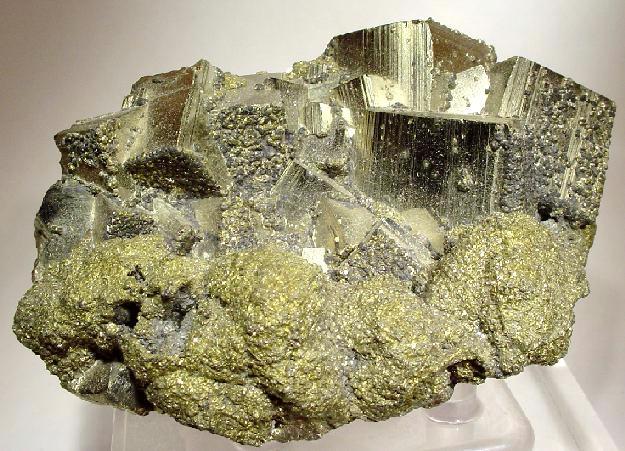
Chalcopyrite (chemical formula CuFeS2) is a copper iron sulfide mineral and the most abundant ore of copper. Recognized by its brassy to golden yellow color and metallic luster, it commonly forms massive to crystalline aggregates and is mined worldwide as the primary source of copper metal.
Image gallery
7 Images



Physical and chemical characteristics
Chalcopyrite crystallizes in the tetragonal system and typically shows a brass-yellow hue that can tarnish to iridescent purples and blues, a trait that has earned some specimens the trade name "peacock ore." Its hardness is moderate and it has a relatively high specific gravity for a non-oxide mineral. Chemically, it is a copper iron sulfide where copper is the economically valuable component.
Occurrence and geological setting
Chalcopyrite occurs in a range of geological environments, most notably in hydrothermal veins, volcanic massive sulfide deposits and porphyry copper systems. It is associated with other sulfides such as pyrite, sphalerite and galena, and with gangue minerals like quartz and calcite. Large porphyry deposits supply most of the world’s copper and commonly host disseminated chalcopyrite.
Extraction and uses
As the primary copper ore, chalcopyrite is processed by beneficiation methods such as crushing, grinding and froth flotation to concentrate the sulfide. Concentrates are then smelted and refined to produce metallic copper, which is used in electrical wiring, plumbing, alloys and many industrial applications. For further information on copper ores and their processing see copper ore resources.
Identification and notable distinctions
- Often mistaken for pyrite due to color, but chalcopyrite is softer and has a different crystal habit.
- Bornite, another copper sulfide, can be confused with tarnished chalcopyrite; bornite has a different composition and tends to show more vibrant iridescence.
- Chalcopyrite is distinct from oxidized copper minerals (malachite, azurite), which form by weathering and display green or blue colors.
Because chalcopyrite is so widespread and copper is vital to modern infrastructure, the mineral has long economic importance. Its varied appearances—from fresh brassy faces to colorful tarnish—also make it a common specimen in mineral collections.
Related articles
Author
AlegsaOnline.com Chalcopyrite: the primary copper ore (CuFeS2) Leandro Alegsa
URL: https://en.alegsaonline.com/art/18375