
Centre Pompidou — Paris cultural centre and modern art museum
Centre Pompidou is a major cultural complex in Paris, opened in 1977; known for its exposed-structure architecture and for housing the Musée National d'Art Moderne, a leading modern art collection.
Overview
The Centre Georges Pompidou is a public cultural complex and museum in Paris, inaugurated in 1977 and named for former French president Georges Pompidou, who championed its creation as a national center for contemporary culture. The building contains multiple institutions and serves both residents and international visitors as a hub for modern and contemporary art.
Image gallery
9 Images


Architecture and layout
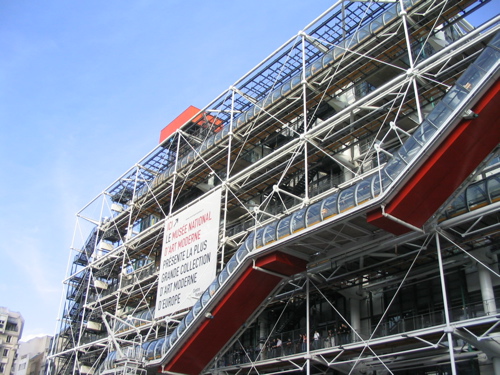
Designed by architects Renzo Piano, Richard Rogers and Gianfranco Franchini, the Centre Pompidou is famous for its "inside-out" design: structural elements, circulation and services are expressed on the exterior, creating large, flexible interior volumes. A glass-enclosed tubular escalator runs along the facade, leading to an expansive public plaza. The visible ducts, trusses and colored service pipes made the building an icon of high-tech architecture and a subject of lively debate when it opened.
Collections and institutions
- Musée National d'Art Moderne — the centre's museum holds one of Europe's most important modern and contemporary art collections, exhibiting works across painting, sculpture, photography and new media. Modern art movements from the 20th and 21st centuries are represented.
- Bibliothèque publique d'information — a large public reference library offering free access to books, periodicals and study spaces.
- IRCAM — an institute for music and acoustic research, hosting concerts, residencies and scientific programs.
History and significance
Commissioned in the late 1960s as part of a state initiative to decentralize cultural life, the Centre Pompidou opened to mixed reactions that soon gave way to broad recognition. It transformed the Beaubourg district, stimulated cultural programming across disciplines, and influenced museum and architectural design worldwide. Beyond its permanent collection, the complex stages temporary exhibitions, performances, film series and educational activities, functioning as a living laboratory for contemporary creative practice.
Notable facts
As a combined cultural facility, the Centre Pompidou is notable both for its role as a leading repository of modern art in Europe and for its emblematic architecture. It remains a major destination for tourists, scholars and artists, and a focal point for debates about urban renewal, preservation and the public role of museums. For more practical visitor information and current programs consult institutional pages or local guides.
Tags
Related articles
Author
AlegsaOnline.com Centre Pompidou — Paris cultural centre and modern art museum Leandro Alegsa
URL: https://en.alegsaonline.com/art/18103