
Cefalù Cathedral (Duomo di Cefalù)
Romanesque basilica in Cefalù, Sicily, begun in the 12th century under the Normans; notable for its fortress-like form and Byzantine mosaics. Part of a UNESCO World Heritage group.
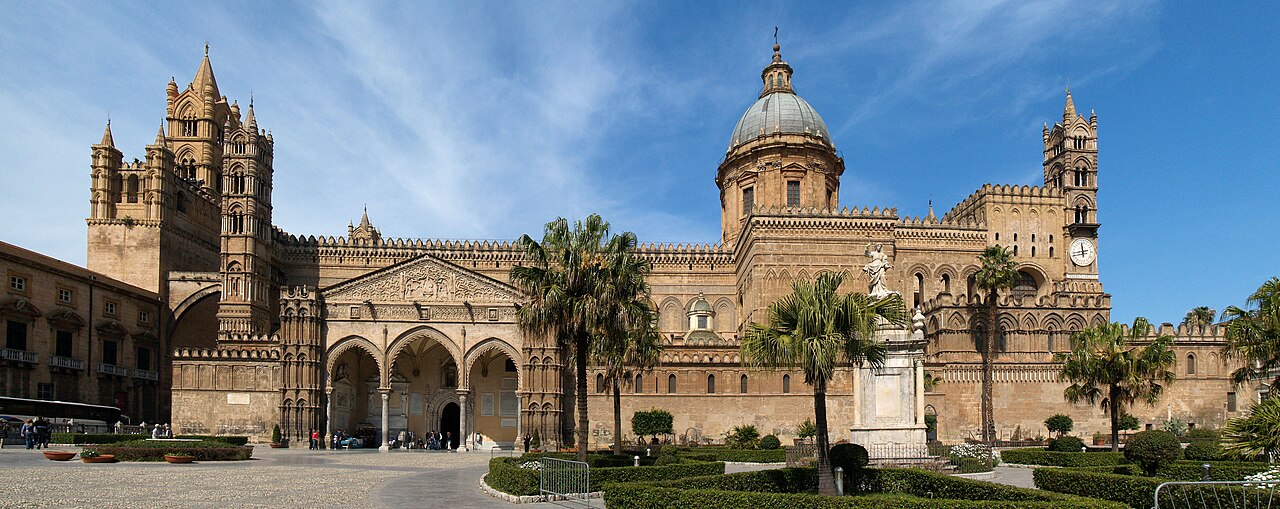
The Cathedral of Cefalù, often referred to by its Italian name Duomo di Cefalù, is the principal church of the coastal town of Cefalù in northern Sicily. It functions as a Roman Catholic basilica and a prominent landmark: a large, fortress-like structure that rises above the narrow streets of the medieval center. The cathedral is one of the nine monuments that together form the UNESCO World Heritage Site known as "Arab-Norman Palermo and the Cathedral Churches of Cefalù and Monreale."
Image gallery
8 Images




Overview and significance
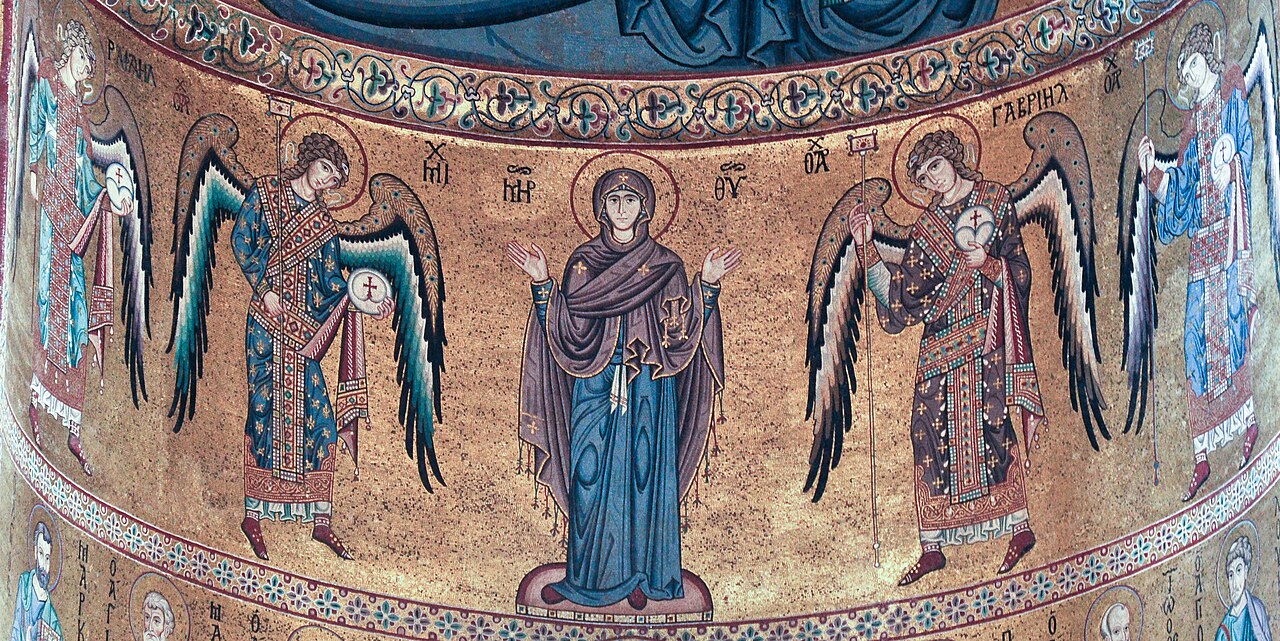
Constructed during the Norman period, the cathedral both served religious purposes and expressed the political power of the Norman kings of Sicily. Its bold massing and robust towers communicate defensive and monumental qualities as much as liturgical ones. The building is celebrated for combining Norman, Byzantine and local Sicilian building traditions into a cohesive architectural whole, and for housing exceptionally fine mosaic decoration in its apse.
Architectural characteristics
- Plan and form: The cathedral follows a traditional basilica layout with a nave, aisles and a prominent apse; twin towers flank the western façade producing a monumental silhouette.
- Exterior appearance: Thick masonry walls, minimal external ornament, and crenellated parapets give a fortress-like impression that emphasizes dominance over the town.
- Interior decoration: The eastern apse contains large Byzantine-style mosaics depicting Christ, angels and saints that are among the most important medieval mosaics in Italy.
- Stylistic fusion: Elements of Norman structural clarity, Byzantine iconography and Islamic ornamental motifs reflect the multicultural environment of 12th-century Sicily and the adaptation of diverse craftsmen and techniques.
History and context
Building began in the early 12th century under the patronage of the Norman king Roger II, who consolidated Norman rule on the island after earlier conquests. A longstanding local tradition holds that the foundation was vowed after the king found refuge from a storm on Cefalù's shore. Construction and decoration spanned several decades and involved artisans of differing backgrounds. The cathedral became a visual declaration of Norman sovereignty while also accommodating the liturgical and artistic currents of the eastern Mediterranean.
Uses, conservation and visitor experience
Today the Duomo remains an active place of worship and a major destination for visitors interested in medieval architecture and art. Its mosaics and monumental spaces attract historians, pilgrims and tourists. Conservation has been ongoing to protect fragile mosaics and stabilize ancient masonry; maintaining the balance between religious use, public access and preservation is a continuing challenge for custodians and heritage authorities.
Notable distinctions and further reading
The cathedral is often noted for its dual character as both church and stronghold, a visual statement of medieval power. It stands alongside the cathedrals of Palermo and Monreale as a key example of the so-called Arab-Norman synthesis on Sicily. For concise introductions and official information see the cathedral’s informational pages and scholarly surveys: cathedral overview, studies on Norman architecture at Norman architecture resources, and international heritage listings at UNESCO entries.
Questions and answers
Q: What is the Cathedral of Cefalù?
A: The Cathedral of Cefalù is a Roman Catholic basilica in Cefalù, Sicily.
Q: What is the UNESCO World Heritage Site that the Cathedral of Cefalù is included in?
A: The Cathedral of Cefalù is included in the UNESCO World Heritage Site known as Arab-Norman Palermo and the Cathedral Churches of Cefalù and Monreale.
Q: When was the Cathedral of Cefalù built?
A: The Cathedral of Cefalù was built in 1131.
Q: In what architectural style was the Cathedral of Cefalù built?
A: The Cathedral of Cefalù was built in the Norman architectural style.
Q: Who conquered the island of Sicily?
A: The Normans conquered the island of Sicily in 1091.
Q: According to tradition, why was the Cathedral of Cefalù built?
A: According to tradition, the king of Sicily, Roger II, made a vow to build the Cathedral of Cefalù after he escaped from a storm to land on the city's beach.
Q: What statement did the Cathedral of Cefalù make about the Norman presence?
A: The Cathedral of Cefalù made a powerful statement of the Norman presence and has a fortress-like character that dominates the skyline of the surrounding medieval town.
Tags
Related articles
Author
AlegsaOnline.com Cefalù Cathedral (Duomo di Cefalù) Leandro Alegsa
URL: https://en.alegsaonline.com/art/17841