
Assisi: Umbrian town of Saint Francis, medieval art and pilgrimage
Assisi, in Umbria, Italy, is renowned as the birthplace of Saint Francis, a center of medieval art and pilgrimage, and a UNESCO World Heritage site noted for its basilicas, frescoes and historic townscape.
Overview
Assisi is a small hill town and a historical town and administrative comune in central Italy, situated on the slopes of Mount Subasio in the region of Umbria. Perched above a fertile plain, the town preserves a compact medieval centre of stone streets, public squares and defensive walls that illustrate its long role as a religious, civic and cultural hub.
Image gallery
10 Images





History and religious heritage
Assisi is best known for its importance to Catholic history as the birthplace and spiritual home of Saint Francis, the friar whose life and teachings emphasized poverty, nature and service. From Assisi he and his companions formed the Franciscan order, which spread rapidly in the thirteenth century. A native and follower, Saint Clare, established a contemplative order for women often called the Poor Clares. Their lives shaped the town’s institutions, architecture and devotional practices.
Art, architecture and notable sites
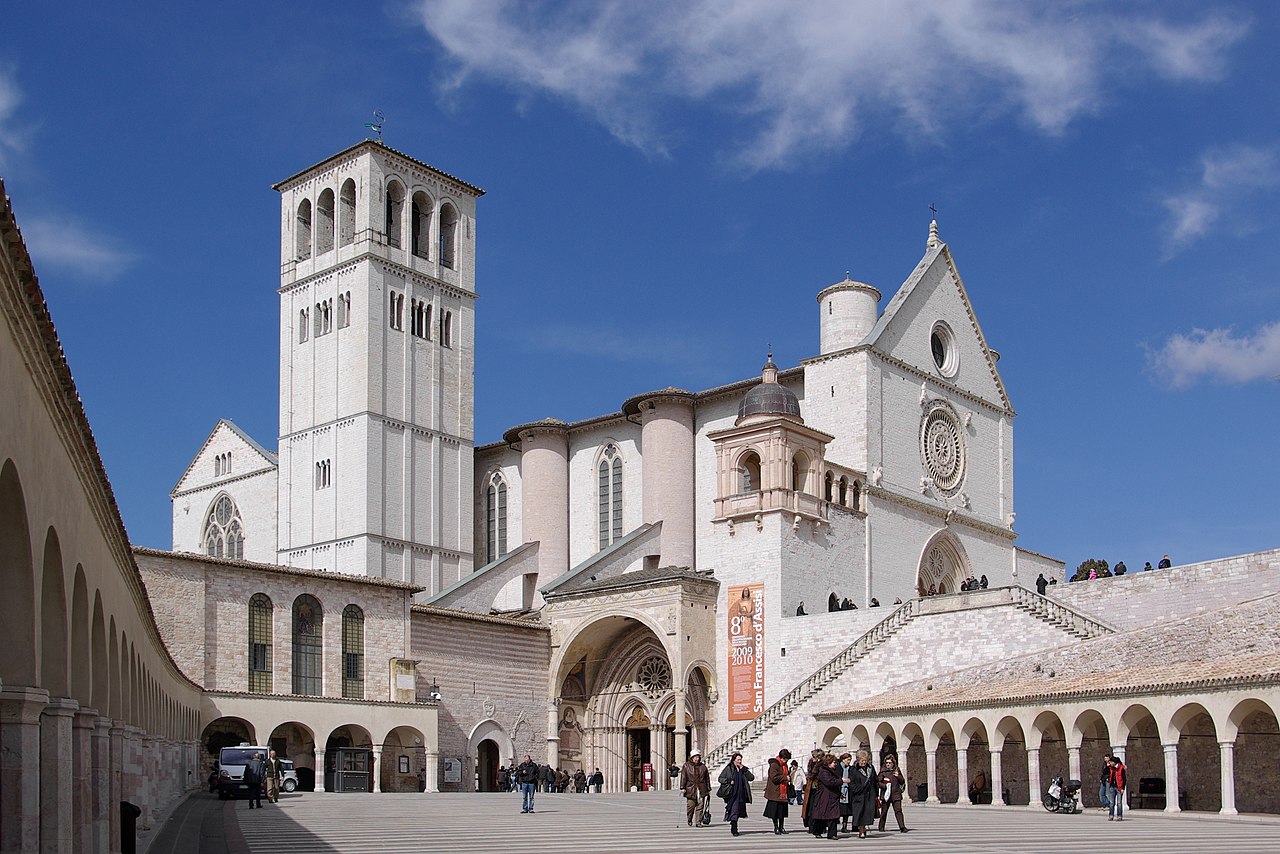
The town contains several important religious monuments. The multi-level Basilica of Saint Francis holds the traditional burial site of Francis and contains extensive fresco decoration. These fresco cycles, long attributed to artists associated with Giotto and his circle, are celebrated both for their narrative power and for their influence on Italian painting; they remain prime examples of medieval devotional art and frescoes in situ. Beyond the basilica, visitors find the simple church of Santa Chiara, the Roman-era temple converted into a church, the Rocca Maggiore fortress and the lively municipal square.
Visiting, pilgrimage and cultural life
Assisi draws religious pilgrims, art historians and general tourists alike. Many make the journey as a pilgrimage to visit Franciscan sites, to attend liturgical celebrations, or to view the medieval fabric of the town. Local festivals, guided walks, and museum displays interpret the layers of Roman, medieval and modern history. Tourism is a major part of the local economy, but the town retains an active religious community and regular worship in its churches.
Significance and distinct features
Assisi’s combination of spiritual heritage, artistic achievement and well-preserved urban form led to its inscription on the UNESCO World Heritage List. It is often cited as a place where religious biography and public art intersect: the life of Saint Francis inspired new forms of religious expression and patronage that are visible in buildings, frescoes and civic institutions. The town’s peaceful setting on Mount Subasio, its compact medieval center and the layering of Roman, medieval and Renaissance elements make Assisi distinctive among Italian hill towns.
Practical notes
- Major sites include the Basilica of Saint Francis, Santa Chiara and the Piazza del Comune.
- Best times to visit combine mild weather and religious feast days when liturgies are held.
- Visitors often combine Assisi with other Umbrian destinations to explore regional art and landscape.
Questions and answers
Q: Where is Assisi located?
A: Assisi is a town and a comune in the region of Umbria in Italy.
Q: Why is Assisi important?
A: Assisi is important because of its art, architecture, and history. It is especially significant to the Catholic religion.
Q: Who is Saint Francis of Assisi?
A: Saint Francis of Assisi was a Catholic saint who was born in Assisi. He founded the Franciscan religious order in the year 1208.
Q: Who is Saint Clare of Assisi?
A: Saint Clare of Assisi was a follower of Saint Francis and was also born in Assisi. She founded an order of religious women called the Poor Clares.
Q: What churches were built in honor of Saint Francis and Saint Clare?
A: Churches were built in honor of Saint Francis and Saint Clare in Assisi after they died.
Q: What is the famous church called where Saint Francis is buried?
A: The famous church where Saint Francis is buried is called the Basilica of Saint Francis of Assisi.
Q: When was Assisi made into a UNESCO World Heritage Site?
A: Assisi was made into a UNESCO World Heritage Site in the year 2000.
Tags
Related articles
Author
AlegsaOnline.com Assisi: Umbrian town of Saint Francis, medieval art and pilgrimage Leandro Alegsa
URL: https://en.alegsaonline.com/art/6743