
Catania — Sicily’s historic port city on the slopes of Etna
Catania is a major Sicilian city on the island’s east coast. A historic port and cultural center, it combines Baroque architecture, a university tradition, active industry and close ties to Mount Etna.
Overview
Catania is a principal city on the island of Sicily, in southern Italy. It serves as the capital of the Province of Catania and is one of the island’s largest urban centers, with a city population of roughly 313,000 and a wider metropolitan area exceeding 800,000. The city blends seaside functions, academic life and cultural institutions and remains an important hub for commerce and transport on the island.
Image gallery
10 Images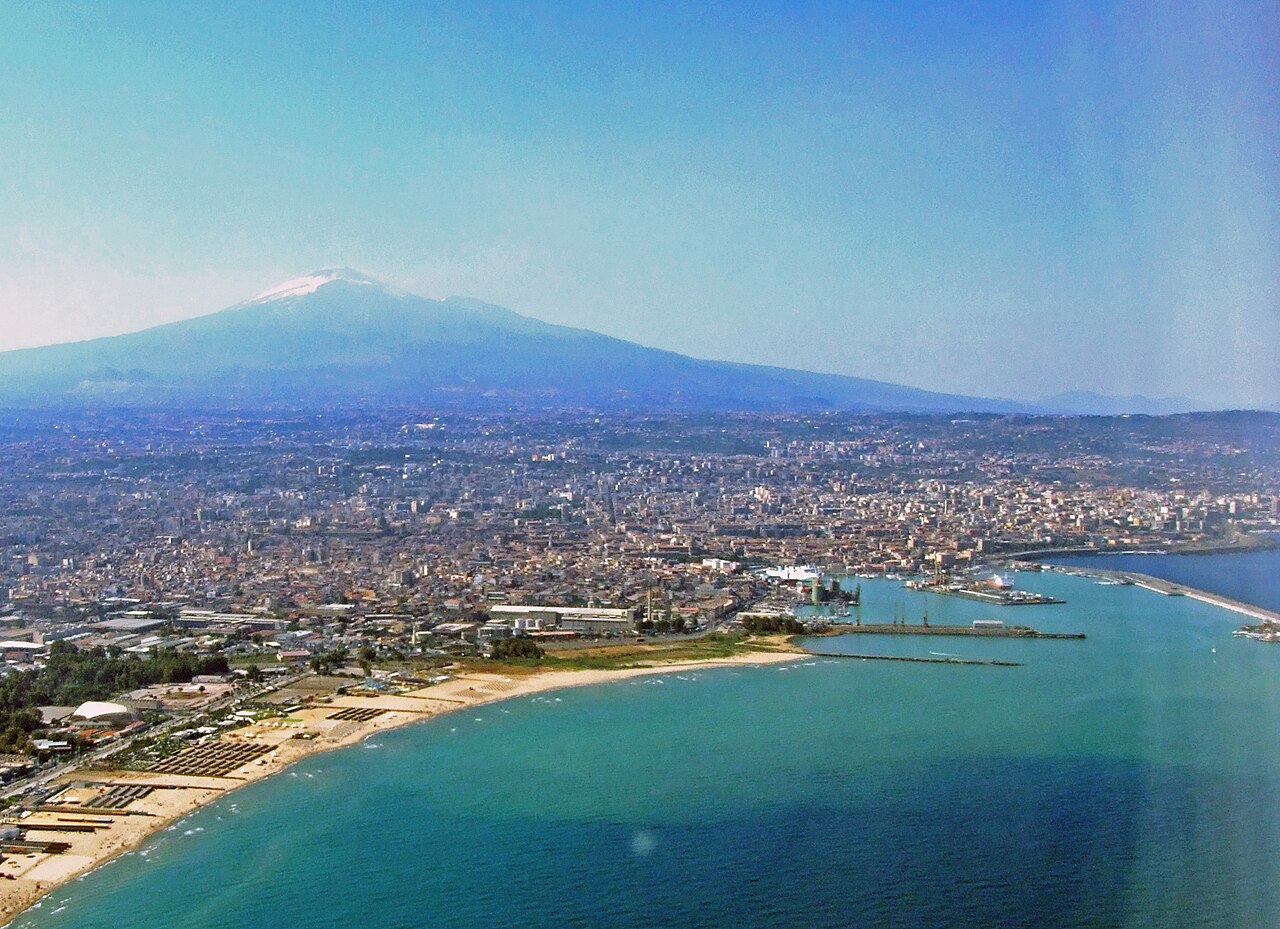


Location and geography
Located on the east coast of Sicily between Messina and Syracuse, Catania sits at the foot of Mount Etna, Europe’s most active volcano. Its coastal plain opens onto the Ionian Sea, giving the city a working port and beaches as well as fertile volcanic soils that support agriculture in the surrounding plain.
History and development
Catania has a long history that stretches back to antiquity. It was an important settlement in classical times, later passing through Roman, Byzantine, Norman and Spanish rule. A devastating earthquake in 1693 reshaped the historic core: much of the city was rebuilt in the exuberant Sicilian Baroque style that defines many of its churches and public spaces today. The city’s development continued through industrialization and urban expansion in the 19th and 20th centuries.
Economy, education and culture
Economic activity combines port operations, manufacturing, services and agriculture — the volcanic soils produce fruit, citrus and other crops. Catania is also an academic center: its university dates from the late Middle Ages and plays a major role in regional research and cultural life. Museums, theaters and festivals preserve local traditions, while a lively street culture and markets reflect everyday life.
Climate and environment
The city experiences a hot-summer Mediterranean climate (classified Csa in the Köppen climate classification), with hot, dry summers and mild, wetter winters. Proximity to Mount Etna periodically affects air quality and landscape through volcanic ash and lava flows, and the mountain is a major feature of local identity and tourism.
Notable facts and practical information
- Architectural highlights include Baroque churches, a restored Roman amphitheater and the lively central market.
- The port supports both cargo and passenger services, linking Sicily with the Italian mainland and Mediterranean ports.
- Visitors and researchers can find more on local services, transport and cultural programs via regional portals and municipal resources (Sicily region, Italian tourism).
For general orientation and travel planning consult official and regional guides, local university pages and cultural inventories to find up-to-date practical information and event listings (city information, coastal services, neighboring cities, provincial resources).
Related articles
Author
AlegsaOnline.com Catania — Sicily’s historic port city on the slopes of Etna Leandro Alegsa
URL: https://en.alegsaonline.com/art/17582
Sources
- istat.it : "Superficie di Comuni Province e Regioni italiane al 9 ottobre 2011"
- demo.istat.it : "Statistiche demografiche ISTAT"