
Cassius Dio: Roman Senator and Historian of Rome in Greek
Cassius Dio (c. AD 150–235) was a Roman statesman and prolific Greek‑language historian whose 80‑book Roman History remains a key source for ancient Rome from Aeneas to the early third century.
Overview
Cassius Dio (Lucius Cassius Dio Cocceianus, c. AD 150–235) was a Roman senator who also earned fame as a historian. He served in the imperial administration and reached the consulship (consul) before devoting much of his later life to writing. He composed a continuous narrative of Roman history in the Greek language (Greek), a choice reflecting the cultural bilingualism of the Roman elite and the broader Mediterranean audience he addressed. Modern scholars refer to him variously as Cassius Dio, Dio Cassius, or simply Dio.
Image gallery
3 Images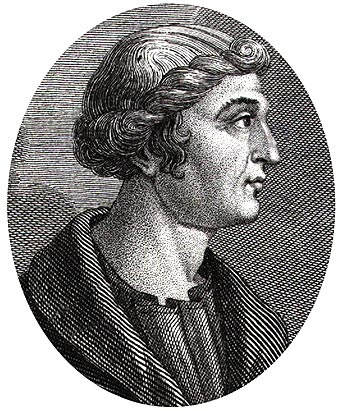


Structure and scope of the Roman History
Dio's major work, usually called the Roman History, originally comprised 80 books and traced Rome's story from its mythic beginnings to events within his lifetime. He began with the legendary arrival of Aeneas—drawn from Roman tradition and epic poetry—(Aeneas) and narrated the settlement of early peoples in the peninsula (Italy), the traditional founding of the city (founding of Rome, conventionally dated to 753 BC), the overthrow of the monarchy and the establishment of the Republic (often associated with 509 BC) and the long transition to imperial rule (the Republic and later the Empire). His narrative extends into the third century AD, covering roughly fourteen centuries of Roman development.
Style, sources, and method
Dio wrote as a continuous chronicle rather than a narrowly thematic history. He drew on a wide range of earlier authors, official records, public speeches, and for the later portions his own experience and senatorial contacts. Characteristics of his work include:
- Broad chronological sweep: a single narrative linking legendary origins to contemporary events.
- Senatorial perspective: emphasis on constitutional and political questions, elite careers, and the role of the Senate.
- Use of multiple sources: summaries of older annalists, biographies, and state records, sometimes quoted or paraphrased.
- Analytic passages: commentary on causes, character, and consequences rather than mere listing of events.
Survival, transmission, and scholarly value
Only parts of the original 80 books survive in full; many others are preserved as fragments, summaries, or excerpts cited by later writers. Surviving books are an indispensable source for Roman history, especially for periods where other narratives are scarce. Historians rely on Dio for political chronology, accounts of imperial actions, and insights into senatorial attitudes. Because he wrote in Greek, his work also bridges Roman and Greek literary traditions and is frequently cited in studies of cultural exchange in the empire.
Reception and influence
From late antiquity through the modern era, Dio's narrative has been used by compilers, epitomizers, and scholars to reconstruct Roman events. His factual reporting is complemented by evaluative commentary, which makes his history useful both as a record and as a source of interpretation. Editors and translators in modern times have produced critical editions that assemble the fragments, reconcile variant manuscript traditions, and make the text accessible in modern languages.
Notable facts and distinctions
Cassius Dio is notable for combining public office with an extended literary project: he was both participant and chronicler. The length and ambition of his work—eighty books covering legendary origins to events he witnessed—mark it as one of antiquity's most comprehensive histories of Rome. Because portions survive only in abridgement or through quotation, reconstructing his full argument remains a task for classicists and historians. For introductions, translations, and critical discussions, see modern reference works and editions (historian, Aeneas, Italy, founding of Rome, the Republic).
Tags
Related articles
Author
AlegsaOnline.com Cassius Dio: Roman Senator and Historian of Rome in Greek Leandro Alegsa
URL: https://en.alegsaonline.com/art/17449
Sources
- wikidata.org : wikidata.org/wiki/Q185223
- catalogo.bne.es : XX1251722
- catalogue.bnf.fr : cb122023034
- data.bnf.fr : (data)
- cantic.bnc.cat : a11114411
- ci.nii.ac.jp : DA02099596
- d-nb.info : 118525824
- isni.org : 0000 0001 2144 1495
- id.loc.gov : n79084710
- aleph.nkp.cz : jn19981000657
- data.bibliotheken.nl : 069534306
- libris.kb.se : 183846
- snaccooperative.org : w6c56ngc
- idref.fr : 03064870X
- trove.nla.gov.au : 1058806