
Caspar David Friedrich: German Romantic Landscape Painter
Caspar David Friedrich (1774–1840) was a German Romantic painter famous for contemplative landscapes—mist, shorelines, ruins and lone figures—that evoke the sublime and spiritual qualities of nature.
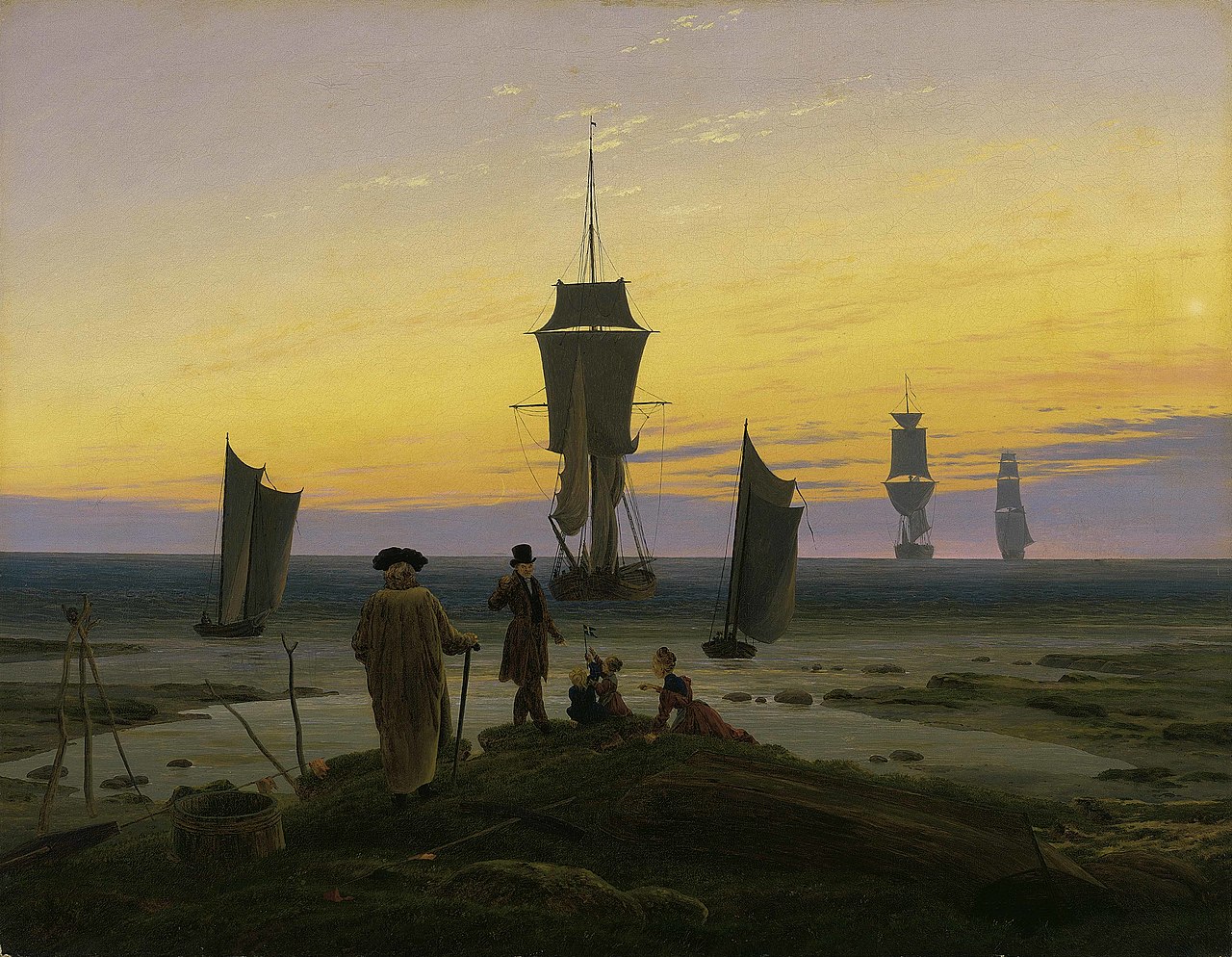
Caspar David Friedrich (1774–1840) was a leading figure of German Romantic painting whose landscapes focus on mood, atmosphere and contemplative solitude. His scenes often feature isolated human figures set against mountains, sea, mist or ruins. Rather than straightforward topography, his compositions use nature as a vehicle for reflection on mortality, faith and the infinite.
Image gallery
10 Images




Characteristics and motifs
Friedrich is known for precise, ordered compositions and a restrained palette that heighten poetic atmosphere. Recurring motifs include the Rückenfigur (a figure seen from behind), Gothic or monastic ruins, low light, dawn and twilight, and dramatic horizons. These elements work together to suggest a spiritual or metaphysical presence without explicit religious iconography.
Life and development
Born and active in what is now Germany, Friedrich spent much of his career around Dresden and the Baltic coast. He trained in academic drawing and landscape studies and absorbed ideas from the wider European Romantic movement. For further context on the cultural movement that shaped his outlook, see Romanticism.
Notable works
- Wanderer above the Sea of Fog — emblematic Rückenfigur composition.
- Chalk Cliffs on Rügen — coastline and solitary contemplation.
- The Abbey in the Oakwood — ruins and funerary mood.
- The Sea of Ice (The Wreck of Hope) — Arctic symbolism of catastrophe.
These paintings are frequently reproduced and studied as milestones of landscape painting and the visual language of the sublime. More on Friedrich’s biography and archives can be found in specialized biographies and museum catalogues; a basic entry is available at biographical resources and general discussions of his pictorial approach at pages about landscape painting.
Legacy
Friedrich’s reputation has fluctuated: admired by contemporaries, later neglected, and rediscovered by art historians and modern artists who found in his work a bridge between Romantic symbolism and later developments in European art. His influence is felt in how landscape can carry philosophical and emotional meaning rather than merely record scenery.
Related articles
Author
AlegsaOnline.com Caspar David Friedrich: German Romantic Landscape Painter Leandro Alegsa
URL: https://en.alegsaonline.com/art/17415