
Carnivoramorpha
Carnivoramorpha is the mammal clade that includes modern Carnivora and their close extinct relatives, defined by shared skull and tooth features and an evolutionary history distinct from Creodonts.
Overview
Carnivoramorpha is a clade of placental mammals that groups the living order Carnivora with a set of their extinct relatives. Members of this assemblage share a suite of dental and cranial traits associated with meat-eating and omnivory. The name emphasizes their relationship to modern carnivores while excluding unrelated, superficially similar groups such as the Creodonts.
Image gallery
5 Images


Key characteristics
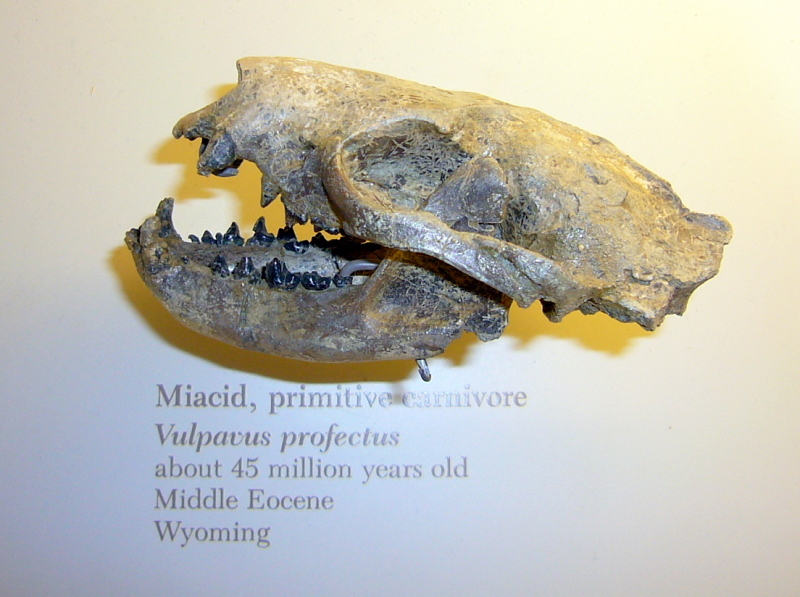
Carnivoramorpha are commonly recognized by adaptations in the teeth and skull that improve processing of flesh and other foods. Features often cited include the development of specialized shearing teeth (the carnassial pair in true carnivores), changes in jaw musculature, and modifications to the basicranial region of the skull. Early members were generally small, arboreal or scansorial mammals that later gave rise to more diverse sizes and diets.
Origins and evolutionary history
Fossil evidence places the origins of carnivoramorphan lineages shortly after the end-Cretaceous extinction, with a notable diversification during the Paleogene. Paleontologists distinguish the clade from other early carnivorous mammals by both skeletal anatomy and phylogenetic analyses. Over time some lineages evolved into the two major branches of living carnivores (often thought of as feliform and caniform groups), while others remained small and eventually died out.
Ecology and importance
Species within Carnivoramorpha have occupied a broad range of ecological roles—from small insectivores and omnivores to the apex predators found among modern carnivores. Their evolutionary innovations in dentition and jaw mechanics facilitated exploitation of new food resources and helped shape terrestrial food webs in Cenozoic ecosystems.
Distinctive relationships and clarification
- Carnivoramorpha is considered basal to the crown-group Carnivora in many classification schemes, meaning it includes early relatives that are closely related to but outside the modern order.
- Creodonts, though also carnivorous, are a separate evolutionary experiment in meat-eating mammals and are not members of Carnivoramorpha.
Research and fossil record
Ongoing paleontological and molecular studies continue to refine the boundaries and internal relationships of Carnivoramorpha. New fossil discoveries, particularly of small Paleogene mammals, provide important data about how characteristic carnivoran features evolved. For summaries and taxonomic treatments see specialist literature and reviews that synthesize fossil, anatomical, and genetic evidence.
Related articles
Author
AlegsaOnline.com Carnivoramorpha Leandro Alegsa
URL: https://en.alegsaonline.com/art/17162
Sources
- ohiou.edu : ohiou.edu/phylocode/IPNM.pdf
- journals.cambridge.org : journals.cambridge.org/action/displayAbstract;jsessionid=C755D4C7A1168E382EAD166AE9CC6DD9…