
Byelorussian Soviet Socialist Republic (BSSR): history and legacy
The Byelorussian Soviet Socialist Republic was a founding republic of the USSR (1922–1991). This article outlines its formation, institutions, wartime experience, society, and transition to the independent Republic of Belarus.
Overview
The Byelorussian Soviet Socialist Republic (commonly abbreviated BSSR) was one of the constituent republics of the Union of Soviet Socialist Republics. It was established in the aftermath of World War I and revolutionary upheaval and became one of the USSR's founding republics in 1922. During its existence the BSSR served as the Soviet administrative unit for much of the territory of what is today the Republic of Belarus, with the city of Minsk as its capital. The republic's official names and English transliterations changed over time; "Byelorussian" (an older form) and "Belarusian" (modern) both appear in historical sources.
Image gallery
10 Images
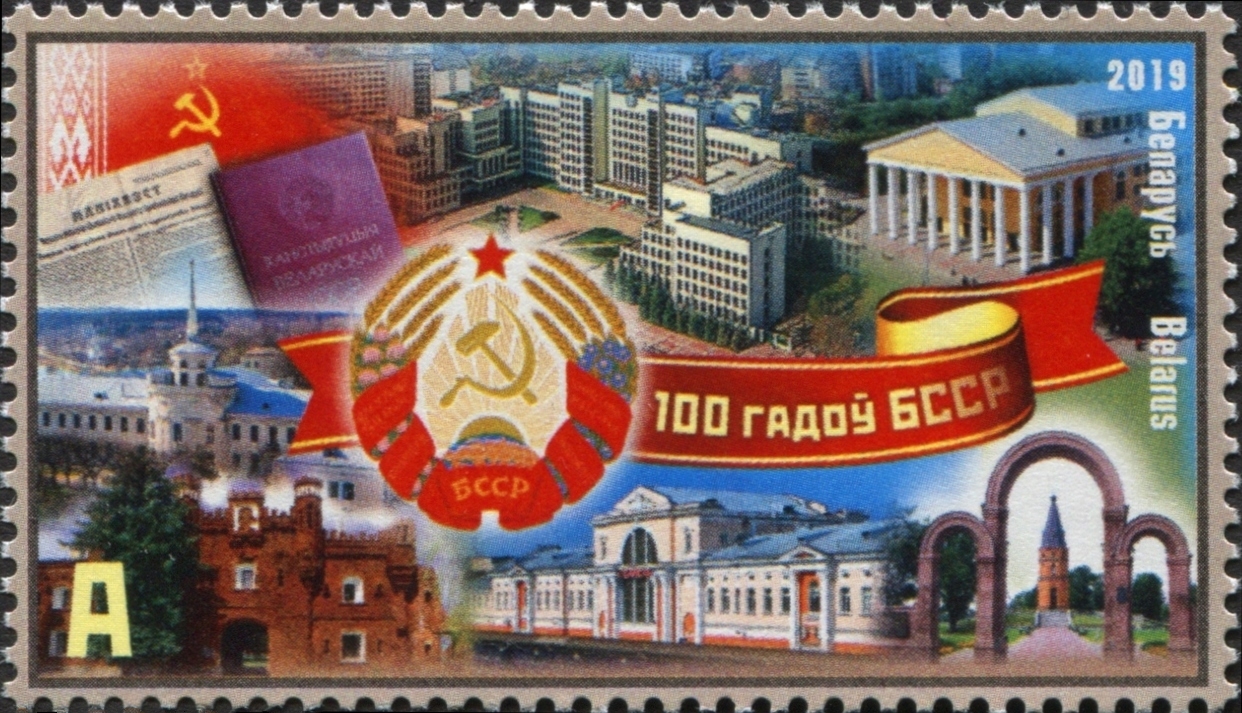


Formation and territorial development
The BSSR emerged in a period of shifting borders in Eastern Europe. Its boundaries were adjusted several times in the 1920s and 1930s as the Soviet state consolidated control and following the Soviet–Polish border changes of 1939. The republic incorporated territories with mixed Belarusian, Polish, Lithuanian and Jewish populations, producing a multiethnic society that the Soviet administration organized under the framework of a union republic.
Wartime experience and international role
Like many areas of the Soviet Union, the BSSR suffered catastrophic damage during the German invasion of the Soviet Union in World War II. Large parts of the republic were occupied by Nazi Germany, and the war years saw widespread destruction, population displacements and loss of life. The BSSR later took part, with the Ukrainian SSR and the Soviet Union itself, in international diplomacy: it was represented among the founding participants at the creation of the United Nations in 1945, a status that reflected Soviet policy to give additional seats to certain union republics.
Government, language and economy
The republic was governed under the Soviet model: the Communist Party of Byelorussia exercised political leadership in alignment with the Communist Party of the Soviet Union. Official institutions—republican government bodies, courts and administrative organs—implemented Moscow-directed plans for industrialization, collectivization of agriculture and postwar reconstruction. The cultural policy combined promotion of local language and traditions with strong pressures toward Russian language use and Soviet identity.
- Administration: republican ministries and soviets mirrored all-Union structures.
- Economy: heavy industry, agriculture in collective farms, and recovery after World War II.
- Society: multiethnic composition, Soviet education and cultural institutions.
Late Soviet period and transition to independence
During the later decades of the USSR the BSSR experienced industrial growth, urbanization and social change, but also environmental and demographic challenges. The 1986 Chernobyl disaster affected parts of the republic and had lasting public-health and ecological consequences. In 1991, amid the broader collapse of Soviet authority, the Byelorussian Soviet Socialist Republic declared sovereignty and then independence, after which it became known as the Republic of Belarus. The transition involved the transformation of institutions, economy and foreign relations as the new state took its place in post‑Soviet Europe.
Notable distinctions and legacy
Historically the BSSR is remembered for its role as a Soviet union republic, its wartime suffering and reconstruction, and its complex mix of ethnic and linguistic influences. Its status as a founding member of the Soviet Union and as an original participant in the United Nations illustrates the distinctive legal and diplomatic footprint some union republics had in the 20th century international order. Modern Belarus traces key elements of its statehood and institutions to the Soviet period while also adapting to sovereignty and new international relationships.
References to related subjects: see constituent republics of the USSR, the Soviet Union, the Ukrainian SSR, the Transcaucasian SFSR, occupation by Nazi Germany and the wider context of World War II.
Related articles
Author
AlegsaOnline.com Byelorussian Soviet Socialist Republic (BSSR): history and legacy Leandro Alegsa
URL: https://en.alegsaonline.com/art/15734