
Bürs (municipality in Vorarlberg, Austria)
Bürs is a small municipality in the Bludenz district of Vorarlberg, western Austria. The article summarizes its location, landscape, history, economy, transport links and local sights.
Overview
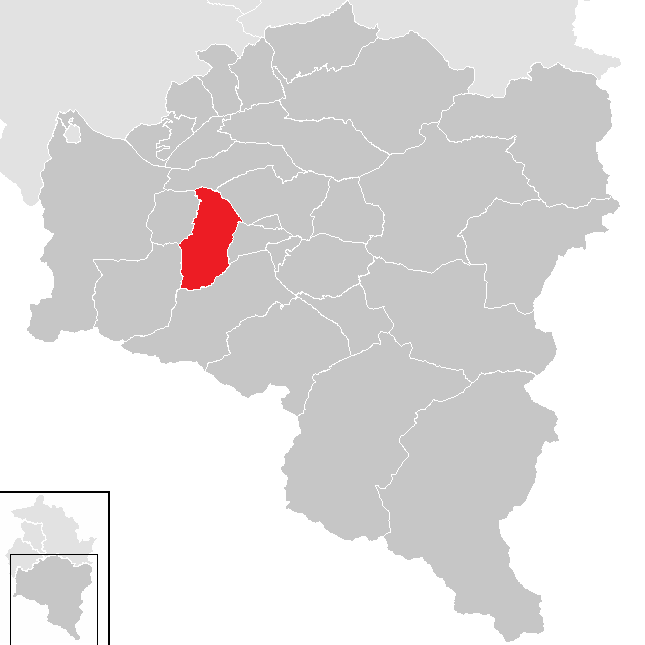
Bürs is a municipality whose administration belongs to the district of Bludenz in the western Austrian region. It lies within the Republic of Austria and the federal state known as Vorarlberg. As a local community it functions as one of several small towns and villages that form the inhabited Walgau valley and surrounding Alpine foothills.
Image gallery
2 Images
Geography and landscape
Bürs occupies a position in an Alpine valley environment, with steep wooded slopes rising not far from the inhabited terraces and lowlands. The local landscape is characteristic of western Austria: narrow valley floors, pastures, and mixed forests that provide opportunities for walking, mountain views and seasonal outdoor activities. The neighbourhood is closely connected to neighbouring towns and to the regional transport corridors that cross the valley.
History and development
The settlement history of Bürs follows the general pattern of the region: long-standing agricultural roots, medieval origins of local parishes and property holdings, and gradual change through the 19th and 20th centuries as communications and industry modernised. Over time the community shifted from a purely agrarian economy to a more mixed local economy, while preserving traditional customs and village structures.
Economy and transport
Today the local economy combines small-scale farming, craft and service businesses and a commuter relationship with nearby urban centres. Many residents work in larger towns while maintaining home-based or local enterprises. Bürs is served by regional roads and benefits from proximity to larger transport hubs in the Bludenz area, enabling rail and road connections to other parts of Vorarlberg and neighbouring regions.
Culture, recreation and sights
Local life in Bürs includes parish and community events, traditional alpine festivals and seasonal outdoor pursuits. Visitors and residents use the area for hiking, cycling and access to nearby winter sports facilities in the broader Bludenz region. Points of local interest typically include village churches, public spaces and rural architecture reflecting the region's cultural heritage.
Further information
- Administrative links and municipal services: municipal page.
- District context and regional planning: district information, Bludenz context.
- State and national frameworks: Vorarlberg, Austria.
- Regional tourism and visitor resources: local region.
For practical travel or administrative queries, consult local municipal or district offices and regional tourist resources to obtain up-to-date schedules, opening hours and seasonal information.
Related articles
Author
AlegsaOnline.com Bürs (municipality in Vorarlberg, Austria) Leandro Alegsa
URL: https://en.alegsaonline.com/art/15533
Sources
- statistik.at : "Dauersiedlungsraum der Gemeinden Politischen Bezirke und Bundesländer - Gebietsstand 1.1.2018"
- statistik.at : "Einwohnerzahl 1.1.2018 nach Gemeinden mit Status, Gebietsstand 1.1.2018"
- commons.wikimedia.org : Bürs