
Burial Hill (Plymouth, Massachusetts)
Historic cemetery atop a bluff in Plymouth with graves dating to the 1620s, including several Mayflower passengers like William Bradford and William Brewster; an important early colonial burial ground and heritage site.
Overview
Burial Hill is the historic cemetery that crowns a prominent rise overlooking the center of Plymouth, Massachusetts. Used continuously since the earliest years of the Plymouth Colony, the site contains headstones and markers that span several centuries and reflect changing styles of burial, commemoration, and landscape use in New England.
Image gallery
10 Images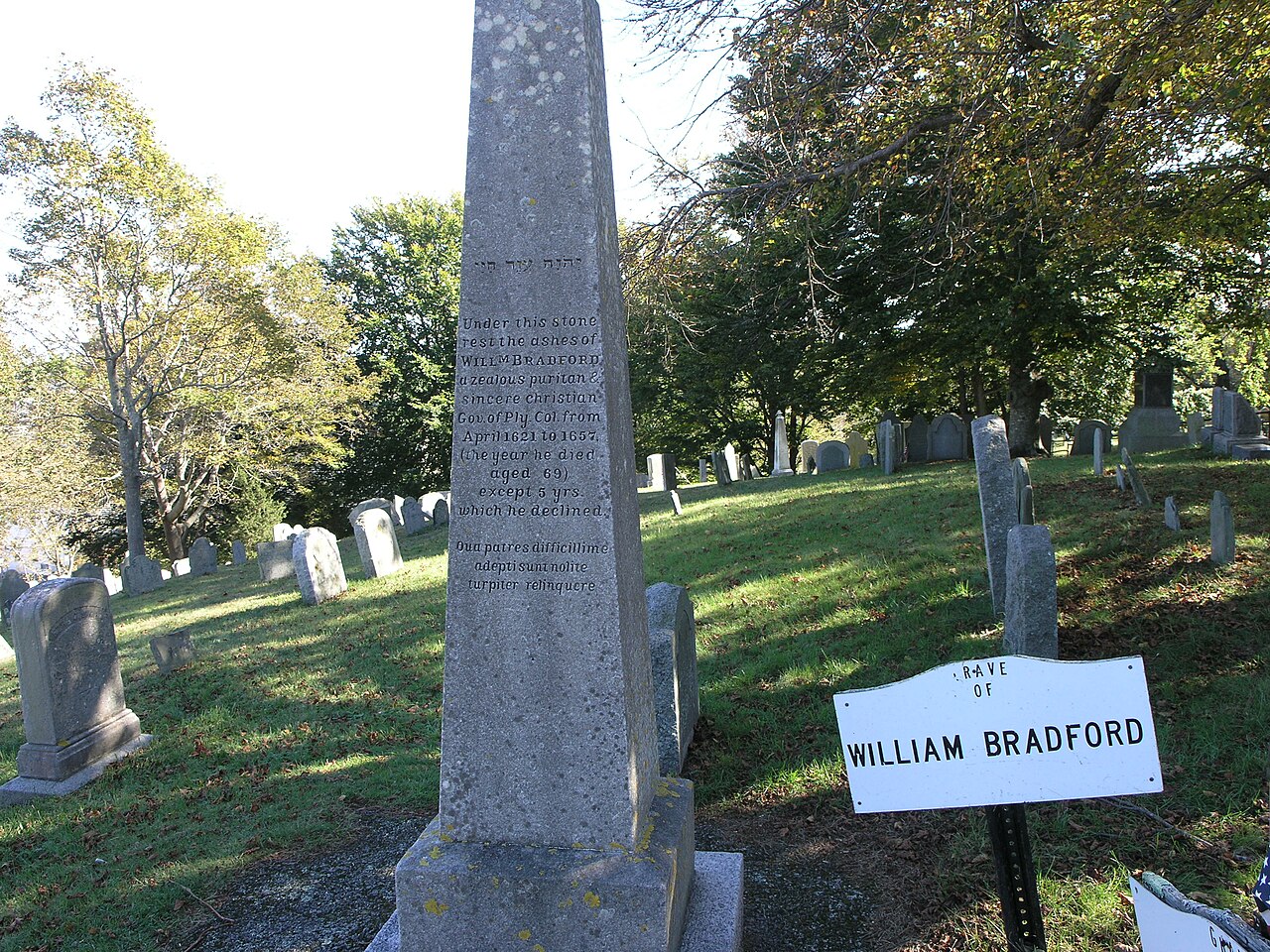


Location and physical characteristics
The burial ground occupies a relatively compact parcel on a hill near the town center and harbor. From its elevated position there are views across the waterfront and nearby streets. The grounds include clustered plots, upright stone headstones, a few chest tombs and later 19th- and 20th-century memorials; pathways among the graves show the cemetery’s long evolution from a simple village burying place to a landscaped historic site.
History and origins
Interments at the site began in the 1620s, during the first decades after the arrival of the Mayflower. As the town grew, Burial Hill became the primary burial place for many of the community’s leaders and families. Markers there record the presence of early colonists and later generations who lived through the colonial, revolutionary and modern eras.
Notable burials and memorials
- The cemetery contains the graves or memorials associated with prominent early colonists, including William Bradford, a long-time governor of the Plymouth Colony.
- It is also linked to William Brewster, an influential elder and religious leader among the Pilgrims.
- In addition to these individuals, Burial Hill holds veterans’ graves, family plots and later commemorative monuments honoring colonial history and local citizens.
Significance and preservation
Burial Hill is valued for its direct connection to the earliest years of English settlement in New England and for its collection of historic stones that illustrate changing funerary art. It forms part of Plymouth’s network of historic sites and is frequently interpreted for visitors interested in colonial history. Local organizations and municipal authorities have undertaken conservation and maintenance to protect fragile markers and to preserve the site’s appearance.
Visiting and context
The cemetery remains accessible to the public as a place of reflection and study; visitors are asked to respect markers and the privacy of any ongoing burials. As a focal point of Plymouth’s historic landscape, Burial Hill is commonly paired in visits with other local sites associated with the early colony. For more information, consult local heritage resources or municipal guides at Burial Hill resources and town references such as Plymouth information.
Related articles
Author
AlegsaOnline.com Burial Hill (Plymouth, Massachusetts) Leandro Alegsa
URL: https://en.alegsaonline.com/art/15431