
Bullitt (1968 film)
Bullitt is a 1968 American crime thriller directed by Peter Yates, noted for Steve McQueen's performance and an influential San Francisco car chase sequence.
Overview
Bullitt is a 1968 American crime thriller directed by Peter Yates and produced by Philip D'Antoni and Robert E. Relyea. The film stars Steve McQueen as Frank Bullitt, a hard‑nosed San Francisco police lieutenant assigned to protect a key witness in a high‑profile case. Combining a terse investigative story with urban atmosphere and a strong sense of realism, the film helped define a cooler, more restrained model of the modern action thriller.
Image gallery
6 Images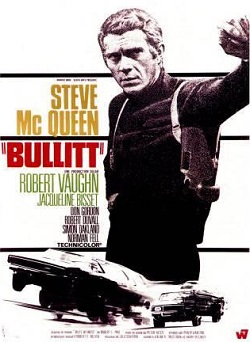


Production and notable elements
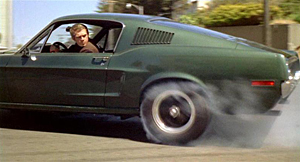
Filmed on location in San Francisco, Bullitt is widely remembered for its naturalistic cinematography, restrained score, and particularly for a long, high‑speed car chase that uses the city’s hilly streets as a dramatic backdrop. The chase sequence, staged with actual cars—most famously a 1968 Ford Mustang and a 1968 Dodge Charger—set a new standard for on‑screen vehicular action through tight editing and aggressive camera placement. The film’s editing received industry recognition and won an Academy Award.
Plot and tone
The plot follows Bullitt as he navigates department politics, threats from organized crime, and the personal cost of police work while trying to uncover who wants the witness dead. Rather than relying on melodrama, the movie emphasizes procedural detail, terse dialogue, and the elliptical cool associated with McQueen’s screen persona, establishing a tone that influenced later police and neo‑noir films.
Cast and key crew
- Lead actor: Steve McQueen as Frank Bullitt
- Supporting actors: (including) Robert Vaughn and Jacqueline Bisset
- Director: Peter Yates
- Producers: Philip D'Antoni and Robert E. Relyea
- Score: Lalo Schifrin; Cinematography: William A. Fraker; Editing: awarded by the Academy
Legacy and influence
Bullitt’s mix of terse storytelling, streetwise realism, and technical craft made it a touchstone for later action and police films. The car chase remains a reference point for filmmakers and car enthusiasts and is frequently cited in discussions of stunt work and editing. The film also reinforced Steve McQueen’s image as a screen icon of cool competence and helped popularize location shooting in major U.S. cities.
Further reading
For additional context on Bullitt’s production and its place in 1960s cinema, see related resources that discuss the film’s making, reception, and continuing reputation.
Related articles
Author
AlegsaOnline.com Bullitt (1968 film) Leandro Alegsa
URL: https://en.alegsaonline.com/art/15263