
Wesley Clark: U.S. Army General, NATO Commander, and 2004 Presidential Candidate
Overview of Wesley K. Clark: his military career, NATO command during the 1990s, post-retirement activities, 2004 Democratic presidential campaign, honors, and notable facts.
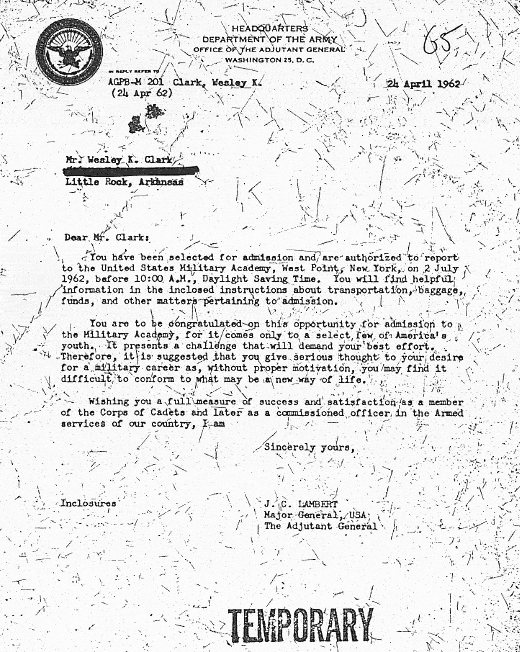
Wesley K. Clark (born December 23, 1944) is a retired four-star general of the United States Army. Over a 34-year military career he held senior command and staff positions and became widely known as the Supreme Allied Commander for NATO forces in Europe. After leaving uniformed service he remained active in public life, writing, commentary and occasional political engagement.
Image gallery
9 Images



Military career and roles
Clark rose through operational and staff assignments, serving in a variety of infantry and joint positions. He commanded at multiple levels before being named NATO's Supreme Allied Commander Europe (SACEUR), a post in which he directed alliance planning and operations during the late 1990s. His tenure included leadership during the Kosovo air campaign and diplomatic-military coordination across NATO partners. He retired from active duty at the end of his service after more than three decades in uniform.
Post-retirement activities
Following retirement, Clark moved into public commentary, writing and business. He has appeared as a television commentator, delivered lectures on security policy, and worked with private firms and non-profit organizations on defense and technology issues. He authored books and essays on strategy and national security topics and participated in initiatives addressing international affairs and veterans' issues.
2004 presidential campaign
In 2003–2004 Clark sought the Democratic nomination for President of the United States. His campaign emphasized national security experience and an alternative to the incumbent administration's policies. The bid attracted attention because of his military background, but he did not secure the nomination and withdrew from the race before the convention.
Awards, honors and legacy
- Clark received numerous military decorations and various civilian honors recognizing public service and leadership.
- Some accounts list high civilian awards among his recognitions; sources vary on specific citations such as the Presidential Medal of Freedom.
- He is remembered for shaping NATO operations in the post–Cold War period and for bringing military perspectives into broader public debate on foreign policy.
Notable facts and distinctions
- Born in Chicago, Illinois, Clark's background combined Midwestern roots with a career spanning decades of U.S. military and international service: Chicago.
- His 2004 candidacy is often cited as an example of a senior military leader entering domestic politics; the campaign took place during the 2004 Democratic primary season: 2004, Democratic presidential politics.
- Clark's public role after uniformed service illustrates a common pathway for senior officers into commentary, advocacy and private-sector work on security issues.
Overall, Wesley Clark's career bridges operational command, alliance leadership and post-service public engagement. His time as a NATO commander and later involvement in policy discussions continue to be referenced in analyses of American military leadership and twentieth- and twenty-first-century coalition operations.
Author
AlegsaOnline.com Wesley Clark: U.S. Army General, NATO Commander, and 2004 Presidential Candidate Leandro Alegsa
URL: https://en.alegsaonline.com/art/147629