
Tornado outbreak of March 2–3, 2020
A destructive overnight tornado outbreak struck middle Tennessee and nearby states on March 2–3, 2020, producing urban and long‑track tornadoes, dozens of deaths, many injuries, and widespread power outages.
Overview
On the night of March 2 and into the morning of March 3, 2020, a severe convective system produced multiple large tornadoes across parts of the central United States. The greatest impacts were recorded in middle Tennessee, where tornadoes moved through populated communities, caused extensive structural damage and led to loss of life. One tornado moved through portions of downtown and west Nashville, an event that received intense media attention due to the urban setting. Authorities reported at least 25 fatalities, at least 150 injured people, and widespread power outages affecting more than 70,000 customers.
Image gallery
7 Images


Notable tornado tracks and affected communities
The tornado that passed through Nashville damaged residential neighborhoods, businesses and some older commercial structures. The downtown and west Nashville path brought immediate comparisons to an earlier damaging tornado that affected East Nashville in 1998. Other confirmed touchdowns were recorded elsewhere in Tennessee, including a documented touch down in western Tennessee between the small communities of Bradford and Skullbone. Reports and damage surveys also noted tornadoes or severe storm effects in parts of southeastern Missouri and western Kentucky, where local officials worked to clear debris and assess structural damage.
Human and infrastructure impacts
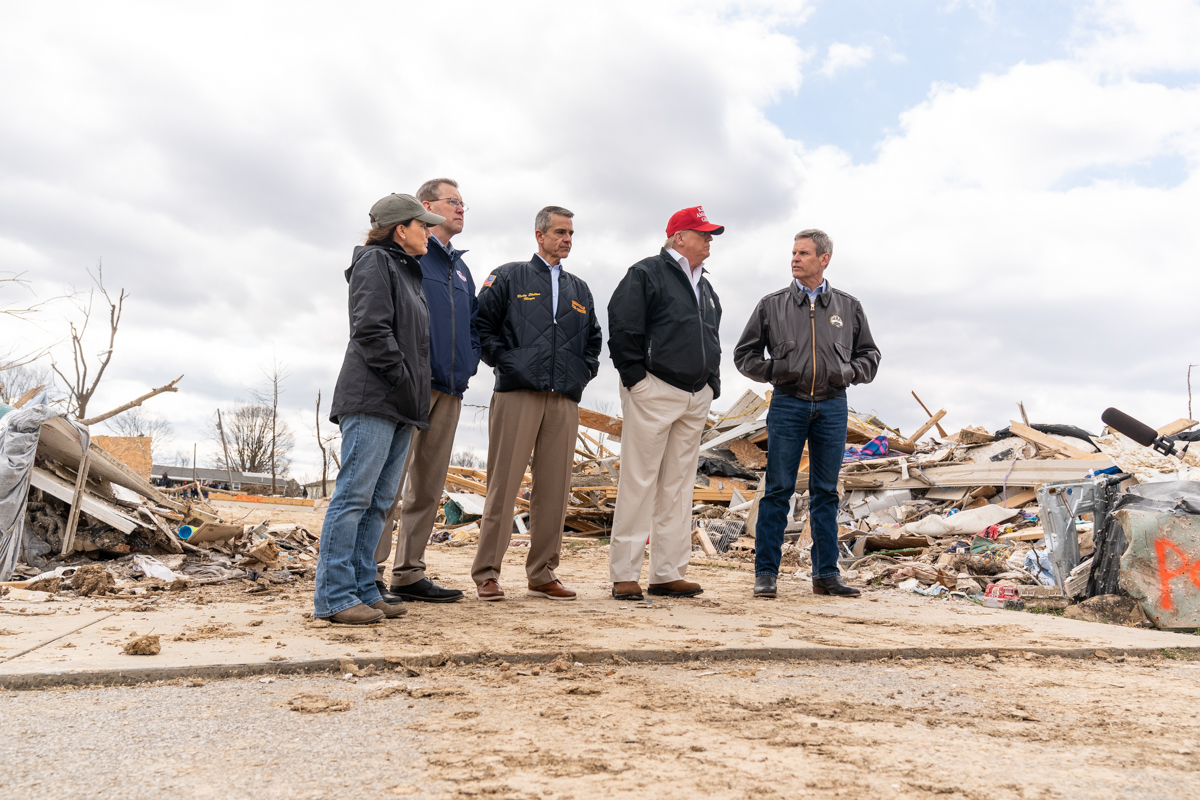
Fatalities, injuries and extensive property damage were concentrated in areas struck by the strongest tornadoes. Damage included destroyed or heavily damaged homes, collapsed walls, roofs torn from buildings, overturned vehicles and downed power and communication lines. Widespread outages and road blockages complicated emergency response during the overnight hours. Local emergency management agencies established shelters and coordinated search and rescue operations for residents in damaged neighborhoods.
Response and official actions
State and local officials mobilized emergency responders, utility crews and public works teams to restore essential services and remove debris. The governor of Tennessee declared a state of emergency to facilitate response and recovery efforts; information and announcements were issued by the governor's office here. Federal attention followed the disaster, and a presidential visit was scheduled for March 6, with the president's planned trip referenced by officials here. Recovery efforts included temporary sheltering, restoration of utilities, damage assessments and the start of long‑term rebuilding planning.
Meteorological context
The outbreak occurred as a line of strong thunderstorms and discrete supercells moved across the region overnight. Tornadoes that form at night pose heightened risk because many people are asleep and may not receive or respond promptly to warnings. Long‑track tornadoes and multiple vortices can form in such dynamic setups, producing widespread damage across both urban and rural areas. Meteorologists and emergency managers later emphasized the importance of multiple, redundant alert methods and community preparedness for nocturnal severe weather.
Aftermath and lessons
In the weeks after the event, communities focused on debris removal, rebuilding and mental‑health support for survivors. The outbreak prompted discussions about building resilience in urban areas, the value of shelters and safe rooms, and the need to maintain and improve warning systems that reach people during overnight hours. State and local agencies, alongside volunteer organizations, provided ongoing assistance while communities planned longer‑term mitigation and recovery measures. For local updates and archived statements about the event, see municipal and state emergency management sources and local media coverage, including statements issued by the city of Nashville.
Author
AlegsaOnline.com Tornado outbreak of March 2–3, 2020 Leandro Alegsa
URL: https://en.alegsaonline.com/art/146873