
Broken Blossoms (1919 silent film)
D. W. Griffith’s 1919 silent melodrama Broken Blossoms follows a tragic friendship in London’s Limehouse. Noted for Lillian Gish’s performance, expressive cinematography and later preservation by the U.S. National Film Registry.
Overview
Broken Blossoms, also released as The Yellow Man and the Girl, is a 1919 silent drama directed by D. W. Griffith. The film centers on a frail young woman who suffers abuse at home and the gentle Chinese man who befriends and shelters her. It premiered on May 13, 1919 and was distributed by United Artists, a studio often associated with filmmaker-driven releases in that era. For basic film credits and viewing information see Broken Blossoms and for director background see D. W. Griffith.
Image gallery
3 Images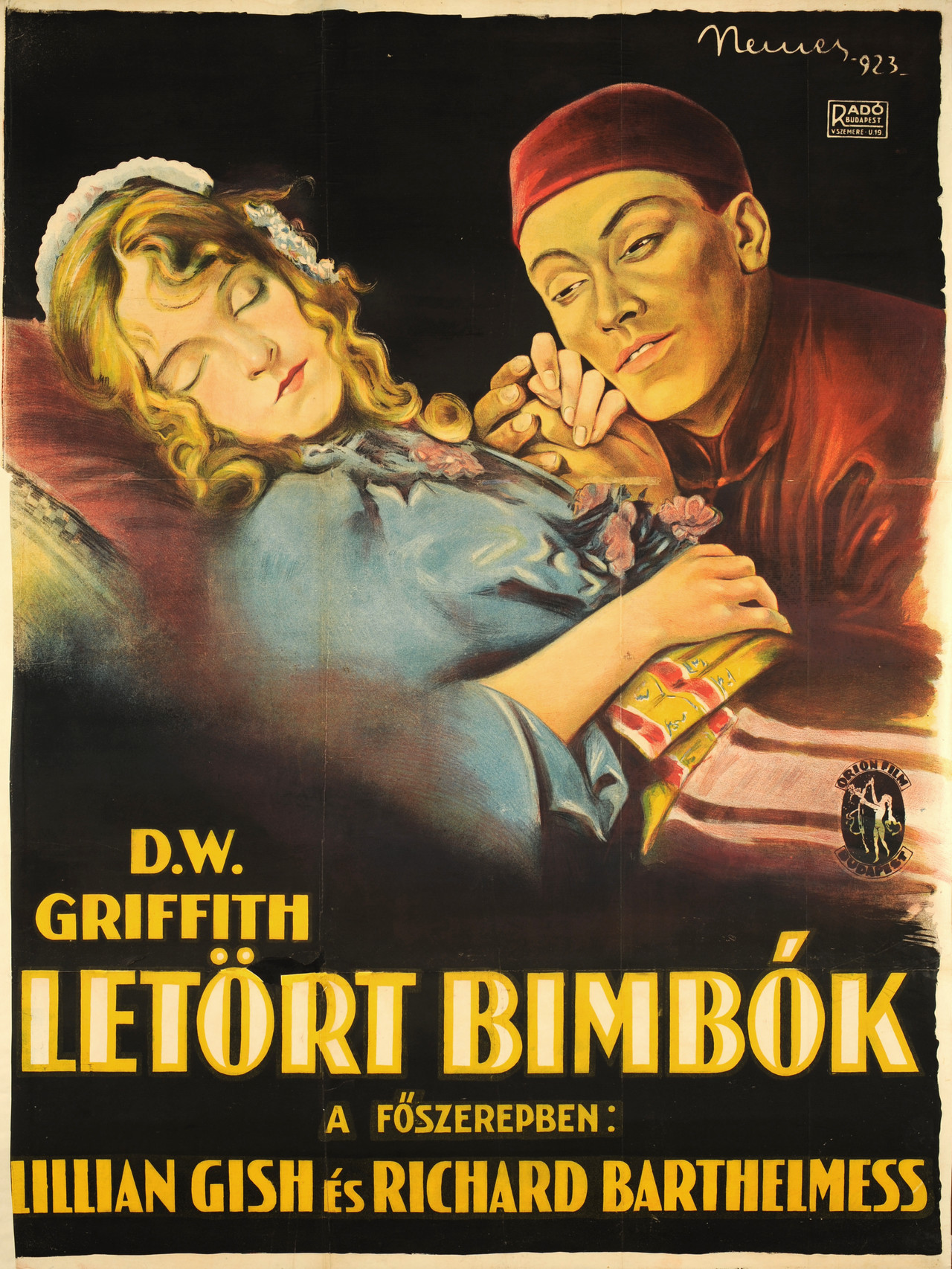


Production, style and major elements
Made during the late silent era, the film is distinguished by its moody lighting, careful framing, and reliance on facial close-ups to convey emotion without sound. Lillian Gish’s portrayal of the abused girl is widely cited as a central performance, and other principal actors contributed to the intimate, stage-like atmosphere. The film adapts a short story from Thomas Burke’s Limehouse tales, transposing the setting and characters into a cinematic melodrama.
Themes, controversy and reception
Broken Blossoms explores themes of vulnerability, compassion across cultural divides, and urban hardship. Contemporary audiences praised its artistry and Gish’s acting, while later critics have noted problematic elements: the depiction of race, the stereotyped Chinatown setting, and the fact that the Chinese character was played by a non-Asian actor—issues often discussed in studies of early American cinema. The original source material used language and tropes now considered offensive, and modern readings treat the film with both historical appreciation and critical caution.
Legacy, preservation and influence
The film has been influential in film history courses for its visual storytelling and mood. In 1996 it was selected for preservation in the U.S. National Film Registry as "culturally, historically, or aesthetically significant," an honor cataloged by the Library of Congress: National Film Registry entry. Distribution history and studio context are discussed in sources on early independent distribution, for example materials related to United Artists.
Notable facts and viewing today
- The picture is silent and presented in black-and-white with intertitles; its visual techniques influenced later filmmakers exploring mood and character.
- It remains a frequent subject of restoration projects and film retrospectives because of its place in Griffith’s body of work and the silent era canon.
- Modern presentations often include contextual introductions that address the film’s historical attitudes and production practices.
For students and viewers, Broken Blossoms offers a compact case study in early cinematic melodrama: a work admired for craft and performance but also reassessed for its cultural assumptions. Consult authoritative archives and film history resources when researching its production, reception, and restoration history.
Related articles
Author
AlegsaOnline.com Broken Blossoms (1919 silent film) Leandro Alegsa
URL: https://en.alegsaonline.com/art/14638