
Brother Rat and a Baby (1940 film)
A 1940 American comedy directed by Ray Enright, a sequel to Brother Rat that follows former cadets adjusting to civilian life and the comic upheaval caused by a newborn.
Overview
Brother Rat and a Baby is a 1940 American comedy film directed by Ray Enright. Produced and distributed during the studio era, it serves as a direct sequel to the earlier film Brother Rat. The picture reunites much of the original cast and continues the lighthearted, situational humor that characterized its predecessor.
Image gallery
1 Image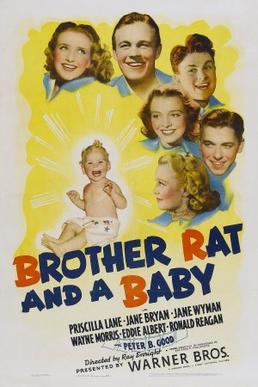
Principal cast
Plot and style
The story picks up after the events of the first film, following young men who have left cadet life and are finding their footing in civilian society. Much of the comedy arises from domestic misunderstandings, romantic entanglements and the chaos that ensues when an unexpected baby becomes the center of attention. The tone is jaunty and situational rather than satirical, reflecting the era's taste for fast-paced, character-driven farce.
Production and context
As a studio-era sequel, the film was crafted to capitalize on familiar characters and audience goodwill. Sequels of this type were common as studios sought reliable box-office returns and opportunities to showcase contract players. The cast includes several performers who would remain visible in later decades, and the film illustrates typical production values and narrative priorities of early 1940s American comedies.
Reception and legacy
Contemporary critics regarded the film as pleasant, if lightweight, entertainment. Its main value today is historical: it offers examples of studio casting, comic timing of the period, and early screen appearances by actors who later achieved greater fame. Notably, two of the cast members later became widely recognized beyond their acting careers, which contributes to modern interest in the picture.
Further notes
For readers seeking more information on the director or individual performers, follow the links provided for background on Ray Enright and the principal cast. The film is often referenced in discussions of cinematic sequels, wartime-era entertainment and the career trajectories of its actors.
Related articles
Author
AlegsaOnline.com Brother Rat and a Baby (1940 film) Leandro Alegsa
URL: https://en.alegsaonline.com/art/14756