
British Rail Mark 3 passenger coach
British Rail's Mark 3 is a family of steel-bodied passenger coaches introduced in 1976 for high-speed service; noted for improved suspension, braking and long service life across InterCity and loco-hauled trains.
The British Rail Mark 3 is a generation of mainline passenger coaches introduced in 1976 by British Rail. It was developed principally for use on the High Speed Train (HST) sets and was engineered for sustained high-speed running. Mark 3 vehicles were also adapted for use as conventional loco-hauled stock during the West Coast Main Line (WCML) electrification programme and formed the basis for several later rolling stock variants.
Image gallery
10 Images


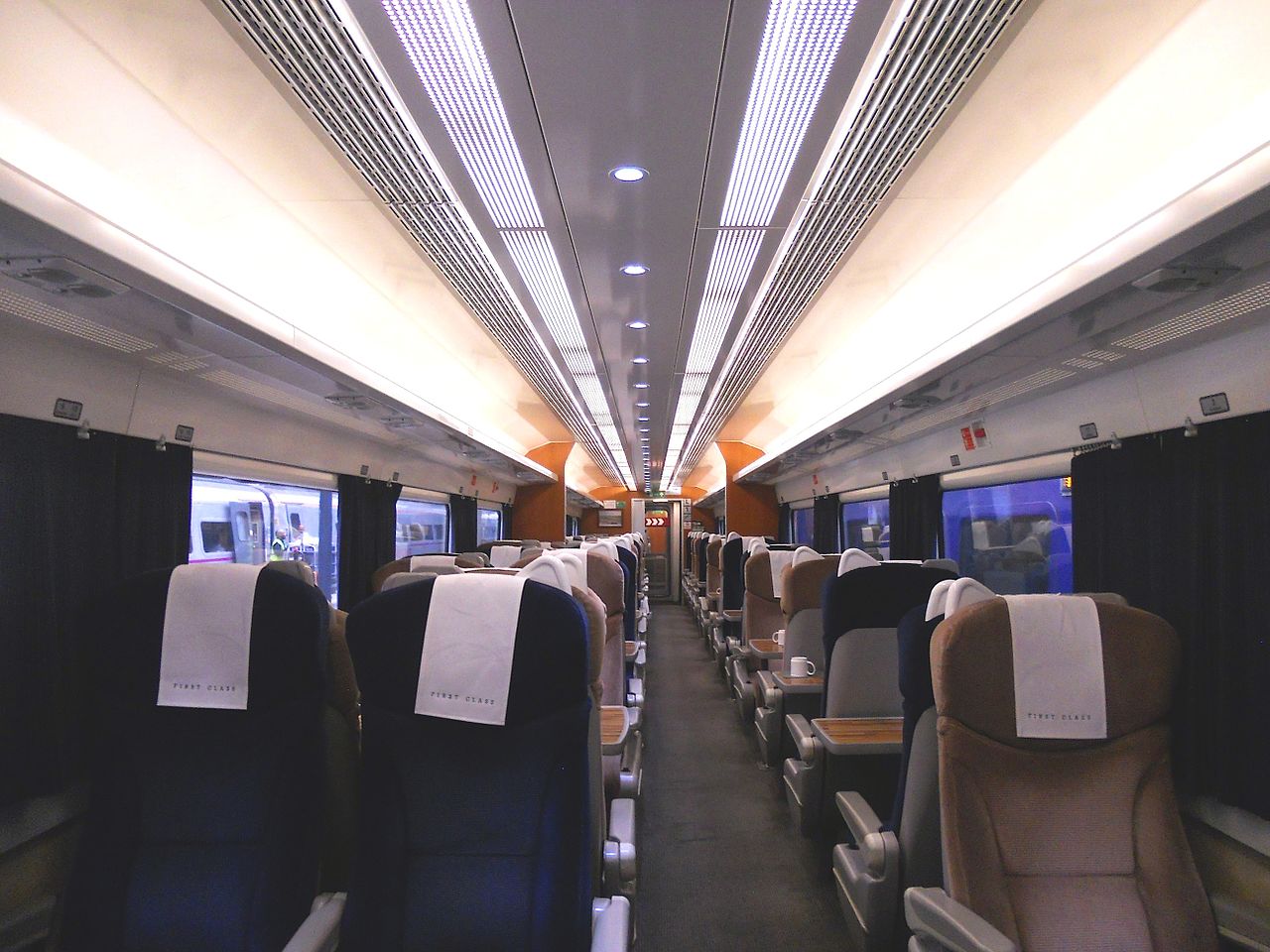

Characteristics
Mark 3 coaches represented a step change from earlier designs, offering a stronger, smoother-riding coach intended for higher speeds. Notable features included improved suspension systems that reduced yaw and roll, disc braking for better stopping performance, and a robust steel bodyshell. The design supported sustained operation at the 125 mph speeds associated with the HST era and accommodated a range of interior fittings from standard open saloons to first-class compartments.
Development and variants
Introduced as the Mark 3 family, the basic design was adapted into sub-classes and specialised vehicles to meet different operational needs. Some batches were modified for locomotive-hauled service and were often referred to by batch codes such as Mark 3A and 3B. Production of Mark 3 carriages ran into the late 1980s, with the final purpose-built coaches completed in 1988. The basic engineering concepts continued to influence multiple-unit designs built into the early 1990s.
Service life and uses
Mark 3 coaches were at the heart of InterCity services for several decades, forming the raked, comfortable portion of HST sets alongside powerful diesel power cars. Beyond express work, they were used in loco-hauled diagrams, suburban and regional services when refurbished, and in departmental roles such as test trains or staff accommodation. Throughout their operational life many coaches received interior and door-system upgrades to meet evolving safety and accessibility standards.
Legacy and notable facts
- The Mark 3 is widely credited with improving passenger comfort and reliability for high-speed services introduced in the 1970s.
- Its technical advances—particularly suspension and braking—set a new benchmark for British coaching stock and informed later designs.
- Many Mark 3 vehicles enjoyed long service lives and were refurbished or repurposed rather than retired immediately, illustrating the durability of the basic design.
Related articles
Author
AlegsaOnline.com British Rail Mark 3 passenger coach Leandro Alegsa
URL: https://en.alegsaonline.com/art/14551