
British Rail Classes 371, 381 and 471 — proposed Networker EMUs
Overview of the unbuilt British Rail Classes 371, 381 and 471: proposed members of the Networker family intended for services in south‑east England, their design aims, roles and legacy.
Classes 371, 381 and 471 were proposed types of electric multiple unit that formed part of British Rail's broader Networker programme. The schemes were developed to modernise suburban and regional fleets and to replace ageing slam‑door trains operating across the south‑east of England. Although drawings and specifications were prepared, these particular classes were not constructed and remained design proposals.
Image gallery
7 Images


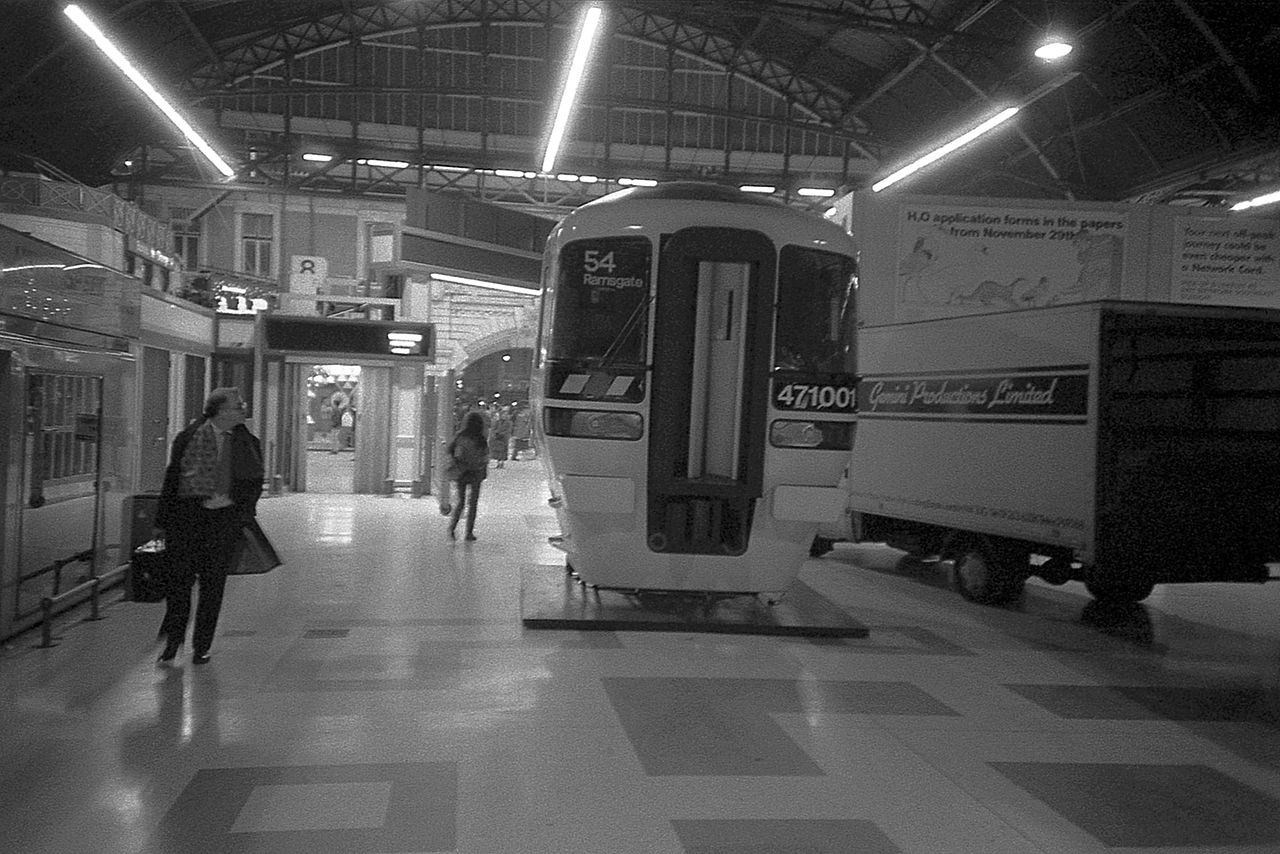


Design intent and characteristics
The three classes were conceived as related variants sharing a common technical and visual family resemblance, but adapted to different service roles. Plans envisaged modern features typical of late 20th‑century EMUs: automatic sliding doors, improved passenger information, higher acceleration for stop‑start services and compatibility with contemporary electrification systems. Some proposals considered dual‑voltage capability so units could operate on third‑rail and overhead sections as required.
Roles and intended use
Each class was intended for a distinct traffic pattern. In outline, one variant targeted inner‑suburban stopping services, another was aimed at longer outer‑suburban or regional runs with fewer stops, and a third was proposed as a higher‑capacity or longer‑distance unit for cross‑network operation. All were tailored to routes in and around London and the wider south‑east of England, where a mixture of electrification and dense commuter demand created a need for flexible train designs.
History and cancellation
The Networker programme was developed under British Rail's Network SouthEast sector to renew rolling stock. Changing priorities, funding pressures and the rail privatisation process led to many initial proposals being scaled back or cancelled. While other Networker types were built and entered service, Classes 371, 381 and 471 did not progress beyond detailed design and planning stages.
Legacy and significance
Although unbuilt, these proposed classes influenced later thinking about modular designs and the desirability of interoperable fleets. Lessons from the Networker proposals informed subsequent procurement by private operators and manufacturers who continued to favour common components across multiple service types. Railway historians and enthusiasts often cite the 371/381/471 proposals when discussing British Rail's late‑era planning and the effects of privatisation on rolling stock programmes.
Notable distinctions
- Related but distinct variants: intended to share a family identity while serving different service patterns.
- Modernisation aim: part of a broader effort to replace older slam‑door stock with vehicles offering improved safety and comfort.
- Unbuilt status: examples of late British Rail designs that were never constructed due to organisational change and shifting procurement practices.
Related articles
Author
AlegsaOnline.com British Rail Classes 371, 381 and 471 — proposed Networker EMUs Leandro Alegsa
URL: https://en.alegsaonline.com/art/14536
Sources
- therailwaycentre.com : EMU List