
Rod Hull and Emu: British comedian and his notorious puppet
Rod Hull (1935–1999) was an English television entertainer best known for performing with Emu, a mute, aggressive arm-length puppet modeled on the Australian emu. He rose to fame in the 1970s and 1980s.
Overview
Rod Hull was an English entertainer and television personality who became widely known for his partnership with a puppet called Emu. Hull developed a distinctive stage persona in which the puppet—an arm-length, mute figure modelled on the Australian flightless bird—behaved aggressively toward presenters and guests, producing chaotic, physical comedy. Hull and Emu were fixtures of British light entertainment in the 1970s and 1980s and made numerous international appearances.
Image gallery
1 Image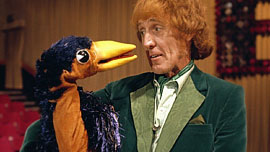
Early life and formation
Born on the Isle of Sheppey, Kent, Hull spent part of his adult life in Australia before returning to Britain to pursue television work. His years abroad helped shape the idea of a bird-like puppet and informed the Australian references that became part of Emu's identity. Hull worked variously as a performer and entertainer before the Emu act became his signature feature.
Emu: design and comic method
Emu was not a talking puppet; instead, Hull relied on movement, timing and mime to convey personality. The puppet was operated from below the arm and depended on fast, unpredictable gestures to surprise other performers and audiences. This non-verbal, physical approach made the act highly visual and adaptable to different kinds of shows. The puppet's design intentionally echoed the long neck and awkward gait of the emu, allowing quick head-thrusts and pecks that became a comic 'attack' motif.
Television career and notable appearances
Hull and Emu appeared on a variety of TV programmes and special events. Typical bookings included chat shows, variety bills and international television spots. Notable examples are:
- Parkinson — a famously chaotic interview moment remains part of the act's public memory.
- The Tonight Show Starring Johnny Carson — one of several U.S. appearances that introduced Emu to American audiences.
- Royal Variety Show — a high-profile variety appearance in the United Kingdom.
Personal life
Hull had a family and fathered six children. His career mixed club dates, television performances and seasonal variety appearances. He was associated in the public eye with the Emu character to such an extent that the puppet often overshadowed his name; nevertheless he remained the creative force and operator behind the act.
Accident and legacy
Rod Hull died in March 1999 at age 63 following a fall at his home. While attempting to adjust a television aerial during a live European club match, he slipped from the roof of his bungalow in Winchelsea, East Sussex, and fell through the greenhouse. He was taken to hospital in Hastings but was pronounced dead shortly afterwards; his death was ruled an accident. References to the places connected to these events appear in several accounts of his life and career.
Significance and reception
Hull's work is remembered primarily for its physical comedy and the audacious persona of Emu. The act influenced later performers who used non-verbal puppetry and prop-driven shock humour on television and in live shows. While opinions about the taste and longevity of the act vary, Emu remains a recognizable figure from British entertainment history and a case study in how a simple puppet concept can become an international comic trademark.
For further reading about Hull's life and appearances see contemporary television histories and programme archives: biographical entries, puppet and ventriloquism studies, and materials relating to Australian wildlife which inspired the figure: Australian context and the emu as a bird. Local records note Hull's birthplace on the Isle of Sheppey and the county of East Sussex. Details of the accident are reported with references to his bungalow in Winchelsea, the greenhouse he fell through, and the hospital in Hastings.
Author
AlegsaOnline.com Rod Hull and Emu: British comedian and his notorious puppet Leandro Alegsa
URL: https://en.alegsaonline.com/art/145029