
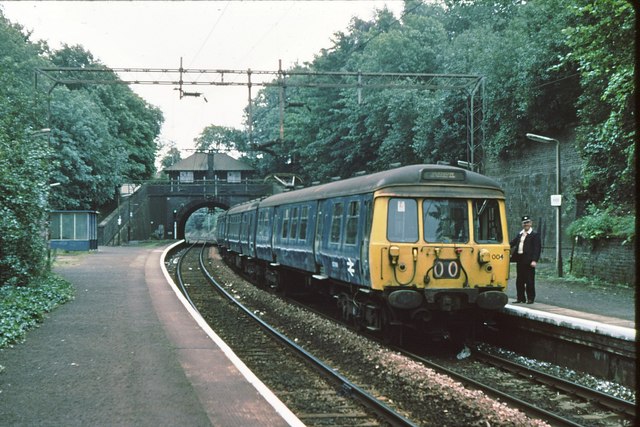
British Rail Class 303 electric multiple unit (the "Blue Train")
Three-car suburban electric multiple units introduced in 1960 for Glasgow electrification. Nicknamed 'Blue Trains', they were designated AM3 pre-TOPS and remained central to Strathclyde services until final withdrawal in 2002.
Overview
The British Rail Class 303 was a family of three-car electric multiple units introduced in 1960 to operate newly electrified suburban routes in and around Glasgow. Familiarly known as the "Blue Train" because of their distinctive livery in early years, they provided frequent commuter services on the North Clyde and Cathcart Circle lines and became a familiar sight on the Strathclyde network for several decades.
Image gallery
7 Images


Design and technical details
Each Class 303 set was formed as a three-car unit with driving trailers at each end and a motor coach in the centre, a configuration well suited to intensive suburban operation and rapid turnarounds. Equipment was built to work with 25 kV AC overhead electrification, the standard for mainline UK electrified routes introduced in the post-war period. Interior arrangements emphasised seated and standing capacity for short-distance journeys, with multiple doorways to speed boarding and alighting during peak periods.
Construction and early years
The units were introduced to support the modernization of Glasgow's commuter railways and to provide an electric alternative to steam and early diesel services. Initially classified as AM3 under British Rail's pre-TOPS alphanumeric system, they were later renumbered as Class 303 under the TOPS system. Their arrival coincided with wider electrification programmes that reshaped suburban travel patterns by offering more frequent and reliable services.
Service and operation
Class 303s operated intensive local timetables, serving inner suburban routes into Glasgow Queen Street and cross-city journeys on electrified corridors. Their consistent availability and relatively simple systems made them useful not only in passenger service but also as a training and operational standard for depots and crews. Over the decades they worked alongside other EMU types as the region's rolling stock mix evolved.
Refurbishment and later modifications
Throughout their service life, many units received periodic overhauls and interior updates to improve passenger comfort and meet evolving standards. Some received updated seating, lighting and minor rewiring or control upgrades; however, the overall appearance and basic mechanical layout remained recognisable. These mid-life works extended operational life while newer technologies were developed for subsequent generations of suburban trains.
Withdrawal and preservation
From the late 1980s and into the 1990s, newer EMUs and changes in operational requirements led to a phased withdrawal of Class 303 units. The final services were withdrawn in 2002. A small number of vehicles have been saved for preservation and static display, where they serve as examples of early post-war suburban electric multiple-unit design and of the period of expansion in UK railway electrification. For information on surviving examples and preservation efforts see preservation resources.
Legacy and significance
Despite being superseded by more modern units, the Class 303 left a lasting legacy on Glasgow commuter travel. Their role in enabling frequent and reliable suburban services contributed to travel patterns in the Strathclyde area and the public perception of electric rail transport. The nickname "Blue Train" remains part of local transport folklore and is often used when discussing mid-20th century rail developments in Scotland.
Further reading and resources
- Fleet lists and photographic archives: fleet records
- Technical descriptions and formation diagrams: formation details
- Service histories and timetable information: service history
- General summary and introduction: overview
- Preservation groups and locations: preservation
Note: This article summarises broadly known facts about the Class 303 family. Specific technical figures, builder details and unit counts are available from specialised reference works and dedicated archival sources linked above.
Related articles
Author
AlegsaOnline.com British Rail Class 303 electric multiple unit (the "Blue Train") Leandro Alegsa
URL: https://en.alegsaonline.com/art/14389