
O Brother, Where Art Thou? (2000) — film overview and significance
A 2000 crime-comedy by the Coen brothers set in 1937 Mississippi, loosely adapting Homer's Odyssey; notable for its music, period production design, and modern digital color grading.
Overview
O Brother, Where Art Thou? is a 2000 American crime comedy film directed by Joel and Ethan Coen. The story follows three escaped convicts as they travel across Depression-era Mississippi in search of freedom, fortune and identity. The movie blends broad comedy, Americana folklore and mythic elements drawn from classical epic, while maintaining the Coens' distinctive tone of irony and visual invention.
Image gallery
1 Image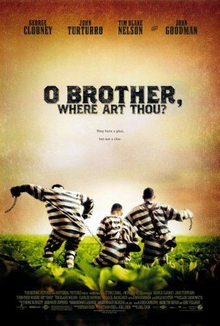
Plot and principal cast
The central characters are Ulysses Everett McGill, a fast-talking ex-con played by George Clooney, and his two companions, Pete and Delmar. Along their journey they encounter figures who echo episodes from Homer's Odyssey — a blind prophet, seductive singers, and a violent one-eyed antagonist. Supporting performances include a range of character actors who embody the film's rural, Depression-era milieu.
Production, style and influences
Set in Mississippi in 1937, during the Great Depression, the production recreates a dustbowl South with attention to period detail. The film is openly inspired by Homer’s epic poem and transposes its themes of wandering and homecoming into American vernacular. Cinematographer Roger Deakins and the Coens used then-novel digital color timing to give the images a sepia-tinged, storybook quality, reinforcing the sense that the film mixes history and myth.
Music and soundtrack
Music plays a central role. A roots-based soundtrack produced by T Bone Burnett drew on bluegrass, gospel, and early country traditions and played a significant part in the film's cultural impact. Songs such as the film’s signature track achieved wide recognition beyond the movie itself, helping to revive interest in traditional American acoustic music.
Themes and notable elements
The film explores themes of identity, redemption, and the power of storytelling. It juxtaposes comic episodes with surreal and allegorical moments — a hallmark of the Coens' work — and invites viewers to read the journey both as a literal escape and a modern retelling of an ancient quest. Critics and audiences often note its layered mixture of satire, folklore and musical performance.
Reception and legacy
Upon release the film attracted attention for its inventive tone, visual approach and influential soundtrack. It helped popularize a renewed appreciation for American roots music and has been studied as an example of how contemporary filmmakers can adapt classical narratives to local, historically grounded settings.
- Setting and location: rural Mississippi, 1937.
- Historical context: the Great Depression era and its social landscape.
- Mythic source: parallels with the Odyssey and its characters.
For further reading on the film's production, soundtrack and critical interpretations, consult specialized film studies and music sources that examine the Coen brothers' methods and the movie's place in contemporary American cinema. Directors' filmography, classical influences and archival interviews provide useful context for deeper study.
Author
AlegsaOnline.com O Brother, Where Art Thou? (2000) — film overview and significance Leandro Alegsa
URL: https://en.alegsaonline.com/art/143824