
British Rail 18000 — prototype gas turbine-electric mainline locomotive
A concise account of British Rail 18000, a single prototype gas turbine-electric locomotive built after WWII, its design, service on the Western Region and its role in mid-20th century traction experimentation.
Overview
British Rail 18000 was a single prototype mainline gas turbine-electric locomotive constructed for British state railways in the immediate postwar period. Originally ordered before World War II, the locomotive was completed after the conflict and trialled in regular passenger service. It represented an experimental attempt to apply gas-turbine power to heavy rail use at a time when British railways were exploring alternatives to steam traction.
Image gallery
5 Images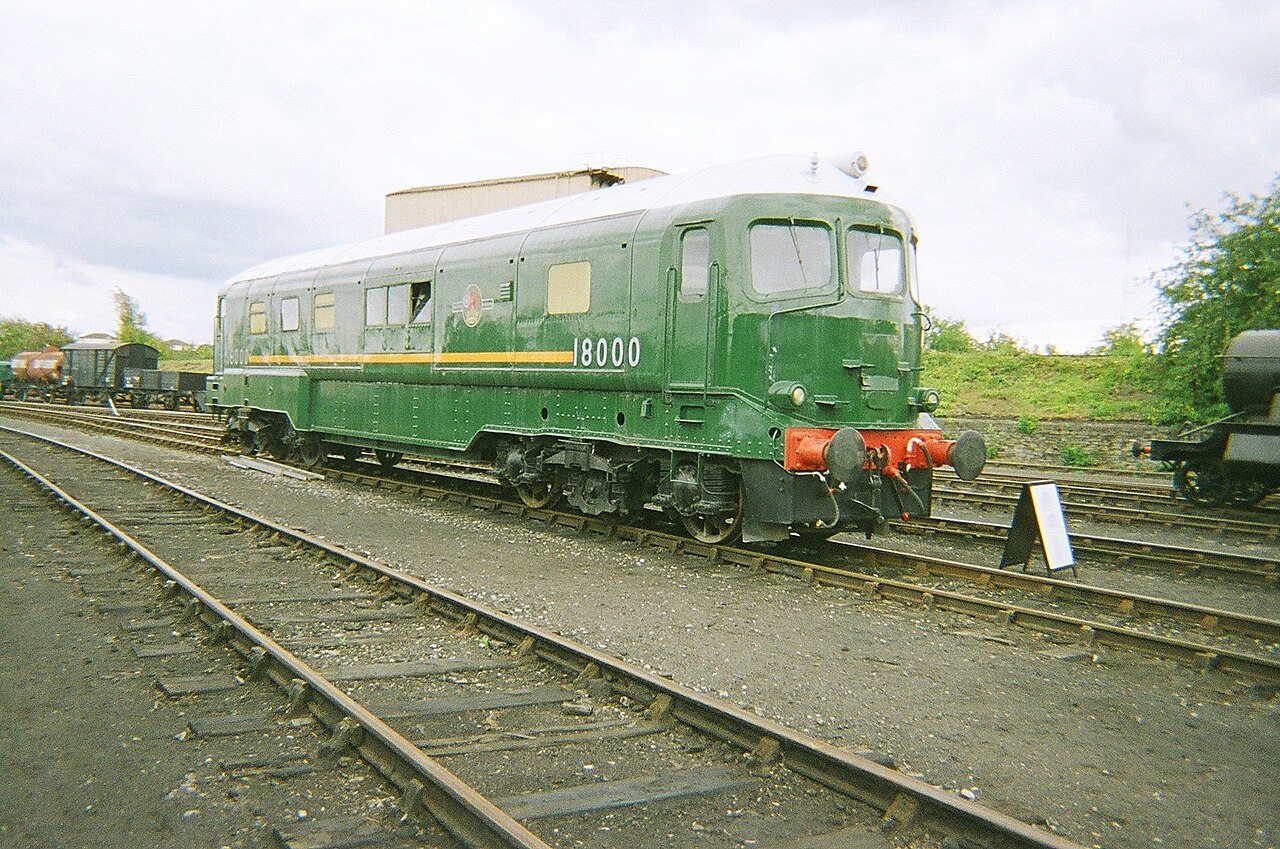


Design and technical characteristics
The locomotive combined a gas turbine prime mover with electrical transmission: the turbine drove an electrical generator, which supplied current to traction motors mounted on the axles. This arrangement is often called gas turbine-electric and shares the same basic principle as diesel-electric locomotives but substitutes a gas turbine for the diesel engine.
- Builder: manufactured by a specialist electrical engineering firm with turbine experience.
- Powerplant: single gas turbine coupled to an alternator/generator.
- Transmission: electrical — generator to traction motors.
- Configuration: intended for express passenger work on main lines, with attention to sustained high-speed running.
History and service
The locomotive was initially ordered by a pre-nationalisation company but its construction was delayed by the war. When completed, it entered service on the Western Region and was chiefly used on express passenger workings out of London Paddington. The trials exposed both the strengths and the limitations of gas-turbine traction in railway use: turbines offered a good power-to-weight ratio and smooth high-speed performance but were less efficient at low power and could consume large amounts of fuel compared with contemporary diesels and steam in many operating conditions.
Legacy and significance
Only one unit of this type was built, and it remained essentially a prototype. Its operational life illustrated practical issues—fuel economy, maintenance of turbine plant and suitability for varied service—that limited broader adoption at the time. Nevertheless, the locomotive contributed valuable data to later traction developments and to the wider debate about modernising the railway fleet after the war.
Further reading and references
For contemporary documents and archival material see industry and railway collections associated with British Railways and manufacturer records held by the builder. Background on the original order and prewar intentions is discussed in sources relating to the Great Western Railway. Context about wartime delay and postwar planning appears in broader histories of rail transport and nationalisation; some studies on wartime and immediate postwar policy are available via general archives and libraries here.
Notable points: the 18000 is best understood as a transitional, experimental machine rather than a production type; it helped define practical constraints of turbine traction on mainline railways and informed subsequent motive power choices.
Related articles
Author
AlegsaOnline.com British Rail 18000 — prototype gas turbine-electric mainline locomotive Leandro Alegsa
URL: https://en.alegsaonline.com/art/14294