
John G. Roberts Jr., Seventeenth Chief Justice of the United States
Profile of John G. Roberts Jr., Chief Justice since 2005: background, career before the Court, judicial approach, key opinions and his role in shaping the Supreme Court.
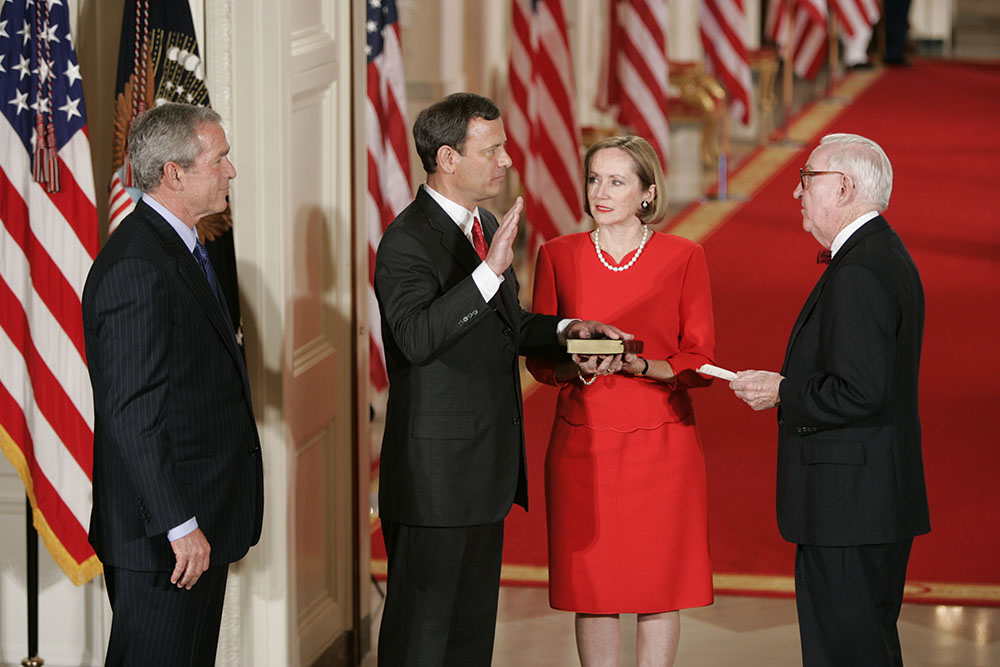
John Glover Roberts Jr. (born January 27, 1955) is the seventeenth Chief Justice of the United States. Nominated by President George W. Bush, Roberts was confirmed by the United States Senate and took his seat on September 29, 2005. He holds the Court's highest administrative post, often described as the institutional leader responsible for managing the Court's docket and representing the judiciary in public and ceremonial roles. As Chief Justice he presides over cases, assigns majority opinions when in the majority, and speaks for the Court on administrative matters, a position sometimes summarized by the title Chief Justice.
Roberts's legal background combined private practice and government service. Before his elevation to the Supreme Court, he served for two years on the United States Court of Appeals for the District of Columbia Circuit. He argued a number of appellate cases and worked in roles that brought him into frequent contact with federal litigation. He received his legal training at Harvard, and his early career included both public- and private-sector work that is characteristic of many high court nominees.
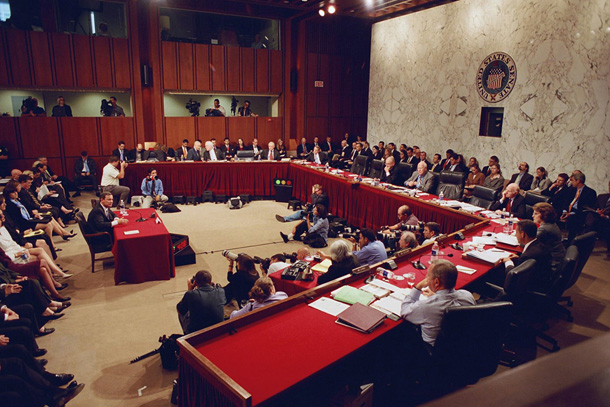
Roberts's path to the bench had an unusual turn. President Bush originally nominated him to replace Sandra Day O'Connor as an Associate Justice, but the death of Chief Justice William Rehnquist during the confirmation process led the President to designate Roberts as his nominee for Chief Justice instead. The Senate confirmed him by a wide margin, and he has served in that capacity since 2005. His appointment placed him among the more conservative justices of the Court at the time of his confirmation, though observers note his opinions sometimes reflect a cautious, institutionally minded approach.
Throughout his tenure Roberts has been viewed as a key swing or median vote in several important cases, particularly after the retirement of Justice Anthony Kennedy. With changes in the Court's membership during the Presidency of Donald Trump and afterward, Roberts's votes and opinions have attracted attention for their potential to decide closely split cases. Commentators and legal analysts have described him as a conservative jurist who frequently emphasizes the Court's institutional legitimacy, the importance of precedent, and narrow, case-specific reasoning.
Image gallery
10 Images




Notable opinions and controversies
- Health-care and economic regulation: In a major health-care case the Chief Justice authored an opinion that proved pivotal in upholding a significant federal statute by construing the government's power in a particular way. That decision illustrated his willingness to reach pragmatic outcomes that preserve institutional stability.
- Voting rights and federal power: Roberts wrote the majority opinion in a prominent voting-rights case that limited a key enforcement formula from mid-20th-century legislation, a ruling that reshaped federal oversight of state election laws.
- Social and constitutional issues: On matters such as marriage equality and other contentious social questions, Roberts has sometimes dissented from the Court's liberal majority, highlighting his conservative interpretive tendencies on certain constitutional claims.
Roberts's leadership style often emphasizes collegiality, the careful assignment of opinions, and efforts to minimize institutional strain. Observers note that he seeks to preserve the Court's reputation and frequently frames decisions in ways that stress legal reasoning over political posture. This institutionalist posture sometimes produces outcomes that surprise observers who expect strictly ideological voting patterns.
As Chief Justice, Roberts remains a central figure in discussions about the Supreme Court's role in American governance. His decisions and administrative actions continue to influence the balance between federal and state power, the reach of congressional authority, and the Court's place in a charged political environment. For more detailed biographical data, case lists, and analyses of his jurisprudence, see official biographies and court records accessible through primary legal resources and institutional profiles.
Further reading and external resources: institutional pages about the Supreme Court, scholarly commentary and case reporting provide extensive material for readers who wish to study Roberts's jurisprudence and leadership in greater depth.
Author
AlegsaOnline.com John G. Roberts Jr., Seventeenth Chief Justice of the United States Leandro Alegsa
URL: https://en.alegsaonline.com/art/140523