
Sandra Day O'Connor
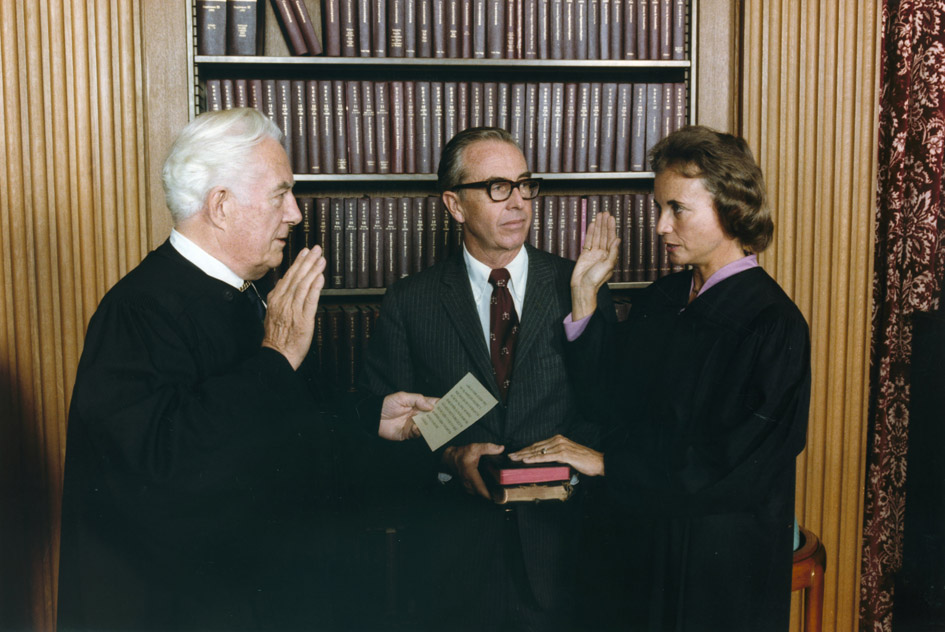
First woman appointed to the U.S. Supreme Court, Sandra Day O'Connor (born 1930) served from 1981 to 2006 and became known for pragmatic, case-by-case jurisprudence and civic education work after retirement.
Overview
Sandra Day O'Connor was the first woman to serve as an Associate Justice of the Supreme Court of the United States. Nominated by President Ronald Reagan and joining the Court in 1981, she served as a pivotal, often decisive vote on many closely divided cases until her retirement in 2006. She was also the Court's first justice from Arizona, and her tenure reshaped expectations about women's roles in the federal judiciary. Her official Court biography and decisions are frequently cited in discussions of modern constitutional law; see the Court context at Supreme Court resources.
Image gallery
10 Images



Early life and education
Raised on a cattle ranch in the American Southwest, O'Connor attended Stanford University, where she completed undergraduate and law degrees at a time when few women entered the legal profession. Her early career included private practice and public service in Arizona, providing practical legal experience that informed her later judicial style.
Career and judicial approach
Before reaching the nation's highest court, O'Connor served in the Arizona State Senate and on state courts, including the state appellate bench. On the Supreme Court she developed a reputation for pragmatic, incremental decision-making. Rather than issuing sweeping doctrinal rules, she often favored case-by-case balancing and compromise, which made her a frequent swing vote on issues ranging from federalism and criminal procedure to equal protection.
Key contributions and tests
One legal principle associated with O'Connor is the "endorsement test," an approach used in Establishment Clause analysis to determine whether a government action appears to endorse or disapprove of religion. This test evaluates the perception such actions create about the relationship between government institutions and religion, and it has influenced subsequent opinions and academic commentary about church–state separation.
Legacy and later activities
After leaving the bench, O'Connor focused on civic education and public engagement. She supported projects that teach constitutional principles and the workings of courts to younger generations and helped launch educational initiatives to strengthen civic knowledge. Her role as a barrier-breaking figure for women in law and government, and her emphasis on pragmatic problem solving, remain central to discussions of Supreme Court history.
Notable facts
- First woman appointed to the U.S. Supreme Court and first justice from Arizona.
- Known for a pragmatic, moderate approach and frequent role as a swing vote during her tenure.
- Associated with the endorsement test in Establishment Clause cases (endorsement test).
- Active post-retirement in civic education and public discourse about the judiciary.
Author
AlegsaOnline.com Sandra Day O'Connor Leandro Alegsa
URL: https://en.alegsaonline.com/art/130462