
William Rehnquist: Chief Justice, conservative jurist, and advocate of federalism
Overview of William H. Rehnquist (1924–2005), his career on the Supreme Court as Associate Justice and Chief Justice, judicial philosophy, major decisions, and lasting influence on federalism and the Court.
William Hubbs Rehnquist was an American lawyer and jurist who served as an Associate Justice and later the 16th Chief Justice of the United States. He first joined the Supreme Court as an Associate Justice after nomination by President Richard Nixon and served from 1971 until 1986. In 1986 he was elevated to Chief Justice by President Ronald Reagan and led the Court until his death in 2005. Contemporary accounts describe him as a conservative jurist who emphasized restraint, respect for the Constitution's original structures, and a substantial role for state governments in the federal system. For a concise biographical outline see legal biography and his role in politics noted at political archives.
Image gallery
8 Images




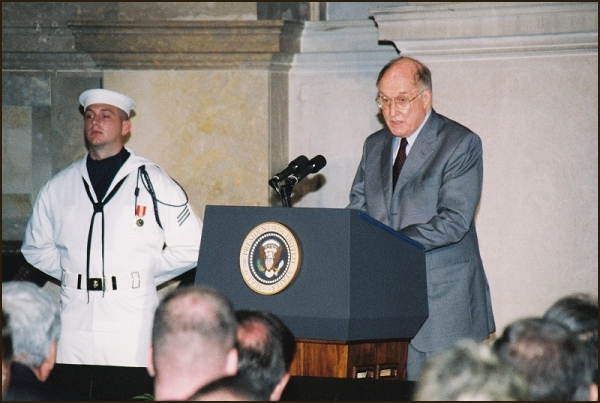
Early life and professional background
Rehnquist was born in 1924 and pursued higher education before entering law. He completed undergraduate studies and then received a law degree from a leading law school. Early in his legal career he worked in government and in private practice and served as a law clerk to a Supreme Court Justice, a formative experience that introduced him to the Court's processes and deliberations. These stages prepared him for nomination and confirmation to the high court, where he first served as an Associate Justice and later as Chief Justice on the Supreme Court.
Judicial philosophy and characteristics
Rehnquist's judicial approach combined elements of textualism and originalist reasoning with a practical interest in the allocation of power between federal and state governments. He argued for a stronger conception of state sovereignty within the constitutional framework — a view often described simply as federalism. He typically favored narrow statutory constructions, limits on expansive readings of the Commerce Clause, and an emphasis on the Constitution's structure rather than on broad readings of federal authority.
Major opinions and influence
During his tenure as Chief Justice the Court issued several decisions that exemplified Rehnquist's influence on federalism and congressional power. Notable rulings from the Rehnquist Court include:
- United States v. Lopez (1995) — the Court invalidated a federal law under the Commerce Clause, marking a renewed willingness to impose limits on Congress's commerce power.
- Printz v. United States (1997) — the Court held that the federal government could not commandeer state officials to administer federal regulatory programs.
- United States v. Morrison (2000) — the Court struck down portions of federal legislation as exceeding powers under the Commerce Clause.
- Planned Parenthood v. Casey (1992) and other cases — the Court's decisions on social and procedural questions of constitutional law often drew on Rehnquist's conservative perspectives on precedent and judicial restraint.
- Bush v. Gore (2000) — a deeply consequential decision reached while Rehnquist was Chief Justice that ended a disputed presidential recount; the case remains a significant part of the Court's modern history.
Leadership, administration, and legacy
As Chief Justice Rehnquist had administrative responsibilities for the federal judiciary and presided over the Court's conferences and opinions. Colleagues and observers noted his efforts to streamline opinion-writing and to maintain collegial procedures. His nearly two decades as Chief Justice reshaped the Court's balance on federalism and separation of powers issues and influenced a generation of conservative legal thought. After his death on September 3, 2005, he was succeeded as Chief Justice by John Roberts.
Further reading and resources
For additional context on his life and rulings consult archival and scholarly sources: court histories, law journals, and institutional biographies available through legal reference sites such as biographical resources, institutional collections at court archives, and academic treatments of federalism. General overviews of the Court's decisions in the Rehnquist era are available through public legal education pages and historical summaries at political reference, administrative records, and selected analyses of key cases at scholarly databases and news retrospectives.
Author
AlegsaOnline.com William Rehnquist: Chief Justice, conservative jurist, and advocate of federalism Leandro Alegsa
URL: https://en.alegsaonline.com/art/132978