
Hubert H. Humphrey Metrodome: Minneapolis's former domed stadium
A concise encyclopedia entry on the Hubert H. Humphrey Metrodome: its design, tenants, major events, history, roof and turf features, and replacement by U.S. Bank Stadium after demolition.
The Hubert H. Humphrey Metrodome, commonly called the Metrodome, was a multi-purpose, air-supported stadium located in downtown Minneapolis. Opened in 1982 and named for former U.S. Vice President Hubert H. Humphrey, it served as a shared home for professional and collegiate teams and staged many major sporting events and concerts. In October 2009 the playing surface was rechristened Mall of America Field as part of a naming-rights agreement; that arrangement and other commercial partnerships were part of the stadium's later years.
Image gallery
10 Images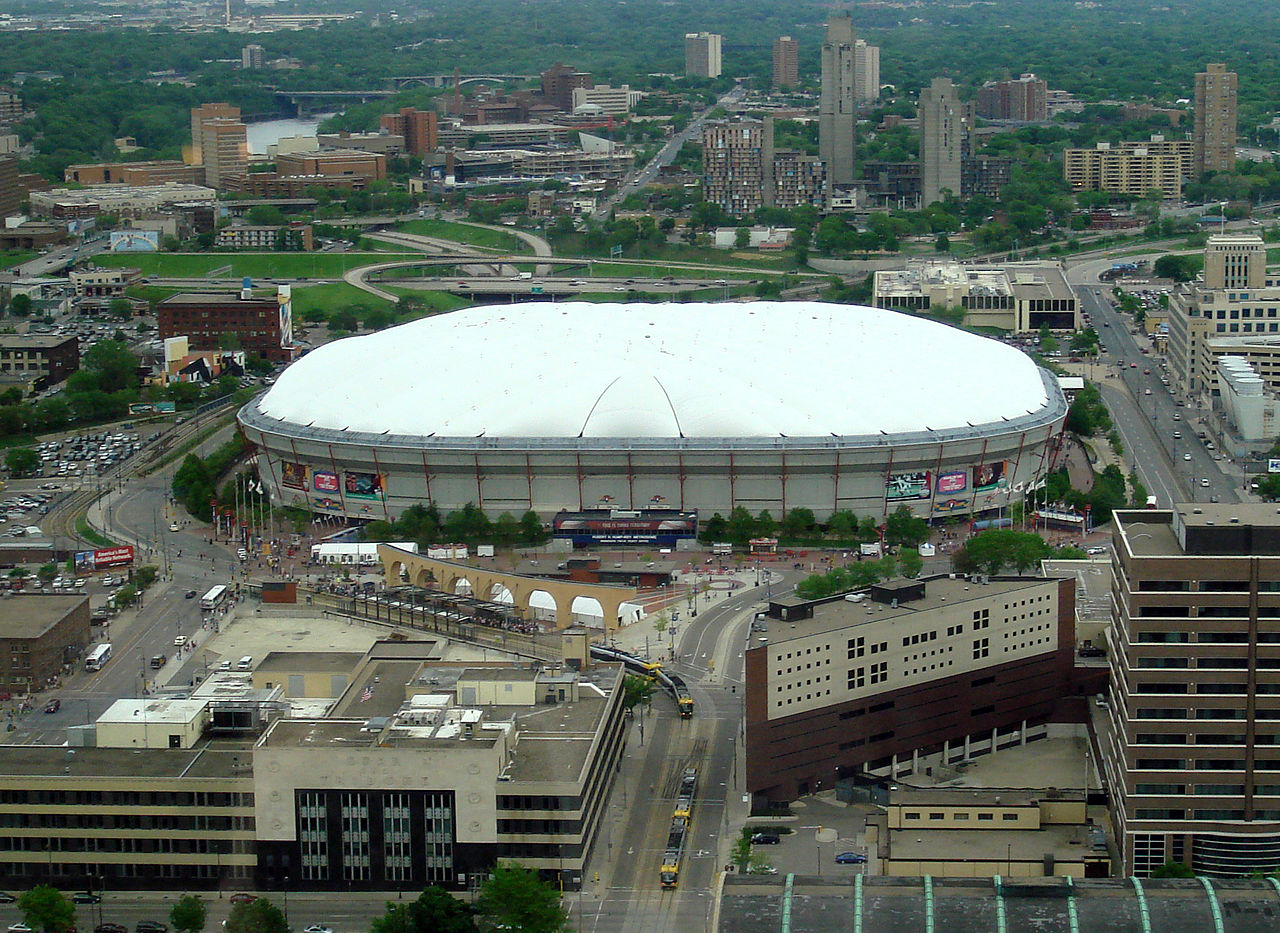


Design and physical features
The Metrodome was built with an air-supported fabric roof, a lightweight membrane structure kept inflated by fans and maintained pressure. This roof style allowed a column-free interior and a flexible venue able to host football, baseball, football and indoor events. The playing surface for most of the stadium's life was synthetic turf; over time the surface was updated to later generations of artificial turf to meet the requirements of different sports. Seating arrangements and sightlines were adjustable, so capacity and layout varied depending on whether the facility was configured for professional baseball, professional football, college events, or concerts.
Primary tenants and major events
The Metrodome's best-known tenants included professional franchises and college teams. Principal occupants were the Minnesota Vikings of the National Football League, and the Minnesota Twins of Major League Baseball. The stadium also served the University athletics programs: the Minnesota Golden Gophers football team and, in later years, other university teams associated with the Big Ten athletics conference used the facility when appropriate.
- Professional football: home games and playoff contests for the Vikings.
- Baseball: regular-season and postseason games for the Twins, including World Series contests during the franchise's championship eras.
- Collegiate and neutral-site competitions: NCAA tournament games and other large-scale events.
- Large concerts, conventions, and community events that required an indoor, high-capacity venue.
Operational history and notable facts
The Metrodome replaced earlier venues that had housed Minnesota teams: it followed the suburban Metropolitan Stadium, which once stood on what is now the Mall of America in Bloomington, and it also took over many functions previously accommodated at Memorial Stadium on the University of Minnesota campus. During its decades of operation the Metrodome was known for both its advantages—an enclosed, weather-protected setting for year-round events—and its quirks, including the challenges posed by the air-supported roof. Heavy snowfalls and windstorms caused the fabric roof to fail on more than one occasion, leading to short-term closures and repairs. The stadium's multifunction character and urban location made it a focal point for sports fans across the region.
Final years, demolition and replacement
By the 2000s there was growing discussion about constructing sport-specific facilities. The Twins moved to nearby Target Field, and the university's football program returned to an on-campus venue. The Metrodome hosted its last Minnesota Vikings game on December 29, 2013, and demolition of the structure began in January 2014 to make way for a new stadium. The site was redeveloped for the Vikings' replacement, U.S. Bank Stadium, which opened in 2016; during construction the Vikings staged home games at the university's on-campus stadium. Naming-rights, lease arrangements, and municipal planning all played roles in the transition from the Metrodome era to the modern replacement facility.
Legacy
For more than three decades the Metrodome was an important civic asset: it brought championship baseball, playoff football, major college events, and cultural spectacles to downtown Minneapolis. Its air-supported roof and multi-use design influenced how cities thought about indoor stadiums in cold climates, while the practical limitations of the facility—aging infrastructure, roof maintenance, and compromises required for multiple sports—helped fuel the later trend toward sport-specific venues. The Metrodome remains a prominent chapter in Minnesota sports history and urban development, remembered for big games, memorable championships, and its role in the evolution of modern stadium design.
Further reading and archival materials are available from local historical resources and institutional records documenting the stadium's construction, decades of events, and the public process that led to its replacement.
Naming rights details | Stadium overview | City of Minneapolis | Metropolitan Stadium history | Mall of America | Bloomington site | University athletics | Campus connections | NFL context | Vikings | Big Ten | Golden Gophers | Twins | Target Field
Author
AlegsaOnline.com Hubert H. Humphrey Metrodome: Minneapolis's former domed stadium Leandro Alegsa
URL: https://en.alegsaonline.com/art/139885