
Hilde Benjamin — East German jurist and justice minister
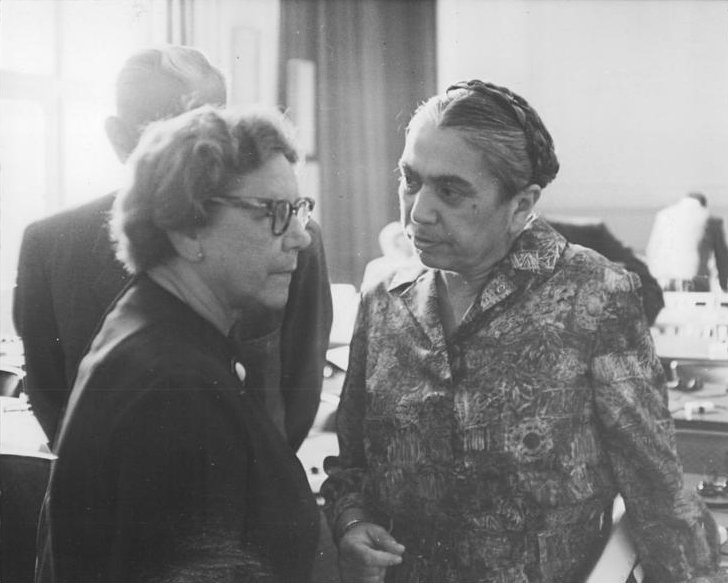
Hilde Benjamin (1902–1989) was a prominent and controversial East German judge and justice minister, known for her role in politically charged trials and for shaping the GDR's judicial system under the SED.
Overview
Hilde Benjamin, born Hilde Lange in Bernburg in 1902 and dead in April 1989, was a leading legal official in the German Democratic Republic. She served as a senior judge and as a minister responsible for justice in the GDR. A long‑time member of the Socialist Unity Party (SED), she played a central role in aligning courts with state policy during the early decades of the Cold War and the Soviet occupation period.
Image gallery
4 Images


Background and career
Benjamin trained in law during the interwar years and rose through post‑war party and governmental ranks in the Soviet zone. As part of the East German legal establishment, she helped build institutions intended to reflect socialist principles. Over her career she held senior posts in ministerial and court structures and participated in drafting and enforcing criminal legislation.
Judicial approach and controversies
She is widely remembered for presiding over politically sensitive cases in which defendants accused of espionage, sabotage or opposition to the regime received harsh sentences. Critics accused her of administering politically motivated justice and of subordinating legal norms to party directives; supporters argued she maintained order in a tense Cold War environment. These polarizing assessments remain central to her historical reputation.
Significance and legacy
Benjamin’s career illustrates how law can be mobilized for political ends in a one‑party state. After German reunification and in scholarly debate, her actions have been reexamined in studies of human rights, transitional justice and the institutional history of the GDR. She died in East Berlin shortly before the fall of the Berlin Wall, and historians continue to debate questions of responsibility, context and continuity in the GDR judiciary.
- Born Hilde Lange; later known as Hilde Benjamin.
- Senior official in the GDR legal system and member of the SED.
- Associated with politically charged trials and strict sentencing policies.
For summaries and primary sources consult specialized biographies and archival collections that examine East German legal practice and party control of the judiciary (local archives, death notices, and institutional histories at studies of East Germany).
Author
AlegsaOnline.com Hilde Benjamin — East German jurist and justice minister Leandro Alegsa
URL: https://en.alegsaonline.com/art/139719